
Compounding Pharmacy Columbus: One Source for Every Specialty in 2026
Introduction: The Columbus Compounding Puzzle in 2026
Patients and providers in Columbus rarely need just one kind of compounded medication. A single household might include a parent on bioidentical hormone therapy, a toddler who refuses bitter antibiotics, and a teenager managing stubborn acne. A single clinic might write prescriptions for topical pain creams, sports recovery formulations, and hormone protocols in the same afternoon. Most local compounding pharmacies, however, excel in only one or two of these niches.
The year 2026 has added urgency: federal regulators set November 19, 2026, as the date by which compounders must stop producing compounded semaglutide. That deadline is now about two weeks away, and Columbus weight-management clinics, med spas, and primary care practices are searching for compliant, full-service alternatives.
This article maps the compounding specialties Columbus actually needs, shows where fragmented local options fall short, and explains how a single PCAB-accredited, nationwide pharmacy can consolidate that work under one roof. It intentionally sets aside a detailed credential-verification walkthrough, a topic covered separately, to focus on specialty coverage and the practical case for consolidation.
The Columbus Compounding Landscape: Strong in Parts, Fragmented as a Whole
Columbus has several reputable independent compounding pharmacies. Many are locally owned, carry strong Better Business Bureau ratings, and have loyal patient bases. Yet each tends to specialize narrowly. One may focus on intrathecal pain therapies and topical pain gels; another may concentrate on veterinary and human infusion work; others list compounding as one service among many in a general retail pharmacy.
For patients and providers, the consequence is practical and frustrating:
- More paperwork: separate intake forms, insurance questions, and refill processes for each pharmacy.
- More points of failure: every additional pharmacy relationship is another place where a prescription can be delayed or misrouted.
- Inconsistent formulation philosophies: bases, excipients, and quality testing practices can vary from one pharmacy to the next, even for similar preparations.
The scale of the market makes this fragmentation more significant. The U.S. compounding pharmacy market is estimated at roughly $7.4 to $16.8 billion in 2026, depending on methodology, with most forecasts projecting 5% to 8% annual growth into the early 2030s. Patient-specific 503A pharmacies are projected to represent about 65% of compounding sales this year, consistent with market research projecting continued growth in the 503A compounding segment. A large volume of personalized compounding is happening, but much of it remains scattered across niche providers.
The rest of this article develops that contrast: fragmented local specialization versus one accredited, nationwide source.
The GLP-1 Compounding Wind-Down: A Time-Sensitive Reason Columbus Clinics Are Searching Now
The regulatory timeline has moved steadily over the past two years:
- February 2025: The FDA determined that the semaglutide shortage was resolved, removing the primary legal basis for widespread compounding of copies.
- April 30, 2026: The FDA proposed excluding semaglutide, tirzepatide, and liraglutide from the 503B outsourcing facility bulks list after finding no clinical need for bulk compounding of these substances.
- November 19, 2026: Both 503A pharmacies and 503B outsourcing facilities must cease production of compounded semaglutide products.
This timeline matters immediately for Columbus. Weight-management programs, aesthetic clinics, and primary care offices that relied on compounded GLP-1 medications need compliant alternatives before the deadline. Those alternatives may include peptide support protocols, hormone-based metabolic approaches, or other legally compliant formulations determined by the prescriber.
What This Means for Columbus Patients and Providers
- Patients mid-treatment need a transition plan. Anyone currently using compounded semaglutide should speak with their prescriber now about what happens when current supplies run out.
- Providers need a pharmacy partner that tracks FDA bulk-list changes. A pharmacy that monitors regulatory updates can adjust its formulation offerings without disrupting patient care.
- The deadline is a natural trigger for consolidation. Rather than scrambling pharmacy by pharmacy, clinics can use this moment to move to a partner that already handles multiple specialties.
Mapping the Five Core Compounding Specialties Columbus Actually Needs
Real-world demand in Columbus centers on five specialty areas: bioidentical hormone replacement therapy (BHRT), pediatric dosing, dermatology, pain management, and sports medicine. Each involves distinct formulation science, regulatory considerations, and patient populations. That complexity explains why many local pharmacies choose one or two areas to do well rather than attempting all five.
Bioidentical Hormone Replacement Therapy (BHRT)
Hormone replacement therapy is the fastest-growing segment in compounding. It is projected to grow at roughly 7.86% annually from 2026 to 2031 and represents an estimated 38.6% share of the compounding market by therapeutic area in 2026.
Demand is broad and rising:
- HRT prescriptions are up 86% since 2021.
- Testosterone prescriptions climbed from 7.3 million in 2019 to more than 11 million in 2024.
- An estimated 7 million patients nationwide currently use compounded bioidentical hormones.
The customization gap is striking. Only 13 FDA-approved bioidentical hormone products exist, yet one 503A pharmacy has documented more than 149,000 unique hormone formulations created from fewer than 10 base hormones. That gap illustrates why personalized BHRT depends on compounding.
For menopause and andropause patients, the most valuable feature is flexibility. Formulas that can be adjusted at each refill based on updated lab results allow prescribers to fine-tune therapy over time instead of forcing patients into fixed commercial strengths.
Pediatric Dosing
Children are not small adults. Newborns through teens often need age- and weight-specific doses that commercial products do not offer, and many need formulations that are free of dyes, preservatives, and common allergens.
Caregivers know the other challenge well: getting a child to actually take the medicine. Flavor choices such as cherry, bubblegum, tutti frutti, marshmallow, and piña colada make a real difference, as do alternative forms like flavored liquids, popsicles, and suckers.
Many local pharmacies treat pediatric compounding as a side offering rather than a dedicated specialty line. The result is inconsistency in which forms and flavors are available from week to week or location to location.
Dermatology
Common dermatology compounding needs in Columbus include:
- Acne and rosacea
- Eczema, psoriasis, and atopic dermatitis
- Scarring and stretch marks
- Dark spots and hyperpigmentation
- Anti-aging formulations
Custom topicals allow providers to combine active ingredients in one preparation, adjust concentrations precisely, and avoid irritants or allergens found in commercial products. Despite this value, dermatology compounding is often mentioned by local pharmacies only as a generic add-on, without a developed specialty program behind it.
Pain Management
Compounded topical pain creams, gels, and ointments deliver medication directly to the affected area. This approach can reduce systemic absorption, limit side effects, and lower addiction risk compared with oral opioids.
Some Columbus independents are genuinely strong in this niche, particularly those focused on intrathecal pain therapies. Their expertise, however, may not extend with the same rigor to hormones, pediatrics, or dermatology. For Columbus pain clinics, the key value lies in multi-ingredient topical combinations tailored to each patient’s response, which requires a pharmacy comfortable adjusting formulas over time.
Sports Medicine
Athletes and active patients benefit from personalized sports medicine formulations that support recovery, reduce inflammation, and aid performance. This specialty often overlaps with pain management and BHRT, but it requires sports-medicine-specific protocols and dosing strategies.
Few local pharmacies market a dedicated sports medicine compounding line. That leaves a gap for Columbus-area athletic trainers, physical therapy practices, and orthopedic clinics serving everyone from weekend runners to collegiate athletes.
Comparing the Fragmented Local Model to a Single-Source Approach
The local competitive picture is consistent: Columbus pharmacies with strong BBB ratings or high review volumes tend to concentrate on specific niches, such as pain, veterinary, or infusion work, or they offer general compounding as a secondary service. Most local sites emphasize being locally owned and experienced, but few address accreditation details, interstate shipping rules, or the GLP-1 transition.
For clinics, fragmentation carries real operational costs:
- Administrative burden: staff must manage separate pharmacy contacts, fax numbers, and portals for BHRT, pediatric, dermatology, pain, and sports medicine prescriptions.
- Quality inconsistency: each pharmacy applies its own testing and sourcing standards, making it harder to guarantee uniform quality across a practice.
- Communication gaps: patient questions and refill issues get routed to different teams with different response times.
The alternative is a single PCAB-accredited, nationwide pharmacy that covers all five specialties. That means one point of contact, one portal, and consistent quality standards across every prescription type.
Why Accreditation Still Matters in This Comparison
Without repeating a full credential-verification guide, one Ohio-specific point deserves mention. Ohio Administrative Code Rule 4729:5-8-04 requires nonresident pharmacies that compound for Ohio patients to have an Ohio-licensed pharmacist serving as the Responsible Person and to prove compliance through one of several pathways:
- NABP’s Verified Pharmacy Program
- A recent USP <795>/<797> inspection report
- Current PCAB accreditation
- Joint Commission medication compounding certification
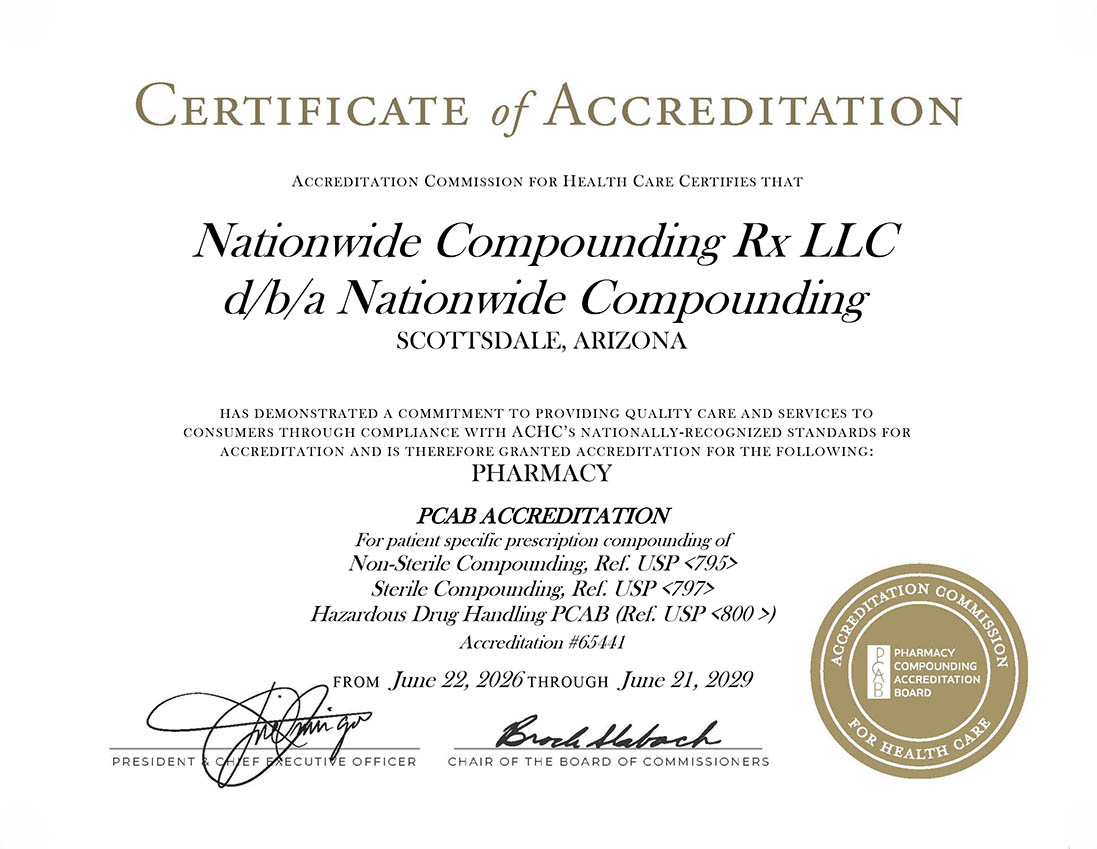
Ohio and Washington are the only two states that specifically mandate verifiable PCAB accreditation as a pathway for nonresident licensure, and the Ohio Board of Pharmacy formally recognizes ACHC, the organization behind PCAB, for nonresident compounding inspections. Nationally, PCAB accreditation in both sterile and non-sterile compounding is held by fewer than 1% of pharmacies, and the American Medical Association recommends that physicians use PCAB-accredited compounders.
For providers comparing a nationwide, multi-specialty option against local alternatives, this is meaningful reassurance. Accreditation is the baseline that makes broad specialty coverage trustworthy, not just convenient.
One Source, Every Specialty: What a Consolidated Compounding Partner Offers Columbus
Nationwide Compounding Rx® illustrates the single-source model. The pharmacy is PCAB-accredited and USP <800>-compliant, backed by 40+ years of combined team experience. It produces both sterile and non-sterile preparations across a full range of specialties:
- BHRT for menopause, andropause, and hormonal imbalances, with formulas adjustable at each refill based on lab results
- Pediatrics for newborns through teens, in kid-friendly flavors and forms
- Dermatology for acne, rosacea, eczema, psoriasis, scarring, pigmentation, and aging
- Pain management through targeted topical creams, gels, and ointments
- Sports medicine for recovery, inflammation, and performance support
- GLP-1/peptide support for metabolic and weight-management programs
Operational features matter as much as specialty breadth. Nationwide Compounding Rx® offers a 1 to 2 business day turnaround, same-day pickup for some medications at its Scottsdale location, independent third-party testing, and high-grade chemicals sourced from FDA-inspected and cleared vendors. Dosage forms include capsules, liquids, topicals, troches and lozenges, oral and sublingual tablets, and suppositories, with allergen-free options free of dyes, fillers, and preservatives.
The provider workflow is built around a four-step framework: Connect → Collaborate → Create → Care. Dedicated Provider and Patient Portals let prescribers submit and track prescriptions and let patients manage refills and support requests, all in one place regardless of specialty.
For Columbus prescribers navigating the GLP-1 wind-down, this structure has a clear advantage. A single compliant partner can adjust its formulation offerings across specialties as regulations change, rather than forcing a new pharmacy search each time federal guidance shifts.
Questions Columbus Patients and Providers Should Ask Before Consolidating Pharmacies
Before moving prescriptions to any single compounding partner, Columbus patients and clinics should ask:
- Does the pharmacy hold current PCAB accreditation covering the specialties needed, including both sterile and non-sterile compounding?
- Can the pharmacy demonstrate compliance with Ohio’s nonresident compounding requirements under Rule 4729:5-8-04?
- Does the pharmacy offer the full range of specialties needed (BHRT, pediatric, dermatology, pain, and sports medicine) rather than just one or two?
- What is the turnaround time, and does the pharmacy provide nationwide shipping with transparency about state-by-state licensing tiers? Nationwide Compounding Rx®, for example, publishes a three-tier shipping map showing fully licensed states, non-sterile-only states, and pending or unlicensed states.
- How does the pharmacy handle regulatory transitions, such as the November 19, 2026, GLP-1 compounding deadline, for patients already in treatment?
Clear answers to these questions separate a dependable long-term partner from a short-term convenience.
Conclusion: Simplifying Compounding in Columbus for 2026 and Beyond
Columbus has capable niche compounding pharmacies, but most patients and providers need coverage across several specialties at the same time. Managing a separate pharmacy for hormones, children’s medications, skin care, pain relief, and athletic recovery adds paperwork, delays, and inconsistency.
A PCAB-accredited, nationwide pharmacy consolidates BHRT, pediatric, dermatology, pain management, and sports medicine compounding into one reliable, compliant relationship. With the GLP-1 compounding deadline arriving on November 19, 2026, Columbus clinics have a timely reason to evaluate their compounding partnerships now rather than later.
In a market growing toward an estimated $16.8 billion and facing increasing regulatory scrutiny, the lesson is straightforward: breadth and accreditation together, not one or the other, define a dependable compounding partner in 2026.
Partner With a Full-Spectrum, PCAB-Accredited Compounding Pharmacy
Columbus patients and providers can consolidate their BHRT, pediatric, dermatology, pain management, sports medicine, and GLP-1/peptide support needs with Nationwide Compounding Rx®, a PCAB-accredited, USP <800>-compliant compounding pharmacy.
- Providers can begin the Connect → Collaborate → Create → Care process through the secure Provider Portal.
- Patients can reach the team through the Patient Portal or the website contact form.
Contact Nationwide Compounding Rx®:
- Phone: (480) 499-8379
- Website: nationwidecompounding.com
- Hours: Monday through Friday, 7:00 AM to 3:30 PM (Arizona time)
- Email response: within one business day
With the November 19, 2026, GLP-1 compounding deadline approaching, Columbus clinics and patients should act now to establish a compliant, full-service compounding relationship before current supplies and options run out.
Related Posts

Fairview Specialty Pharmacy and Fairview Compounding Pharmacy share a brand but operate very differently, with distinct accreditations and regulatory histories. This 2026 guide breaks down the split, highlights key FDA inspection findings, and explains what patients needing custom formulations should do before Fairview's 2027 network changes take effect.

Discover what compound medication truly means beyond the dictionary definition, exploring the gap between the FDA's legal view and USP's clinical standard. This guide breaks down 503A vs 503B pharmacies, the 2012 NECC outbreak that reshaped oversight, and what 2026 rules mean for compounded GLP-1 medications.

Searching for CareFirst Specialty Pharmacy often returns conflicting results from unrelated businesses and the insurer's own network. This article clarifies the confusion and explains why CareFirst's ESPN program won't compound certain prescriptions in 2026, plus who members should contact instead.

Confirm you've found the real Marty's Compounding Pharmacy in Flowood, MS, and learn a simple four-step process to verify its licensing and accreditation. This 2026 guide also clears up a common mix-up with a similarly named Brooklyn pharmacy and offers a credentialed nationwide-shipping alternative.