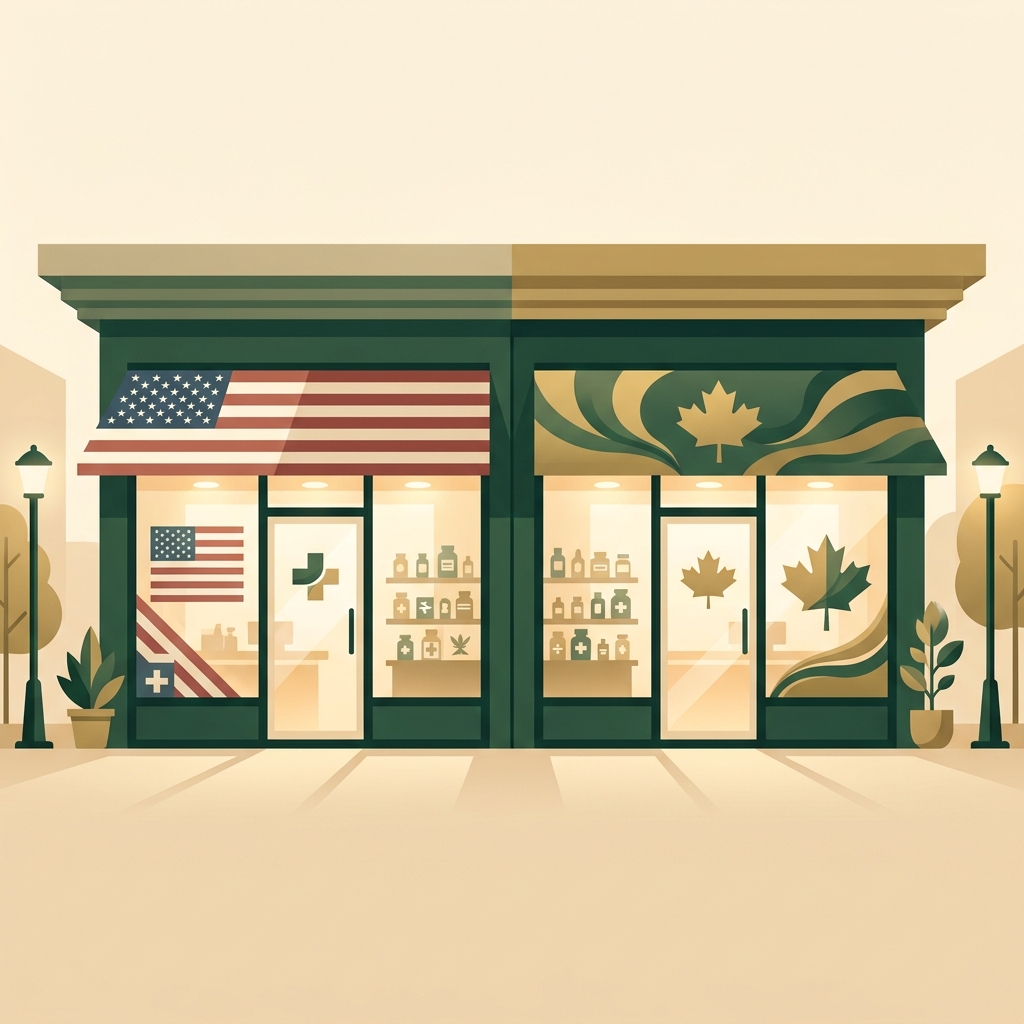
Many patients searching for Medivera Compounding Pharmacy assume it's a Canadian brand—but it's actually a U.S.-based pharmacy headquartered in Troy, Michigan. This guide clarifies the confusion and breaks down how U.S. and Canadian compounding pharmacies differ in regulation, accreditation, and prescription fulfillment. If you're a U.S. patient or provider, discover what to look for in a PCAB-accredited compounding pharmacy in 2026.

Compounded peptide therapy is navigating a pivotal moment in 2026—facing new regulatory openings and serious safety scrutiny at the same time. This guide breaks down what's currently legal, what the evidence actually supports, and the critical questions every patient should ask before starting a protocol.

Standard medications often can't meet the complex, individualized needs of cancer patients—but compounding pharmacy can. This 2026 oncology guide explores five critical clinical gaps that custom medications fill, from chemotherapy-induced neuropathy to pediatric dose precision. Learn what to look for in a qualified compounding pharmacy partner for oncology care.

Specialty pharmaceuticals now drive nearly 50% of total pharmacy spend, yet confusion between specialty and compounding pharmacy has never been greater. This 2026 guide delivers a structured, data-backed comparison of all three pharmacy models. Discover which approach truly fits your patient population or care needs.
Choosing a compounding pharmacy in 2026 means scrutinizing real credentials, not marketing claims. This guide compares Olympia Compounding Pharmacy Orlando with PCAB-accredited Nationwide Compounding Rx® across FDA inspection history, USP 800 compliance, and 503A vs. 503B distinctions. Find out what each pharmacy's credentials actually mean for patient safety and prescriber liability.

Compounded injury treatment for sports medicine is transforming how practitioners address the 8.6 million sports injuries reported annually in the U.S. This 2026 guide delivers sport-specific, injury-pattern-matched formulations alongside critical guidance on anti-doping compliance and the female athlete medication gap. Explore how multimodal compounding strategies outperform one-size-fits-all commercial options.

Half of all U.S. medications carry no pediatric labeling, leaving parents and prescribers searching for safer alternatives. A pediatric compounding pharmacy bridges that gap by creating child-ready formulations tailored to every developmental stage. This 2026 guide equips both families and clinicians with the clinical framework and practical steps to navigate compounding with confidence.

The specialty drug market is projected to approach $965.5 billion by 2030, yet most patients default to the same PBM-owned mega-pharmacies without evaluating their options. This guide audits five core specialty pharmacy service dimensions—drug access, dosage management, patient education, care coordination, and shortage navigation—to help you choose the model that actually fits your clinical needs.

Neovance Specialty Pharmacy is a non-commercial, manufacturer-linked pharmacy built to support Patient Assistance Programs—not everyday prescriptions. This guide explains exactly what Neovance does, where its model has structural limits, and when PCAB-accredited compounding steps in to fill the gap.

Drug discontinuations hit a record high in 2026, leaving patients without medications that have worked for years. Compounding a discontinued medication is often a legal solution—but only if your drug passes a specific eligibility test. This roadmap walks patients and providers through every step of the process.
At Nationwide Compounding Rx®, we partner with prescribing practices to provide personalized medications with quality, safety, and patient care at the forefront. We offer convenient pickup, free standard shipping, same-day pickup on select medications, and a 1–2 business day turnaround on most orders.
At Nationwide Compounding Rx®, we partner with prescribing practices to provide personalized medications with quality, safety, and patient care at the forefront. We offer convenient pickup, free standard shipping, same-day pickup on select medications, and a 1–2 business day turnaround on most orders.
Quick Links
Accredited & Compliant