Transdermal pain medication compounding offers prescribers a science-backed, opioid-sparing alternative for chronic pain patients. This 2026 clinical guide covers pharmacokinetics, base selection, API mapping by pain type, and current USP quality standards. Learn how to apply a rigorous framework when partnering with a PCAB-accredited compounding pharmacy.

Contemporary compounding methodologies have transformed pharmacy from manual guesswork into a measurable, verifiable science. In 2026, precision compounding is defined by automation, advanced delivery systems, and rigorous quality assurance protocols. Learn what standards to look for when evaluating any compounding pharmacy partner.

Millions of patients struggle when mass-manufactured medications fail to meet their unique needs. These six real-world compounding pharmacy patient success stories reveal how customized formulations delivered measurable results across hormones, pain, pediatrics, dermatology, weight loss, and sports medicine in 2026.
A compounding prescription is a legal instrument, not just a clinical order—and every field on it determines whether your medication is legally exempt from FDA premarket approval. This guide breaks down exactly what compounding pharmacy prescription requirements mean under Section 503A in 2026. Whether you're a patient or a prescriber, understand what's required and why it matters.

Over 70 million Americans struggle with sleep disorders, yet OTC melatonin consistently delivers unreliable doses and disappointing results. A compounding pharmacy for sleep disorders offers precision-dosed, custom formulations backed by clinical evidence. This 2026 guide helps patients and providers understand when and how compounded sleep medications are the smarter solution.
A custom capsule compounding pharmacy offers unmatched flexibility in dose strength, ingredients, and release profiles that mass-manufactured medications cannot match. This 2026 clinical guide explains the science behind compounded capsules, key regulatory frameworks, and how to identify a qualified pharmacy. Written for both prescribers and informed patients seeking better medication outcomes.

The right drug delivery form can mean the difference between treatment success and failure. This complete 2026 guide explores novel drug delivery forms in compounding—covering the pharmacokinetics, clinical applications, and patient populations each form best serves. Learn how compounding pharmacies engineer personalized delivery systems that commercial manufacturers simply cannot match.

If your labs look normal but you're still exhausted and gaining weight, you're not imagining it. Hormone therapy for weight gain and fatigue targets the subtle imbalances standard testing routinely overlooks. Learn why the treatment gap exists and how precision hormone therapy can finally help you feel like yourself again.

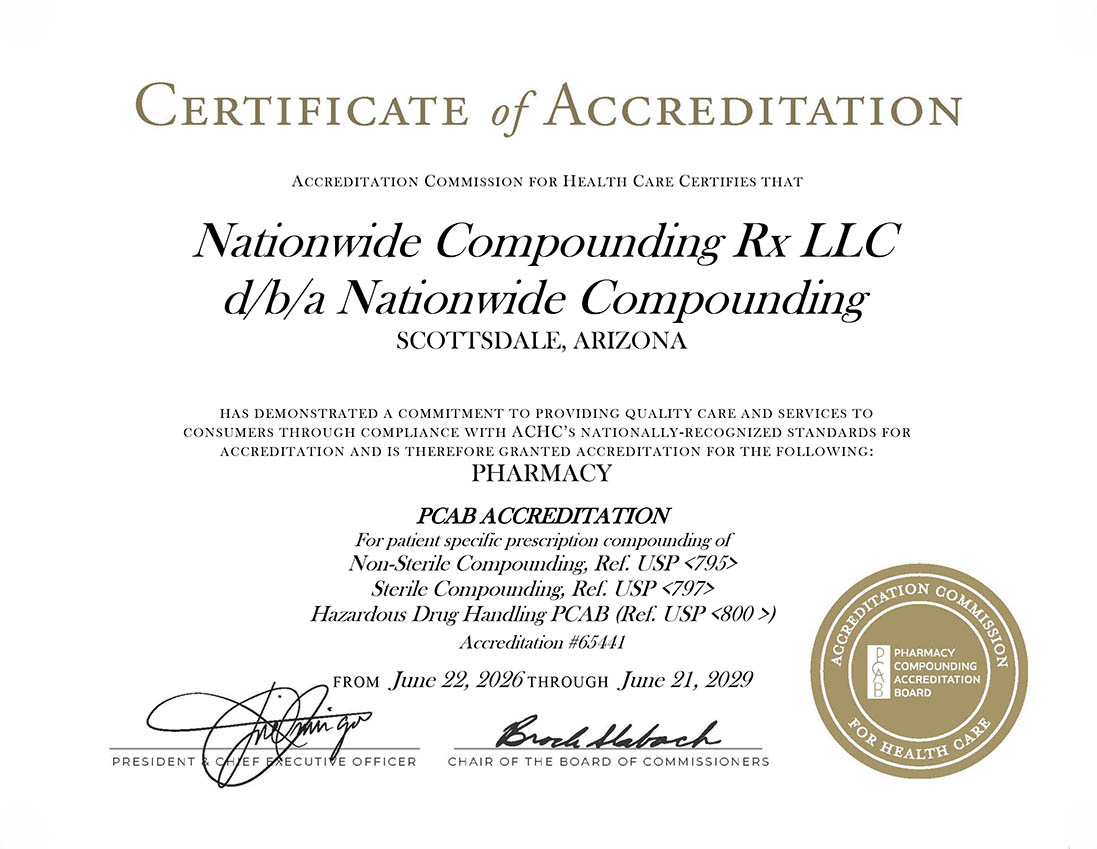
Fewer than 1% of U.S. compounding pharmacies hold PCAB accreditation—yet millions of compounded prescriptions are filled every year. This guide has compounding pharmacy accreditation explained, covering PCAB, NABP, The Joint Commission, and why voluntary credentialing is the true marker of quality and patient safety in 2026.

State regulations compounding pharmacy compliance has never been more complex than in 2026. This guide maps where states diverge from federal 503A and 503B baselines across four critical dimensions: inspection frequency, USP standard adoption, out-of-state shipping rules, and prescriber authority. Providers who prescribe compounded medications need this updated compliance map to avoid costly regulatory missteps.

At Nationwide Compounding Rx®, we partner with prescribing practices to provide personalized medications with quality, safety, and patient care at the forefront. We offer convenient pickup, free standard shipping, same-day pickup on select medications, and a 1–2 business day turnaround on most orders.
At Nationwide Compounding Rx®, we partner with prescribing practices to provide personalized medications with quality, safety, and patient care at the forefront. We offer convenient pickup, free standard shipping, same-day pickup on select medications, and a 1–2 business day turnaround on most orders.
Quick Links
Accredited & Compliant