
Compound Medication Examples: 15 Real Formulas by Specialty
Introduction: What Compounded Medications Really Look Like
Compounded medications make up only an estimated 1% to 3% of all U.S. prescriptions. Yet most people encounter the term through one narrow channel: headlines about compounded GLP-1 weight-loss drugs. That coverage leaves a distorted impression of what compounding is and who it serves.
Existing resources tend to fall into two camps. Some focus almost entirely on semaglutide and tirzepatide. Others offer a short, generic bulleted list that rarely goes deeper than “acne creams” or “hormone suppositories.” Neither shows the real breadth of the practice.
This article presents 15 concrete, named formulas organized across five specialty areas that roughly follow a patient’s life stages: pediatrics, hormone therapy (BHRT), pain management, dermatology, and sports medicine. Each example takes clinically dense language, such as exact mg/mL strengths and multi-drug combinations, and translates it into plain explanations for patients and caregivers.
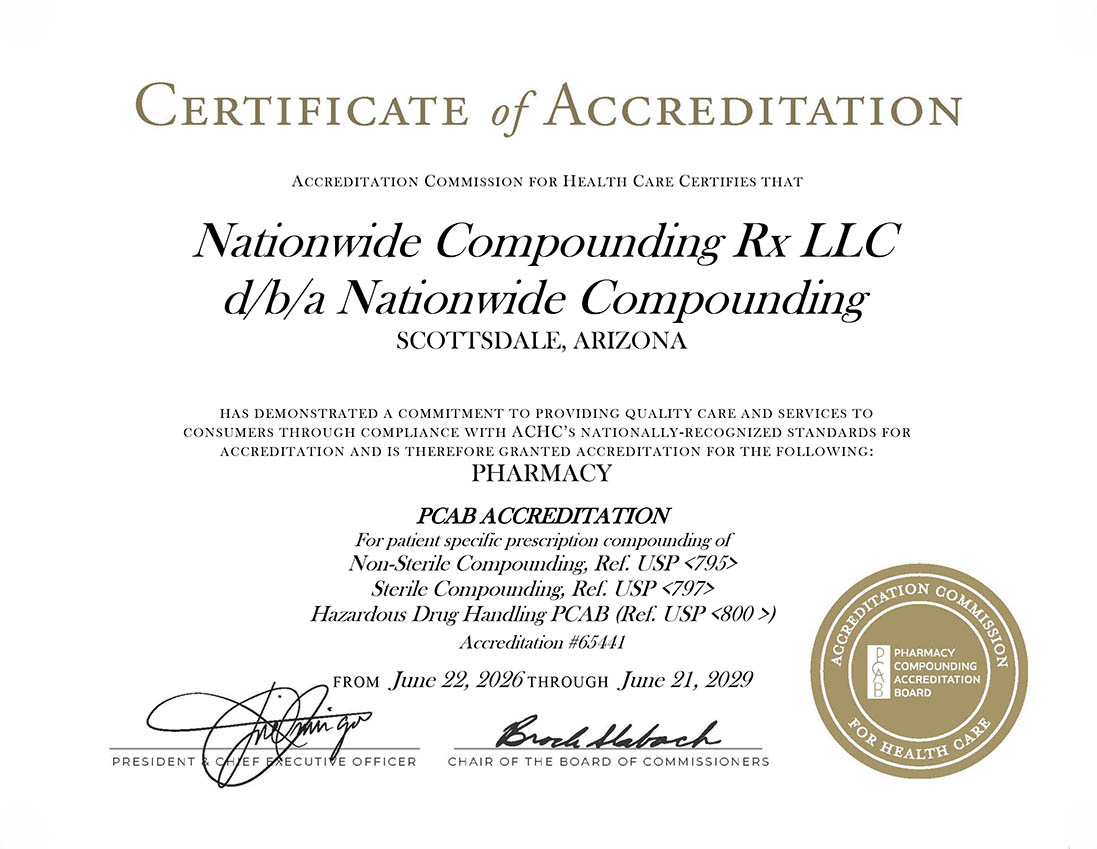
The article also covers the regulatory side: the difference between 503A and 503B compounding, and the 2026 regulatory rollback on compounded GLP-1 drugs. Compounding is a valuable tool, not a cure-all. This guide is offered as education by Nationwide Compounding Rx®, a PCAB-accredited, USP 800-compliant compounding pharmacy based in Scottsdale, Arizona.
What Is a Compounded Medication? A Quick Primer
Compounding is the process in which a licensed pharmacist prepares a customized medication for an individual patient. The pharmacist may change the strength, dosage form, flavor, or ingredient combination compared with what drug manufacturers produce commercially.
One caveat matters from the start. Compounded drugs contain the same active ingredients as approved brand-name or generic medications, but they do not undergo the same FDA testing or approval process. That is why the pharmacy’s quality standards carry so much weight.
According to published research on compounding and medication adherence, compounded medicines represent between 1% and 3% of prescriptions, and their use is growing. The same research describes compounding’s role in helping patients take their medications as prescribed as underexploited, despite being an important part of pharmacy practice.
503A vs. 503B: The Regulatory Distinction Every Example Depends On
Federal law splits compounding into two tracks:
- Section 503A covers traditional, patient-specific compounding by a licensed pharmacist in a state-licensed pharmacy. State boards of pharmacy regulate it primarily. Nearly all 15 examples in this article fall under this category.
- Section 503B covers FDA-registered outsourcing facilities. These facilities can produce compounded drugs in larger batches without a patient-specific prescription and face stricter FDA oversight.
The distinction affects oversight, traceability, and safety expectations for any compounded prescription. Both sections also restrict which bulk drug substances can be used in compounding, which provides an added safeguard. For a deeper look, Nationwide Compounding Rx® maintains a 503A compounding regulatory guide.
Pediatric Compounding Examples: Making Medicine Manageable for Kids
Most commercial drugs are dosed and flavored for adults. They are not designed for a toddler’s body weight or taste preferences. Pediatric compounding fills this gap, most often by converting adult tablets into flavored liquids dosed to the child’s weight.
1. Flavored Suspensions: Lamotrigine and Amlodipine
Consider a young child who needs lamotrigine for seizures or amlodipine for high blood pressure but cannot swallow a pill. A compounding pharmacist can convert the tablet into a liquid suspension. Hospital pediatric pharmacies document this practice routinely; one published list includes an acetylcysteine 5% oral suspension at 50 mg/mL.
For caregivers, the key point is simple. The pharmacist calculates an exact concentration (milligrams per milliliter) so the prescribed dose fits a measurable amount of liquid matched to the child’s weight. Flavors such as cherry, bubblegum, tutti frutti, or marshmallow can make medicine time less of a struggle.
Other tablets commonly converted this way include acetazolamide, captopril, metoprolol, and hydroxychloroquine.
2. “Magic Mouthwash” for Nausea and Mouth Sores
“Magic mouthwash” is a multi-ingredient liquid often compounded for hospitalized children or children undergoing chemotherapy. It helps relieve mouth sores, oral discomfort, and related symptoms when swallowing is painful. No single commercial product addresses several of these symptoms at once, so compounding is well suited to the need. Formulas vary by prescriber and patient, and the prescribing physician determines the exact ingredients.
3. All-Purpose Nipple Ointment for Nursing Mothers
Pediatric compounding also serves caregivers. All-purpose nipple ointment is a multi-ingredient topical compounded for breastfeeding mothers with nipple pain or irritation. Pharmacists typically formulate it without ingredients that would be unsafe if the nursing infant ingested small amounts, which supports both mother and baby.
Hormone & BHRT Compounding Examples: Personalizing Hormone Therapy
Bioidentical hormone replacement therapy (BHRT) is one of the fastest-growing compounding categories, projected to grow at a 7.86% compound annual growth rate from 2026 to 2031. Its main advantage is flexibility: prescribers can adjust BHRT formulas at each refill based on updated lab results, unlike fixed-dose commercial products. This category primarily serves patients going through menopause and andropause.
4. Bi-Est Cream (Estradiol + Estriol)
Bi-Est is a topical cream that combines two forms of estrogen, estradiol and estriol, in a ratio customized to the patient. It is used to relieve menopausal symptoms and allows a more individualized estrogen balance than standard single-hormone products.
5. Testosterone Cream
Compounded testosterone cream is a topical option for men experiencing andropause or women with diagnosed low testosterone. A topical cream may help avoid the sharp hormone peaks associated with some commercial formulations. The strength and application site are tailored to each patient’s lab values.
6. DHEA Troches
Troches are soft, flavored lozenges that dissolve under the tongue or between the cheek and gum. They offer a patient-friendly alternative to capsules or injections. DHEA troches are a hormone-support option often prescribed alongside other BHRT formulas, and customizable flavor and strength help patients stay consistent with their regimen.
Pain Management Compounding Examples: Targeted Relief Beyond the Pill Bottle
Pain management accounted for roughly 31.23% of the U.S. compounding market in 2025, the largest single category. The appeal is clear: topical, localized formulations can reduce systemic side effects and addiction risk compared with oral opioids.
7. Multi-Ingredient Neuropathic Pain Cream (Gabapentin, Baclofen, Ketamine, Lidocaine)
This is the textbook example of multi-drug compounding. A topical cream for treatment-resistant nerve pain may combine gabapentin, baclofen, ketamine, and lidocaine, sometimes with amitriptyline, clonidine, or bupivacaine.
No commercial product combines these agents in one topical, so compounding is the only way to deliver this approach. In plain terms, each ingredient targets a different part of the pain process (nerve signaling, muscle spasm, or local numbing) in a single application at the site of pain.
8. Low-Dose Naltrexone (LDN)
Naltrexone is an FDA-approved drug normally used for opioid and alcohol dependence. Low-dose naltrexone uses a much smaller dose, prescribed off-label for chronic pain and inflammatory conditions that have not responded to conventional treatment. Because commercial naltrexone is not manufactured at these low strengths, LDN is available in usable form only through compounding.
9. Palliative/Hospice Pain and Symptom Gels
Hospice and palliative care teams rely on customized topical gels, troches, and suppositories to manage pain, nausea, and other end-of-life symptoms when frail patients cannot tolerate standard pills or injections. This use rarely appears in generic compounding lists, yet it has a large impact on patient comfort and dignity.
Dermatology Compounding Examples: Custom Skin Solutions
Dermatology compounding combines multiple active ingredients into one topical, matched to a patient’s skin type, sensitivities, and condition severity.
10. Custom Acne Topicals
Compounded acne treatments can combine an antibiotic, a retinoid, and an anti-inflammatory agent in a single cream at a concentration suited to the patient’s skin. For sensitive skin, pharmacists can prepare allergen-free, dye-free, and fragrance-free versions.
11. Rosacea Topicals
Compounded rosacea formulas typically pair anti-inflammatory and antimicrobial agents to reduce redness and flare-ups without the irritating fillers found in some commercial creams. A preservative-free base can benefit patients with highly reactive skin.
12. Anti-Aging / Scar and Pigmentation Topicals
Anti-aging formulas may combine retinoids, antioxidants, and skin-lightening agents to address dark spots, stretch marks, and scarring. Prescribers often adjust these formulas over time as the skin responds, which a one-size-fits-all product cannot do.
Sports Medicine & Recovery Compounding Examples: Supporting Performance and Healing
Sports medicine compounding is a newer but growing specialty for athletes and active patients focused on recovery and inflammation. It overlaps with pain management but focuses on musculoskeletal recovery rather than chronic disease.
13. Multi-Ingredient Topical Recovery Cream (Anti-Inflammatory + Muscle Relaxant Blend)
This topical may combine an NSAID or other anti-inflammatory agent with a muscle relaxant such as cyclobenzaprine and a warming or cooling agent like menthol. Applied directly to sore or strained muscles, it offers localized relief without the stomach-related side effects of oral anti-inflammatories. That makes it useful for athletes managing recurring strains.
14. Compounded Magnesium or Recovery Troches/Lozenges
Flavored troches give athletes a convenient alternative to pills or powders after training. Custom flavor and strength make frequent use easier to maintain.
15. Custom-Strength Anti-Inflammatory Gel for Joint and Tendon Support
A compounded gel can be made at a specific concentration for joint or tendon inflammation, often alongside physical therapy. Prescribers can adjust the strength over a training or recovery cycle, an advantage over fixed-dose commercial topicals.
Beyond the 15: Honorable Mentions and the 2026 GLP-1 Reality Check
GLP-1 drugs. Compounded semaglutide (based on Ozempic, Wegovy, or Rybelsus) and tirzepatide (based on Mounjaro or Zepbound) surged after these drugs entered the FDA shortage list in 2022. In 2026, the landscape has changed sharply. On April 1, 2026, the FDA issued guidance prohibiting mass “copycat” compounding of these drugs now that the shortage has stabilized. By May 2026, more than 1,700 adverse events tied to compounded semaglutide and tirzepatide had been reported to the FDA, many involving dosing errors with multidose vials.
GLP-1s are therefore not the defining example of compounding. They are one narrowing, heavily regulated category within a much broader and more stable field.
Veterinary compounding. Pet owners often encounter compounding through flavored liquids or chews (tuna, chicken, beef) for animals that refuse pills. Documented veterinary formulations include methimazole oral liquid for hyperthyroid cats, potassium bromide capsules, and cyclosporine 2% ophthalmic solution. The risks are real, too: in 2009, 21 polo ponies died after receiving a compounded selenium product, and in 2014 and 2019 horses died after compounded pyrimethamine was found to be roughly 18 to 21 times stronger than labeled.
Rare diseases. In the Netherlands, pharmacy-compounded chenodeoxycholic acid and cholic acid capsules were developed for patients with bile acid synthesis defects and cerebrotendinous xanthomatosis when authorized orphan medicines were unavailable. In cases like these, compounding can be lifesaving.
Why Transparency About Risk and Regulation Matters
At 1% to 3% of U.S. prescriptions, compounding is a meaningful but niche practice. It is not a mainstream replacement for FDA-approved drugs.
History shows why standards matter. In 2012, contaminated injectable steroids from a Massachusetts compounding pharmacy (NECC) caused a fungal meningitis outbreak, with roughly 750 injuries and 60 deaths. The tragedy led Congress to create the 503B outsourcing facility category and strengthen FDA oversight.
Roughly 7,500 compounding pharmacies operate in the U.S., and their quality standards vary widely. Patients should look for:
- PCAB/ACHC accreditation
- NABP Compounding Accreditation
- USP <795>, <797>, and <800> compliance (covering non-sterile, sterile, and hazardous drug handling)
Nationwide Compounding Rx® is PCAB accredited and USP 800 compliant. It uses independent third-party testing and sources high-grade chemicals from FDA-inspected and cleared vendors, which reflects the standards patients should expect from any compounding pharmacy.
How to Talk to Your Doctor or Pharmacist About a Compounded Medication
Patients who struggle with pill size, flavor, allergies to fillers or dyes, or a discontinued medication strength can ask their prescriber whether a compounded option is appropriate.
When evaluating a compounding pharmacy, useful questions include:
- Is the pharmacy accredited, and by which organization?
- Where does it source its active ingredients?
- Does it use independent third-party testing?
- What is the typical turnaround time?
- Is the preparation compounded under 503A or 503B?
Either the patient or the provider can start the conversation, but compounding works best as a shared decision among patient, prescriber, and pharmacist. A licensed prescriber must still authorize the prescription.
Conclusion: Compounding’s Real Breadth, From Nursery to Locker Room
These 15 examples span five specialties: flavored pediatric suspensions and nursing ointments, personalized BHRT creams and troches, multi-agent pain creams and LDN, custom dermatology topicals, and sports recovery formulas. Compounding’s value lies in personalization at every life stage, not in one trending drug category.
Credibility depends on honesty about the practice’s limits: its 1% to 3% share of prescriptions, the 503A/503B distinction, and the documented risks alongside the benefits. Nationwide Compounding Rx® offers BHRT, pain management, dermatology, pediatrics, and sports medicine compounding under accredited quality standards.
Talk to Nationwide Compounding Rx About a Custom Formula
Patients and healthcare providers can contact Nationwide Compounding Rx® to discuss whether a compounded formulation fits a specific need. The pharmacy’s provider partnership follows a four-step framework: Connect, Collaborate, Create, Care.
To start a conversation:
- Visit: nationwidecompounding.com
- Call: (480) 499-8379 (Monday through Friday, 7:00 AM to 3:30 PM)
- Use the secure portals: Providers can submit and track prescriptions, and patients can manage refills and support requests.
With PCAB accreditation, USP 800 compliance, and a one- to two-business-day turnaround, Nationwide Compounding Rx® gives patients and prescribers an accredited, verifiable alternative to unverified compounding sources.
Related Posts

Looking for Solutions Specialty Pharmacy in Las Vegas, NV? This 2026 guide covers SSPRX's address, hours, and services, plus how Nevada's updated compounding licensing rules affect your choice of pharmacy. Learn what to verify before filling a prescription locally or out of state.

Columbus patients and providers often need multiple types of compounded medications, but most local pharmacies specialize narrowly. Learn how a single PCAB-accredited, nationwide compounding pharmacy can consolidate every specialty—from hormones to pain management—while staying compliant ahead of the 2026 semaglutide deadline.

Fairview Specialty Pharmacy and Fairview Compounding Pharmacy share a brand but operate very differently, with distinct accreditations and regulatory histories. This 2026 guide breaks down the split, highlights key FDA inspection findings, and explains what patients needing custom formulations should do before Fairview's 2027 network changes take effect.

Discover what compound medication truly means beyond the dictionary definition, exploring the gap between the FDA's legal view and USP's clinical standard. This guide breaks down 503A vs 503B pharmacies, the 2012 NECC outbreak that reshaped oversight, and what 2026 rules mean for compounded GLP-1 medications.