Compounding Pharmacy for Sports Medicine Practices: The 2026 Clinical Partnership Guide
Introduction: Why Sports Medicine Practices Need a Dedicated Compounding Pharmacy Partner in 2026
Sports medicine practices face a recurring clinical frustration: commercially manufactured medications are formulated for average patient populations, not for athletes whose treatment demands precise dosing, targeted delivery, and formulations free of performance-impairing side effects. From the weekend warrior managing chronic tendinopathy to the professional competitor recovering from soft-tissue injury, the needs of athletic patients increasingly fall outside what mass-produced pharmaceuticals can address.
The market reflects this gap. The U.S. compounding pharmacy market is estimated at $6.0 billion in 2026 and is projected to reach $12.7 billion by 2036, growing at a 7.7% CAGR, with sports medicine explicitly cited as a contributing growth driver.
2026 also represents a regulatory inflection point. The February 2026 peptide reclassification (covering BPC-157, TB-500, CJC-1295, and others) and the upcoming FDA Pharmacy Compounding Advisory Committee review on July 23 and 24, 2026 represent the most significant expansion in sports medicine compounding access in years.
This guide is written for sports medicine physicians, medical directors, and practice managers evaluating or upgrading a compounding pharmacy partnership. It covers four value pillars: (1) clinical formulation capabilities, (2) the 2026 peptide opportunity, (3) anti-doping and WADA compliance support, and (4) the business case for practice differentiation and patient retention. Throughout, it references Nationwide Compounding Rx®, a PCAB-accredited, nationwide-shipping pharmacy built specifically for the B2B clinical relationship model.
The Clinical Case for Compounding in Sports Medicine: What Commercial Pharmacies Cannot Deliver
Mass-manufactured medications are designed for population averages, not for athletes who require precise dosing, specific delivery mechanisms, and formulations engineered to avoid side effects that compromise performance. This is the fundamental gap compounding fills.
A landmark peer-reviewed study published in Pharmacia in May 2026, “Compounding pharmacy in sports medicine: Enabling personalized therapeutics and bridging clinical gaps,” synthesizes the evidence on customized topical medications using iontophoresis and phonophoresis for localized drug delivery while minimizing systemic effects.
The systemic side effect problem is central. Oral analgesics, NSAIDs, and muscle relaxants cause drowsiness, GI distress, and performance impairment. Topical and transdermal compounded formulations bypass the GI tract entirely, minimizing these effects. It is no accident that pain management leads compounding pharmacy revenue at approximately 34% of the market, directly aligned with sports medicine’s core therapeutic need.
Compounding also enables polypharmacy advantages: multiple medications combined into a single dose, supporting precise tapering protocols and reducing the complexity burden on athlete-patients. The opportunity spans the full athletic spectrum, from professional team physicians and physical therapists to coaches, trainers, and community-level practices.
Core Compounded Formulations for Sports Medicine Practices: A Clinical Reference
The formulations below serve as a clinical reference for prescribers, detailing delivery mechanisms and therapeutic rationale. Nationwide Compounding Rx® offers a one to two business day turnaround on all compounded medications, with same-day pickup available for select formulations.
Topical and Transdermal Analgesic Combinations
The flagship multi-agent topical formula combines Diclofenac 3% / Baclofen 2% / Cyclobenzaprine 2% / Gabapentin 6% / Lidocaine 5% Cream. Each agent serves a distinct role: diclofenac (NSAID), baclofen (antispasmodic), cyclobenzaprine (muscle relaxant), gabapentin (neuropathic pain), and lidocaine (local anesthetic). Combined in a single topical, they deliver synergistic relief without systemic exposure.
Other key options include Ketoprofen 10 to 20% in PLO (Pluronic Lecithin Organogel) gel, a high-penetration transdermal NSAID well suited to soft-tissue injuries, and Cyclobenzaprine/Ketoprofen transdermal gel for muscle spasm with concurrent inflammation.
Nationwide Compounding Rx® can customize concentrations, base vehicles, and excipients based on the prescriber’s protocol and the patient’s skin tolerance or allergy profile. Available dosage forms include transdermal creams, gels, and ointments, and the pharmacy can eliminate common allergens such as lactose, dyes, and gluten that may affect sensitive athletes.
Iontophoresis and Phonophoresis Solutions
Iontophoresis and phonophoresis are physical therapy-adjacent delivery techniques that drive active pharmaceutical ingredients into deep tissue, achieving therapeutic concentrations in muscle and tendon beneath the skin. Iontophoresis uses electrical current; phonophoresis uses ultrasound energy.
The standard iontophoresis formula is Dexamethasone 0.4% aqueous solution, valuable for reducing localized inflammation in tendinopathies and bursitis without systemic corticosteroid exposure. Phonophoresis requires a custom ultrasound gel base with embedded API, a formulation uniquely enabled by compounding pharmacies.
These delivery systems are particularly valuable for practices with in-house physical therapy or rehabilitation services. Compounding pharmacists working with athletes, athletic teams, and sports medicine practices have reported favorable outcomes with topical muscle relaxants, transdermal gels, ultrasound gels, and iontophoresis solutions. Commercial pharmacies do not stock these specialized delivery vehicles, making compounding the only pathway to these formulations.
Corticosteroid and Anti-Inflammatory Protocols
Compounded corticosteroid formulations support both injection and topical use with custom concentrations, preservative-free options, and combination formulas unavailable commercially. Preservative-free injectable formulations are especially valuable for intra-articular and peritendinous injections, reducing local tissue irritation and the risk of adverse reactions.
Compounding also allows NSAIDs to be prepared at concentrations and in delivery vehicles not available in commercial products. For competitive athletes, route-of-administration rules under the WADA glucocorticoid category apply, and the pharmacy partner should be consulted (covered in depth below).
Muscle Relaxants, Neuropathic Agents, and Combination Protocols
Compounded muscle relaxants such as baclofen and cyclobenzaprine, prepared in transdermal form, manage acute muscle injury without the sedating systemic effects of oral formulations. Gabapentin and lidocaine combinations address neuropathic presentations common in sports medicine, including nerve entrapment and post-surgical neuropathy.
The clinical value of single-application combination protocols is significant: one compounded cream can replace three or four separate commercial products, improving compliance and simplifying the workflow. Nationwide Compounding Rx® works collaboratively with prescribers to develop practice-specific formularies, functioning as an extension of the clinical team rather than a fulfillment vendor.
The 2026 Peptide Reclassification: What Sports Medicine Practices Need to Know Right Now
This is the most significant regulatory development in sports medicine compounding in recent years and a major competitive differentiator for practices that act early.
In 2023 and 2024, the FDA moved numerous peptides to Category 2 (not eligible for compounding), effectively removing them from legal clinical access. Then, on February 27, 2026, HHS Secretary RFK Jr. announced that approximately 14 of 19 previously restricted peptides, including BPC-157, TB-500, CJC-1295, Ipamorelin, and Thymosin Alpha-1, would be reclassified from Category 2 back to Category 1, restoring legal compounding access with a physician’s prescription. The FDA Pharmacy Compounding Advisory Committee will formally review BPC-157, TB-500, KPV, and MOTs-C for inclusion on the 503A Bulk Drug Substances List on July 23 and 24, 2026, a pivotal event practices should monitor.
The quality imperative cannot be overstated. A 2023 FDA analysis found that over 40% of peptide products sold through research chemical vendors contained inaccurate dosing, contamination, or degraded active compounds, reinforcing why a licensed, PCAB-accredited compounding pharmacy is the only safe and legally defensible source.
BPC-157, TB-500, and CJC-1295: Clinical Profiles and Sports Medicine Applications
BPC-157 (Body Protection Compound-157) carries a preclinical evidence base exceeding 100 animal studies demonstrating soft-tissue repair, tendon healing, and angiogenesis benefits, positioning it as a potential adjunct for tendinopathy, ligament injury, and post-surgical recovery protocols.
TB-500 (Thymosin Beta-4) plays a role in actin regulation, cell migration, and tissue repair, relevant for muscle injury recovery and chronic tendon pathology. CJC-1295 and Ipamorelin act as growth hormone secretagogues, relevant for body composition, recovery optimization, and sleep quality. Thymosin Alpha-1 offers immune-modulating properties relevant for athletes facing recurrent illness or immune suppression from heavy training loads.
A critical compliance flag: all of these peptides remain on the WADA Prohibited List under the S0 Unapproved Substances category. Practices must clearly distinguish between non-tested recreational athletes (for whom these may be appropriate with proper informed consent) and WADA-regulated competitive athletes (for whom they are currently prohibited).
Nationwide Compounding Rx® sources all APIs from FDA-inspected and cleared vendors, with full traceability and chain-of-custody documentation essential for prescriber liability protection.
Operational Readiness: How to Integrate Peptide Protocols Into Your Practice
Practices should establish clear patient stratification protocols before prescribing compounded peptides: competitive versus recreational, tested versus non-tested, and sport-specific prohibited substance lists. A standardized informed consent document should address the investigational status of peptides, WADA prohibition status, and the pharmacy’s quality assurance measures.
The 503A model (patient-specific prescription) is the appropriate framework for most sports medicine practices: each prescription is compounded for a named patient with a valid prescriber-patient relationship. Nationwide Compounding Rx® ships to 47 states plus Washington, D.C., allowing practices to maintain a single pharmacy partnership across their entire panel. Practices should engage their pharmacy partner ahead of the July 2026 advisory committee meeting to develop formulary protocols and staff education materials.
Anti-Doping Compliance as a Pharmacy Partnership Differentiator: Protecting Your Competitive Athlete Patients
The stakes are high. A single anti-doping violation can end an athlete’s career, expose the prescribing physician to liability, and damage the practice’s reputation. USADA explicitly warns that compounded medications carry higher contamination risk for athletes: three UFC athletes were sanctioned after testing positive due to contaminated compounded supplement products, even with valid prescriptions.
There is also a documented expertise gap. A 2023 study found only 52% of pharmacists provided appropriate advice across both clinical and anti-doping dimensions when counseling athlete-patients. A specialized sports medicine compounding pharmacy partner fills this gap. Adding urgency, WADA has placed GLP-1 receptor agonists (semaglutide, tirzepatide) on its 2026 monitoring list, creating new counseling responsibilities for clinics prescribing weight management or metabolic therapies to competitive athletes.
Understanding the WADA Prohibited List in the Context of Compounded Medications
The relevant WADA categories include S0 (Unapproved Substances, including BPC-157 and TB-500), S1 (Anabolic Agents), S2 (Peptide Hormones and Growth Factors, relevant for CJC-1295 and Ipamorelin), and S9 (Glucocorticoids, where route-of-administration rules apply to compounded corticosteroids). The Global DRO (Drug Reference Online) tool is the standard reference for checking substance status by sport and country, and a pharmacy partner should be able to cross-reference compounded formulations against it.
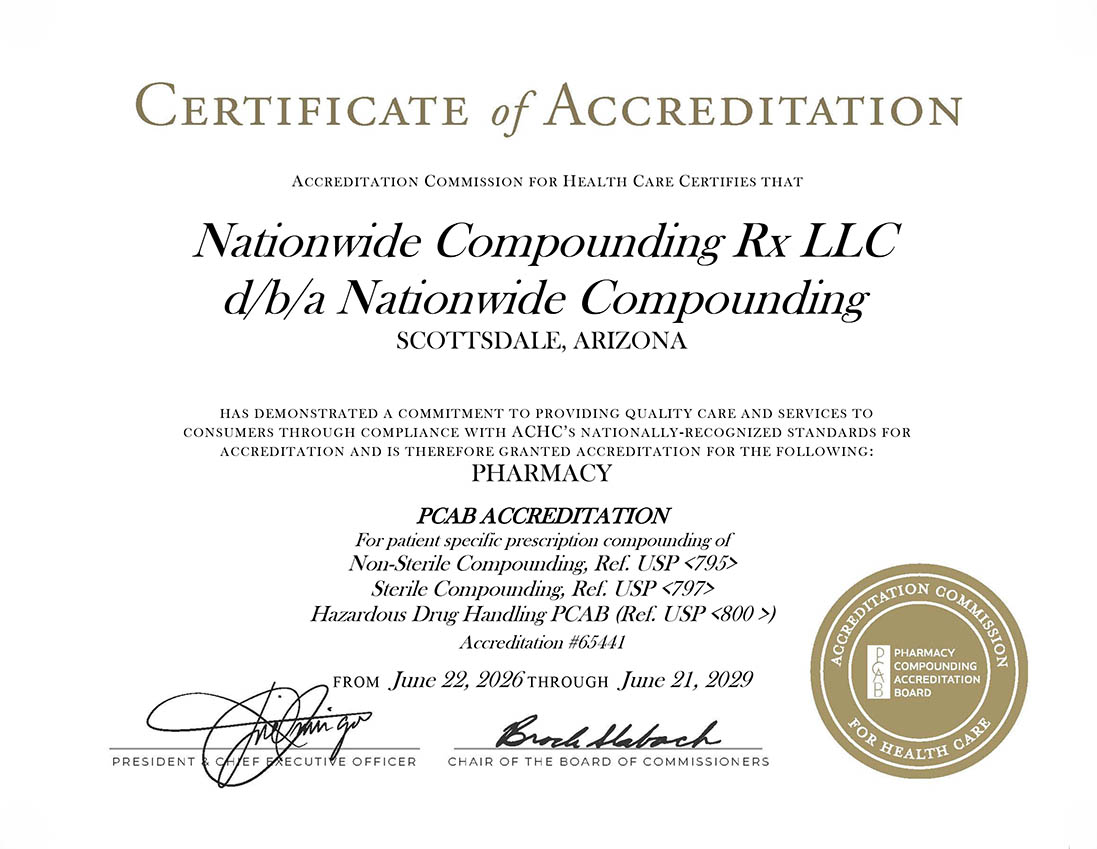
Strict liability governs anti-doping: athletes are responsible for any prohibited substance in their system regardless of source, making PCAB-accredited, FDA-compliant pharmacies the only defensible choice. Fewer than 1% of U.S. compounding pharmacies hold PCAB accreditation, and the AMA recommends physicians use only PCAB-accredited pharmacies. Nationwide Compounding Rx® has maintained PCAB accreditation since its founding.
Therapeutic Use Exemptions (TUEs): How Your Pharmacy Partner Supports the Process
Athletes who require a prohibited substance for legitimate medical treatment can apply for a TUE through their national anti-doping organization or international federation. The pharmacy partner’s role is essential: providing detailed formulation documentation (exact ingredients, concentrations, excipients), certificate of analysis, API sourcing records, and batch testing results, all of which are required for TUE applications.
Compounded medications require additional documentation compared to commercial products because there is no FDA-approved label; the pharmacy must provide a comprehensive formulation dossier. Practices should establish a TUE documentation workflow with their partner before a competitive athlete needs it. Nationwide Compounding Rx® maintains full traceability and chain-of-custody documentation supporting complete TUE submissions.
Building a Compliance-First Protocol for Your Athletic Patient Population
A tiered patient intake protocol should identify competitive versus recreational athletes at intake, document sport and governing body, and flag WADA-regulated patients for enhanced medication review. A pharmacy partner consultation should be integrated into the prescribing workflow for all competitive athletes.
The adolescent athlete segment deserves attention: the majority of sports injuries in young people occur among adolescents aged 13 to 15. Compounded formulations can be tailored for this population through appropriate dosing and palatable delivery forms, and anti-doping education should begin at this age. Annual staff education sessions, co-facilitated by the pharmacy partner, keep teams current on WADA updates, peptide reclassification, and GLP-1 monitoring. Nationwide Compounding Rx® collaborates with prescribers as a clinical partner, making this education a natural extension of the relationship.
The Business Case: How a Compounding Pharmacy Partnership Differentiates Your Sports Medicine Practice
The right pharmacy partner is not merely a medication supplier; it is a practice differentiator driving patient acquisition, retention, and revenue. Hospitals and clinics hold approximately 50% of the U.S. compounding pharmacy market by end-user, confirming that B2B clinic partnerships are the dominant revenue channel.
These relationships are notably durable. Once a clinic becomes a compounding partner, switching costs (finding a new qualified compounder, validating processes, updating ordering systems, and retraining staff) make these relationships highly stable. A comprehensive compounded medication program covering topical analgesics, transdermal delivery, peptide protocols, and anti-doping support becomes a competitive moat that commercial practices cannot replicate.
Reducing Patient Drop-Off Through Medication Adherence
Medication non-adherence is a primary driver of patient drop-off. Athletes who experience side effects from oral medications, cannot tolerate commercial formulations, or find dosing schedules impractical tend to discontinue treatment and disengage. Compounded formulations directly address these barriers: topical delivery eliminates GI side effects, combination formulas reduce pill burden, and custom flavoring and dosage forms improve palatability.
Nationwide Compounding Rx® offers troches, transdermal creams, gels, ointments, capsules, gummies, oral liquids, and suppositories, and can eliminate lactose, dyes, gluten, and sugar from any formulation. A patient who adheres to treatment, achieves better outcomes, and returns for follow-up represents far more lifetime practice revenue than one who drops off after a first prescription. The pharmacy’s one to two business day turnaround supports continuity of care and reduces the window for disengagement.
Practice Differentiation: Attracting Athletic Teams, Clinics, and High-Performance Patients
A robust compounding partnership allows a practice to market a differentiated care model: personalized, compounded protocols that commercial pharmacies cannot provide. This positions the practice to serve as the medical provider for local athletic teams (high school, collegiate, amateur, and semi-professional), where customized, compliant formulations for a roster of athletes are a meaningful advantage.
High-performance patients willing to invest in performance and recovery are typically high-value with strong referral networks. A pharmacy partner can support outreach through educational content, staff training, and co-branded materials. Just as Nationwide Compounding Rx® serves as the exclusive provider of RM3® for Red Mountain Weight Loss®, sports medicine practices can develop proprietary formulary protocols that competitors cannot easily duplicate.
Revenue and Operational Considerations for the Practice
Some practices dispense compounded medications directly from the clinic (office pay model), creating an additional revenue stream and improving convenience, subject to applicable regulatory requirements. Compounded medications for chronic conditions such as tendinopathy management and recovery protocols generate predictable, recurring volume unlike episodic commercial prescriptions.
Nationwide Compounding Rx® works collaboratively to develop practice-specific formularies, reducing prescribing burden and improving clinical consistency. Practices should discuss volume-based pricing, turnaround guarantees, and shipping arrangements during partnership negotiation. With shipping to 47 states plus Washington, D.C., practices with telehealth components or multi-state panels can maintain a single pharmacy relationship.
Evaluating a Compounding Pharmacy Partner: The 2026 Due Diligence Checklist for Sports Medicine Practices
The 2026 regulatory environment, with updated USP standards revised November 2023, the peptide reclassification, and heightened FDA scrutiny, makes due diligence more important than ever. An estimated 30 to 40 million compounded prescriptions are filled annually in the U.S., but quality and compliance vary dramatically across providers.
Accreditation and Regulatory Compliance Standards
- PCAB Accreditation: Confirm current accreditation. Fewer than 1% of U.S. compounding pharmacies hold it, and the AMA recommends it as the standard. Nationwide Compounding Rx® has maintained PCAB accreditation since its founding.
- USP Compliance: Verify compliance with USP <795> (non-sterile), <797> (sterile, revised November 2023), and <800> (hazardous drugs). Nationwide Compounding Rx® operates a USP 800 compliant facility.
- FDA-Inspected API Sourcing: Confirm all APIs come from FDA-inspected and cleared vendors.
- 503A vs. 503B Classification: Understand the model. Most sports medicine practices will use a 503A pharmacy.
- State Licensing: Confirm shipping coverage. Nationwide Compounding Rx® ships to 47 states plus D.C. (not Alabama, California, North Carolina, or South Carolina).
Clinical Capabilities and Sports Medicine Expertise
Confirm formulary breadth across topical analgesics, transdermal gels, iontophoresis solutions, phonophoresis ultrasound gels, injectable preparations, and peptide formulations. Assess collaborative formulary development, peptide compounding readiness under the restored Category 1 framework, anti-doping expertise (WADA review, Global DRO consultation, TUE support), and turnaround time. Nationwide Compounding Rx® offers one to two business day turnaround, essential for acute injury management.
Quality Assurance and Documentation
Confirm the pharmacy provides a Certificate of Analysis for each batch (potency, purity, and sterility where applicable), complete chain-of-custody documentation, USP-compliant beyond-use dating protocols, and rigorous contamination controls via USP 800 compliance. Nationwide Compounding Rx® staff brings a combined 40 years of compounding experience to prescriber consultations.
Partnership Model and Practice Integration
Confirm direct pharmacist-to-prescriber consultation access, efficient ordering and communication systems, staff education support, and reliable shipping and logistics including cold-chain protocols. Nationwide Compounding Rx® contact: Main Line 480-499-8379, Toll-Free 1-833-650-9836, Fax 480-699-5341, Monday through Friday, 7:00 a.m. to 3:30 p.m. MST.
Conclusion: Building the Sports Medicine Compounding Partnership That Serves Your Practice and Your Athletes
Four value pillars define the modern sports medicine compounding partnership: clinical formulation capabilities that commercial pharmacies cannot match, the 2026 peptide reclassification opportunity available now, anti-doping compliance support that protects athletes and prescribers, and a business model that reduces patient drop-off while differentiating the practice.
The 2026 urgency is real. The February peptide reclassification and the July 23 and 24 FDA advisory committee meeting create a narrow window of first-mover advantage for practices establishing protocols now. With more than 40% of peptide products from unregulated sources containing dosing errors or contamination, and three UFC athletes already sanctioned over contaminated compounded products, the choice of pharmacy partner is a clinical and liability decision, not merely a logistical one.
The most successful practices in 2026 will treat their compounding pharmacy as an integrated clinical partner contributing to formulary development, staff education, compliance, and retention. As personalized medicine reshapes sports medicine, the practices investing in the right partnership today are building clinical infrastructure that will deliver compounding value for their athletes and their business for years to come.
Partner With Nationwide Compounding Rx® for Your Sports Medicine Practice
Sports medicine physicians, medical directors, and practice managers are invited to contact Nationwide Compounding Rx® to discuss a clinical partnership built around their athletic patient population.
The partnership credentials speak directly to what sophisticated sports medicine practices require: PCAB-accredited, USP 800 compliant, 40 years of combined compounding expertise, one to two business day turnaround, and shipping to 47 states plus Washington, D.C. Nationwide Compounding Rx® does not take a one-size-fits-all approach. The team works directly with prescribers to develop customized formularies, support anti-doping compliance, and integrate seamlessly into the clinical workflow.
Contact Nationwide Compounding Rx®:
- Main Line: 480-499-8379
- Toll-Free: 1-833-650-9836
- Fax: 480-699-5341
- Website: www.NationwideCompounding.com
- Address: 14000 N. Hayden Rd., Suite 104, Scottsdale, AZ 85260
- Hours: Monday through Friday, 7:00 a.m. to 3:30 p.m. MST
Practices interested in the 2026 peptide protocols specifically should reach out to discuss formulary readiness ahead of the July 2026 FDA advisory committee decision. Nationwide Compounding Rx® has maintained PCAB accreditation since its founding and purchases only the highest grade chemicals from FDA-inspected and cleared vendors: the standard competitive athlete patients deserve.
Related Posts

Searching for Marty's Compounding Pharmacy but not sure if a local Mississippi storefront fits your needs? This guide compares Marty's Pharmacy & Compounding Center to nationwide compounding options using a five-point credential checklist covering accreditation, testing, and shipping licenses in 2026.

The term 'board of specialty pharmacy' actually refers to four distinct organizations, each serving a different purpose. This article breaks down BPS, SPCB, state boards, and PCAB to reveal which body truly governs compounding pharmacy quality in 2026.

Many patients assume CVS Pharmacy Specialty Services can compound custom medications simply because it holds PCAB accreditation—but the reality is more nuanced. This article breaks down what the accreditation actually covers, how the FDA's 503A/503B rules apply, and what it means for prior authorizations on oncology, MS, and RA prescriptions in 2026.

Many patients land on Accredo after a physician, insurer, or PBM directs them there. This guide breaks down what specialty pharmacy Accredo actually does—and the critical compounding limitations you need to know about in 2026.