Green Compounding Pharmacy Search: Named Pharmacy or Clean-Label Rx?
Introduction: One Search, Three Different Answers
“Green compounding pharmacy” is one of the more confusing searches in the compounding space. The phrase combines three distinct intentions in a single query, and search engines rarely sort them out cleanly.
Some searchers want a specific business in Ohio. Others are looking for a similarly named pharmacy in Australia. A much larger group uses “green” as informal shorthand for something else entirely: medication that is dye-free, preservative-free, and allergen-free.
This article addresses all three. It starts with a quick disambiguation for readers seeking a named pharmacy, then offers a deeper explainer for readers seeking clean-label medication, covering what that label should actually mean and which credentials support it.
That second part matters because most clean-label content online is thin marketing copy. Removing an ingredient from a formula is easy to claim and harder to verify. The sections below explain what true clean-label compounding requires and which pharmacies deliver it at a national scale.
Which “Green Compounding Pharmacy” Are You Looking For?
This section is a quick reference for readers who typed the query expecting a specific business. Readers looking for either named pharmacy will find clear direction here before the article moves into the broader clean-label discussion.
Compounding Pharmacy of Green (Uniontown/Green, Ohio)
Compounding Pharmacy of Green is a real, locally owned pharmacy serving the Green and Uniontown area of Ohio. Public sources cite 1995 and 2004 as founding milestones. The pharmacy operates at greencompounding.com.
Its service scope includes:
- Human prescription compounding
- Veterinary compounding
- Hormone replacement therapy (HRT)
- Sterile preparations
Readers who need hours, directions, or direct contact for this business should visit greencompounding.com. This article does not replace that lookup.
Green Dispensary Compounding Pharmacy (Australia)
Green Dispensary Compounding Pharmacy is a separate business based in Australia. It describes itself as having more than 25 years of heritage. It operates a sterile lab and delivers across Australia, serving patients, prescribers, and veterinary clients.
U.S.-based searchers should note the geographic distinction. This pharmacy is not a domestic option, and it operates under Australian regulatory frameworks rather than FDA oversight and United States Pharmacopeia (USP) standards.
“Green” as Clean-Label Search Shorthand
A large share of searchers are not looking for either named business. They use “green” informally to mean clean medication: free of dyes, preservatives, fillers, and common allergens.
This pattern is common among:
- Parents of children with food or dye sensitivities
- Patients with autoimmune or mast cell conditions
- Bioidentical hormone replacement therapy (BHRT) and wellness-oriented patients
This intent receives little credible, detailed content online, so the rest of the article addresses it in depth.
The Academic Definition: “Green Pharmacy” as Sustainability, Not Just Clean Labels
Academic and trade literature uses “green pharmacy” in a more technical sense: environmental sustainability in pharmacy practice.
The concept covers several operational areas:
- Green chemistry and solvents: reducing hazardous inputs in drug preparation
- Eco-friendly packaging: minimizing plastic and paper waste
- Medicine take-back and disposal programs: keeping pharmaceuticals out of water systems
- Energy efficiency: lowering facility carbon footprints
- Waste-reduction audits: improving segregation and procurement-driven demand reduction
The International Pharmaceutical Federation (FIP) formalized this direction in its policy statement on environmentally sustainable pharmacy practice. The statement calls for practices that limit environmental hazards caused by medicines. Pharmacy Times has also made the case for green pharmacy, arguing that waste audits, sustainable packaging, and paper reduction can substantially lower pharmacy’s contribution to health care’s carbon and waste footprint.
This meaning differs from clean-label compounding. The two share a spirit of reducing harmful inputs, but they solve different problems: sustainability-focused green pharmacy protects the environment, while clean-label compounding protects the individual patient from excipients that trigger reactions.
Commercial compounding pharmacies rarely address the sustainability definition at all. Acknowledging it here gives readers a complete picture. The focus now returns to clean-label intent, which drives most of this search traffic.
What “Clean-Label” Compounding Actually Requires
This is the core of the article: moving past marketing claims toward verifiable standards.
The starting point is structural. FDA-approved commercial drugs are formulated for mass-production efficiency, and manufacturers are not required to offer allergen-free variants. A patient who reacts to a dye, binder, or preservative in a commercial tablet often has no commercial alternative. Compounding fills that gap.
Beyond “We Remove Dyes and Gluten”: The Marketing Gap
Many local pharmacy pages list the same short set of excludable ingredients: dyes, gluten, lactose, and preservatives. Few offer regulatory or clinical context.
That omission matters. Removing an ingredient from a formula sheet means little without verified process controls behind it. A preparation can be “dye-free” on paper yet contaminated through shared equipment, poorly sourced raw materials, or inconsistent technique. Purity, potency, and consistency in the finished product are what make a clean-label claim meaningful.
Three proof points separate verifiable clean-label compounding from marketing language. Patients and providers should look for each one.
PCAB Accreditation: The Gold Standard Few Pharmacies Hold
PCAB accreditation is granted by the Pharmacy Compounding Accreditation Board and administered by the Accreditation Commission for Health Care (ACHC). It is widely regarded as the voluntary gold standard for compounding quality.
It is also uncommon. Fewer than 1% of all U.S. pharmacies hold PCAB accreditation. Among pharmacies with high compounding volume, roughly 21% do. Accreditation is a meaningful differentiator, not a given.
PCAB audits several areas:
- Facility standards: environmental controls, cleanroom design, and equipment
- Process controls: documented, repeatable compounding procedures
- Staff training: competency verification for compounding personnel
- Quality assurance systems: testing, recordkeeping, and corrective action protocols
PCAB standards reference the core USP chapters that govern compounding, so accreditation and USP compliance are closely linked.
USP <795>, <797>, and <800> Compliance Explained
The United States Pharmacopeia publishes the chapters that define how compounding should be performed. Three are central:
- USP <795>: standards for non-sterile compounding, such as capsules, creams, and oral liquids
- USP <797>: standards for sterile compounding, such as injectables, where contamination control is critical
- USP <800>: standards for safely handling hazardous drugs to protect patients, staff, and the environment
All three chapters became officially enforceable on November 1, 2023. Industry observers describe this as the most significant regulatory shift in compounding since the Drug Quality and Security Act of 2013.
These chapters matter for clean-label claims because they govern cross-contamination control. An allergen-free preparation is only as reliable as the cleaning, segregation, and handling procedures surrounding it. Compliance with the chapters relevant to each preparation type is what protects allergen-free integrity.
Third-Party Testing and FDA-Inspected Sourcing
Independent third-party testing verifies that the finished product matches its label. A formula might specify no dyes or preservatives, but testing confirms potency and purity in the actual preparation the patient receives.
Raw ingredient sourcing matters just as much. Chemicals from FDA-inspected and cleared vendors reduce the risk of hidden excipients, impurities, or contaminants entering a preparation before compounding even begins.
Together, testing and sourcing separate verifiable clean-label compounding from unverified claims. One controls what goes in. The other confirms what comes out.
Who Actually Needs Clean-Label Compounding, and Why It’s Clinically Significant
Clean-label compounding is not only a preference. For several patient populations, it carries real clinical weight.
Pediatric Patients and Food/Excipient Allergies
Pediatric literature describes compounding pharmacists as especially well-suited to serve children with food allergies. Pharmaceutical-grade, allergen-free bases give them a wider range of options than commercial products allow.
Common pediatric needs include:
- Dye-free liquids for children sensitive to artificial colors
- Gluten-free and lactose-free formulations
- Flavored dosage forms that improve acceptance in children from newborns through teens
- Age- and weight-specific dosing unavailable in commercial strengths
Neonates and Preservative-Free Formulations
For neonates, preservative-free compounding is a safety issue. Excipients such as benzyl alcohol, a common preservative, carry documented toxicity risk in newborns, whose ability to metabolize these compounds is still immature.
This population shows clearly that “clean-label” can have measurable medical stakes. Removing a preservative in this context reduces a known risk.
Autoimmune, Mast Cell, and BHRT/Wellness Patients
Patients with autoimmune conditions or mast cell activation syndrome often react to common excipients in commercial drugs. Dyes, fillers, and preservatives can trigger flares or reactions unrelated to the active ingredient. Compounding allows the active medication to be delivered without those triggers.
BHRT and integrative medicine patients form another active segment. Many seek dye-free, preservative-free formulations as part of a broader wellness-oriented approach, often with hormone doses adjusted over time based on lab results.
A Growing Market: Why Clean-Label Search Demand Keeps Rising
The compounding market is large and expanding. Estimates for 2026 range from roughly $5.99 billion to $20.2 billion, depending on methodology and scope. Mordor Intelligence places the market at $16.78 billion in 2026, growing to $22.08 billion by 2031. Most compound annual growth rate estimates fall in the 5% to 7.6% range.
Scale is visible in prescription volume too. An estimated 30 to 40 million compounded prescriptions are filled in the U.S. each year.
Cultural trends reinforce this medical demand. The broader clean-label movement in food and consumer goods reflects widespread distrust of color additives, preservatives, and flavorings. As consumers scrutinize ingredient labels on groceries, many apply the same scrutiny to their medications.
This growth explains why local options alone are often insufficient. Patients in areas without a qualified compounder need a credentialed provider that can ship across state lines while maintaining consistent quality standards.
Nationwide Compounding Rx®: A Credentialed Answer for Clean-Label Compounding, Coast to Coast
For readers who came looking for “green” in the clean-label sense, the next question is which pharmacies meet the standards described above. Nationwide Compounding Rx®, based in Scottsdale, Arizona, meets them with documented credentials rather than “clean” or “green” marketing language alone.
PCAB Accreditation and USP <800> Compliance in Practice
Nationwide Compounding Rx® is PCAB accredited and USP <800> compliant, placing it among the small percentage of U.S. pharmacies that meet this bar. The pharmacy produces both sterile and non-sterile preparations.
Two operational practices support its clean-label claims:
- Independent third-party testing to verify quality and consistency
- High-grade chemicals sourced from FDA-inspected and cleared vendors
These are the same proof points outlined earlier, applied in daily operations.
Allergen-Free Formulation Capabilities Across Specialties
The pharmacy prepares formulations free of dyes, fillers, preservatives, and allergens across multiple specialties:
- Pediatrics: age- and weight-specific medications in kid-friendly forms
- Dermatology: custom topicals for acne, rosacea, eczema, psoriasis, and more
- BHRT: hormone formulations adjustable at each refill based on lab results
- Pain management: topical creams, gels, and ointments that localize treatment
- Sports medicine: formulations supporting recovery and inflammation control
Dosage-form flexibility helps meet individual sensitivities. Options include capsules, liquids, topicals, troches and lozenges, oral and sublingual tablets, suppositories, and pediatric forms such as flavored liquids, popsicles, and suckers. Flavor choices range from cherry and bubblegum to piña colada, with animal-friendly flavors also available.
The pharmacy can also recreate discontinued or commercially unavailable strengths, which is especially valuable for patients with narrow formulation requirements and no commercial alternative.
Readers who want more background can review the pharmacy’s guide on why compounding differs from commercial pharmacy.
Nationwide Access, Turnaround, and Provider Collaboration
National reach is the key difference from single-location pharmacies such as the Ohio and Australian businesses described earlier. Nationwide Compounding Rx® ships to multiple licensed states through a three-tier system: fully licensed states, non-sterile-only states with sterile licensing pending, and pending or unlicensed states. Availability varies by medication type, state regulations, and prescription requirements.
Turnaround is typically 1 to 2 business days, with same-day pickup available for some medications.
For prescribers, the pharmacy uses a structured partnership model: Connect, Collaborate, Create, Care. Secure provider and patient portals support prescription submission, order tracking, and refill management.
How to Evaluate Any Compounding Pharmacy’s Clean-Label Claims
Whichever pharmacy a patient or provider chooses, the same checklist applies:
- Ask about PCAB accreditation. Confirm current status rather than assuming it.
- Confirm USP compliance for the preparation type. Non-sterile preparations fall under <795>, sterile under <797>, and hazardous drugs under <800>.
- Ask about third-party testing. Find out how often finished preparations are independently tested and for what.
- Confirm ingredient sourcing. Ask whether raw chemicals come from FDA-inspected and cleared vendors.
- Request documentation. Credible pharmacies can provide evidence of their accreditation, compliance, and testing practices.
This framework applies equally to local pharmacies, including named ones such as Compounding Pharmacy of Green, and to national providers. Credentials, not branding, should guide the decision.
Conclusion: Clarity First, Credentials Second
The search “green compounding pharmacy” resolves three ways. One meaning points to Compounding Pharmacy of Green in Ohio. Another points to Green Dispensary Compounding Pharmacy in Australia. The largest group of searchers wants clean-label medication free of dyes, preservatives, and allergens.
For that group, true clean-label compounding depends on verifiable standards: PCAB accreditation, USP compliance, independent third-party testing, and vetted ingredient sourcing. Ingredient-removal claims alone are not enough.
Nationwide Compounding Rx® offers a credentialed, nationwide option for patients and providers who came looking for “green” in the clean-label sense, backed by the standards that make the claim meaningful.
Talk to a Compounding Specialist About Allergen-Free Formulations
Providers and patients exploring dye-free, preservative-free, or allergen-free formulations can connect directly with the Nationwide Compounding Rx® team. For prescribers, the Connect, Collaborate, Create, Care framework is the starting point for a working partnership built around individual patient needs.
Contact options:
- Phone: (480) 499-8379
- Fax: 480-699-5341
- Online: the website contact form or the secure provider and patient portals
- Hours: Monday through Friday, 7:00 AM to 3:30 PM
- Address: 14000 N. Hayden Rd., Suite 104, Scottsdale, AZ 85260
Email inquiries receive a response within one business day.
When evaluating any compounding pharmacy, patients and providers should request documentation of PCAB accreditation, USP compliance, and testing practices. A pharmacy that delivers clean-label medication should be able to show the evidence behind it.
Related Posts
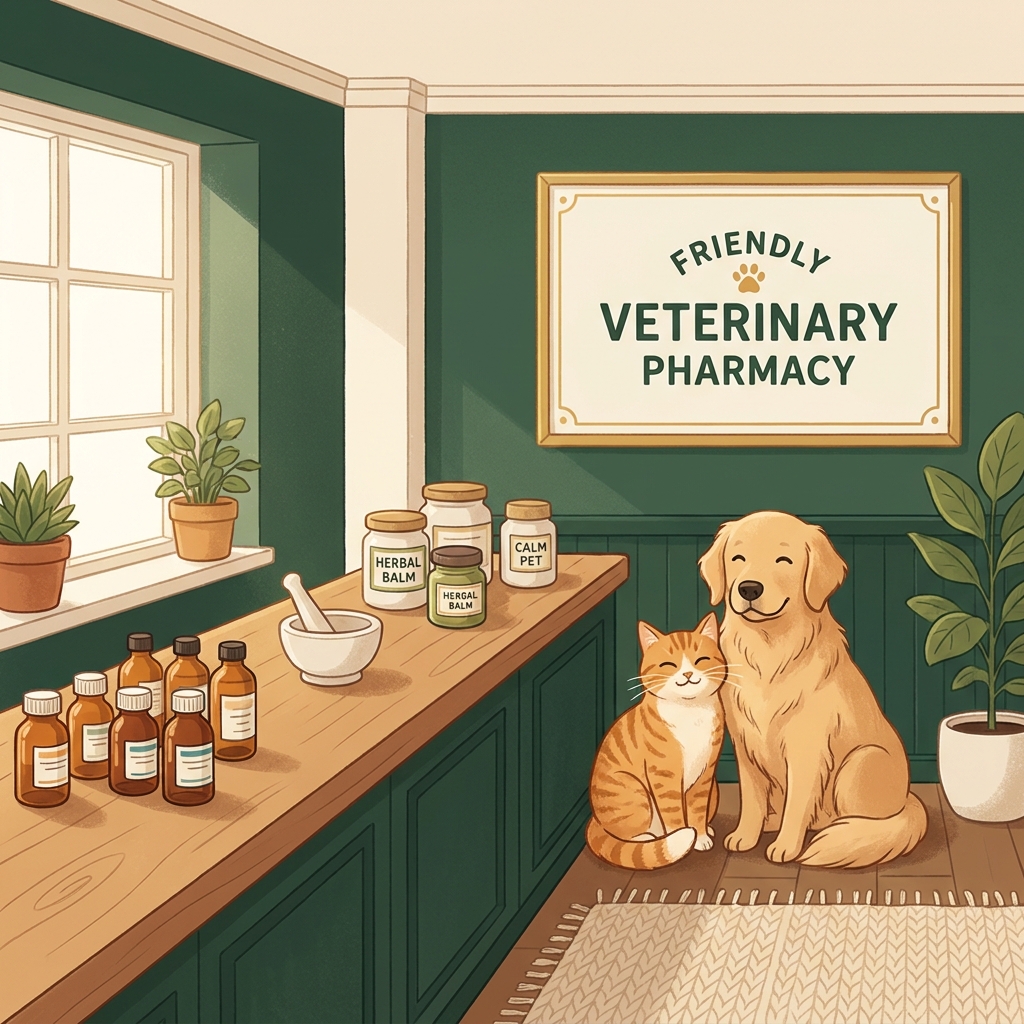
Explore how a trusted animal compounding pharmacy bridges the gap between commercial drug limitations and real-world veterinary needs. From feline-friendly flavors to large-animal dosing for horses, this guide covers the regulations, species-specific considerations, and quality checks every pet owner and vet should know in 2026.
Searching for a Columbus Ohio compounding pharmacy in 2026 means navigating new state guidance, tighter GLP-1 enforcement, and rising demand for PCAB-accredited providers. This guide breaks down Ohio's updated rules, shows how to verify a pharmacy's credentials, and explains why accreditation—not just location—should drive your decision.

Specialty pharmacy services now span far more than dispensing, covering adherence, prior authorization, and cold-chain delivery for complex therapies. This article breaks down where compounding pharmacies step in to solve real 2026 gaps like PA denials, shortages, and discontinued formulations.
Integrative and functional medicine practices juggle BHRT, peptides, LDN, and nutrient compounds—often across multiple vendors. This 2026 guide breaks down the hidden costs of fragmented sourcing and offers a practical framework for choosing a compounding pharmacy for integrative medicine that can unify your formulary under one accredited partner.