Pencol Compounding Pharmacy: Can It Ship to Your State in 2026?
Introduction: The Question That Matters Before You Transfer a Script
A prescriber hands a patient a compounded prescription and recommends Pencol Compounding Pharmacy in Denver. The patient, or a caregiver managing medications for a family member or pet, now faces a practical question before anything else happens: can this pharmacy legally ship the medication to the state where they live?
Most online coverage of Pencol centers on its FDA inspection history. This article sets that topic aside to focus on a more immediate issue for anyone considering a prescription transfer: geographic reach.
The core finding is that Pencol’s documented shipping footprint covers roughly 13 states. Because compounded medications are governed by federal Section 503A rules and state-by-state licensing, the question of whether a given state is covered is a legal matter, not simply one of convenience. People searching for “Pencol Compounding Pharmacy” are often verifying legitimacy or shipping eligibility before sending a script, and this guide is designed to answer that question clearly.
What Is Pencol Compounding Pharmacy?
Pencol is a long-standing Denver compounding pharmacy with deep local roots. Key facts include:
- Legal name: Maplerose/Maple Rose Enterprises, Inc., doing business as Pencol Pharmacy
- Address: 1325 S Colorado Blvd, Suite B-024, Denver, CO 80222
- Phone: (303) 388-3613
A brief history. The name traces back to 1925, when a pharmacy opened at the corner of Pennsylvania and Colfax in Denver (hence “Pen-Col”). In 1973, Marshall Tobin opened Medisave Pharmacy, which merged with PenCol in 1985 to form PenCol Medisave Pharmacy. After relocating, the combined business was renamed Pencol Compounding Pharmacy.
Regulatory classification. Pencol is a Section 503A compounding pharmacy, licensed by the Colorado Board of Pharmacy as an in-state Prescription Drug Outlet. That classification matters because 503A status determines how and where the pharmacy can distribute compounded medications.
Core services include:
- Men’s sexual health (including sterile compounding)
- Bioidentical hormone replacement therapy (BHRT)
- Cosmeceuticals and dermatology
- Pain management
- An extensive veterinary compounding menu, covering drugs such as Methimazole, Gabapentin, Trilostane, and Ursodiol
Pencol is a legitimate, full-service local pharmacy. Its limitation for many patients is not its existence or its services but its geographic reach. The pharmacy’s FDA inspection timeline is covered in depth elsewhere, so this article focuses solely on shipping eligibility.
Pencol’s Documented Shipping Footprint: About 13 States
According to industry research, Pencol’s shipping footprint is limited to approximately 13 states:
Arizona, Colorado, Delaware, Florida, Georgia, Illinois, Kentucky, New Mexico, New York, Pennsylvania, Rhode Island, Wisconsin, and Wyoming, with Indiana reported as a recent addition.
This list reflects non-resident pharmacy permits and licenses, not a shipping preference. A pharmacy cannot simply decide to mail compounded medications into a state; it must first be licensed by that state’s Board of Pharmacy.
State licensing also changes over time. Pharmacies add new permits, allow others to lapse, or encounter renewal delays. Patients should always verify current coverage directly with the pharmacy before assuming their state is included.
This licensing reality explains why geography matters more than brand reputation when deciding whether to transfer a prescription. A well-known pharmacy that is not licensed in a patient’s state is, for that patient, not an option at all.
Why Geography Is a Legal Issue, Not Just a Logistics One
Interstate shipping of compounded drugs is shaped by Section 503A of the Federal Food, Drug, and Cosmetic Act. As explained by the Congressional Research Service, Section 503A restricts a pharmacy from distributing compounded drugs out of state in quantities exceeding 5% of its total prescription orders, unless the pharmacy’s home state has signed an FDA Memorandum of Understanding (MOU) addressing interstate distribution.
In practice, that framework has not worked as originally designed. As the Health Law Alliance has outlined, the standard FDA MOU has been in legal limbo since a 2021 court remand. As a result, in 2026, state-by-state non-resident licensing is the real-world gatekeeper for legal interstate shipping.
The working rule is straightforward: a 503A pharmacy can ship a patient-specific prescription across state lines only if it holds an active non-resident pharmacy permit in the destination state.
For context, many reputable 503A compounding pharmacies hold permits in somewhere between 30 and 50 states. Measured against that benchmark, Pencol’s reach of roughly 13 states is narrow by industry standards. That is not a judgment on quality; it simply reflects how far the pharmacy can legally serve.
What Happens If You Live Outside Pencol’s Licensed States
If a pharmacy lacks a non-resident permit in a patient’s state, it legally cannot fill and ship that prescription there, regardless of what the prescriber intended.
The practical consequences can include:
- Delayed care while the patient searches for an eligible pharmacy
- Prescription rejection after the transfer has already been initiated
- Mid-treatment disruption, which is especially problematic for ongoing BHRT, pain management, or veterinary regimens where consistency matters
Patients should not assume a pharmacy “will just ship it anyway.” Shipping into an unlicensed state creates compliance risk for the pharmacy, and it can create complications for the prescriber and patient as well.
How to Verify Any Compounding Pharmacy’s State Licensing
Before transferring any compounded prescription, patients and caregivers can take a few simple verification steps:
- Check the destination state’s Board of Pharmacy. Most state boards maintain a searchable database of licensed non-resident pharmacies. Searching by the pharmacy’s legal name (for Pencol, Maplerose/Maple Rose Enterprises) often yields the most accurate result.
- Call the pharmacy directly. Ask which states it currently ships to and whether licensure in the patient’s state is active, pending, or unavailable.
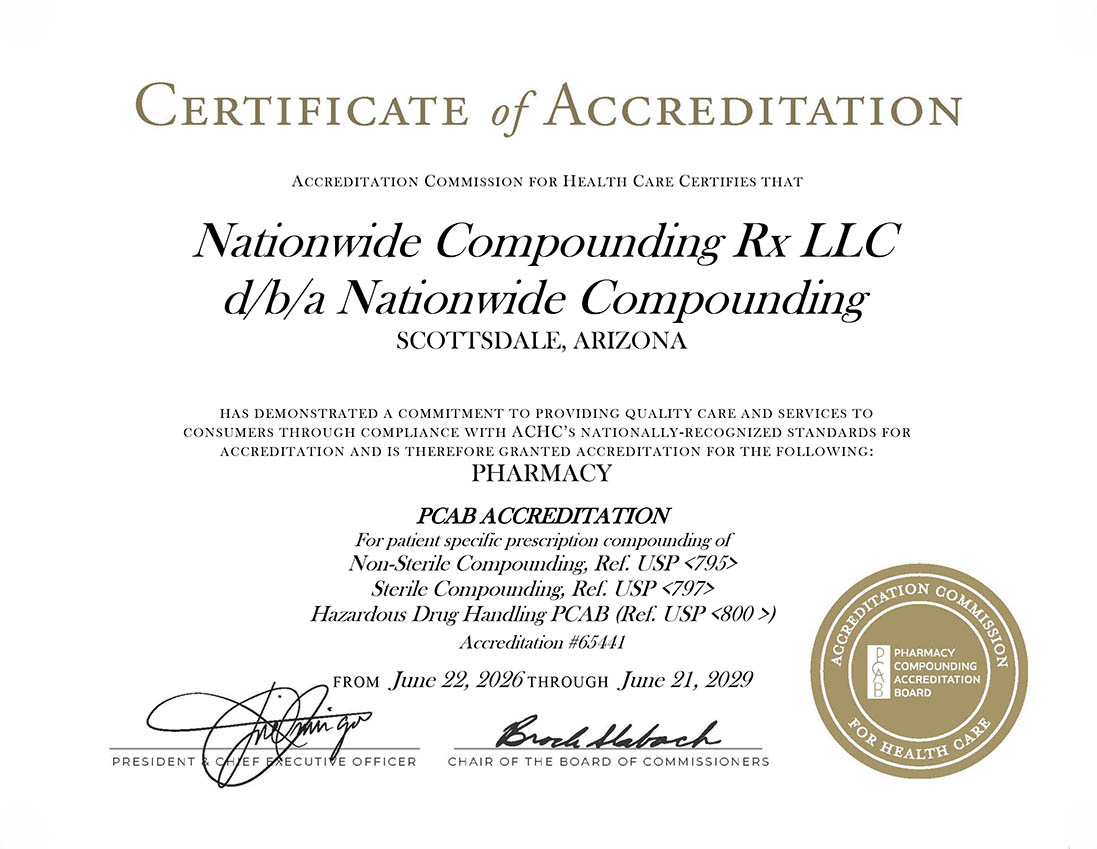
- Ask about quality credentials. Licensing determines whether a pharmacy can ship; accreditation and standards compliance help indicate how well it compounds. Useful questions include whether the pharmacy is PCAB accredited and whether it complies with USP <795> (non-sterile), USP <797> (sterile), and USP <800> (hazardous drug handling).
- Cross-reference multiple sources. Directory listings, BBB profiles, state boards, and the pharmacy’s own statements should line up. Relying on a single listing site can lead to outdated or incomplete information.
The Coverage Gap: What About the Other ~37 States?
With roughly 13 states covered, Pencol cannot reliably serve the remaining 37 or so states. That gap includes several high-population states such as California, Texas, Ohio, Michigan, North Carolina, and New Jersey, none of which appear on the documented list.
This matters because of who is searching. Many people looking up “Pencol Compounding Pharmacy” are not just hunting for a phone number. They are conducting pre-purchase due diligence: confirming the pharmacy is legitimate and checking whether it can ship to them.
For patients outside Pencol’s footprint, the practical solution is a compounding pharmacy with broader, verified multi-state non-resident licensure.
A Broader Option: Nationwide Compounding Rx’s Multi-State Reach
Nationwide Compounding Rx®, based in Scottsdale, Arizona, is a PCAB-accredited, USP <800>-compliant compounding pharmacy licensed to serve patients and providers across multiple states, with coverage varying by medication type and state regulations.
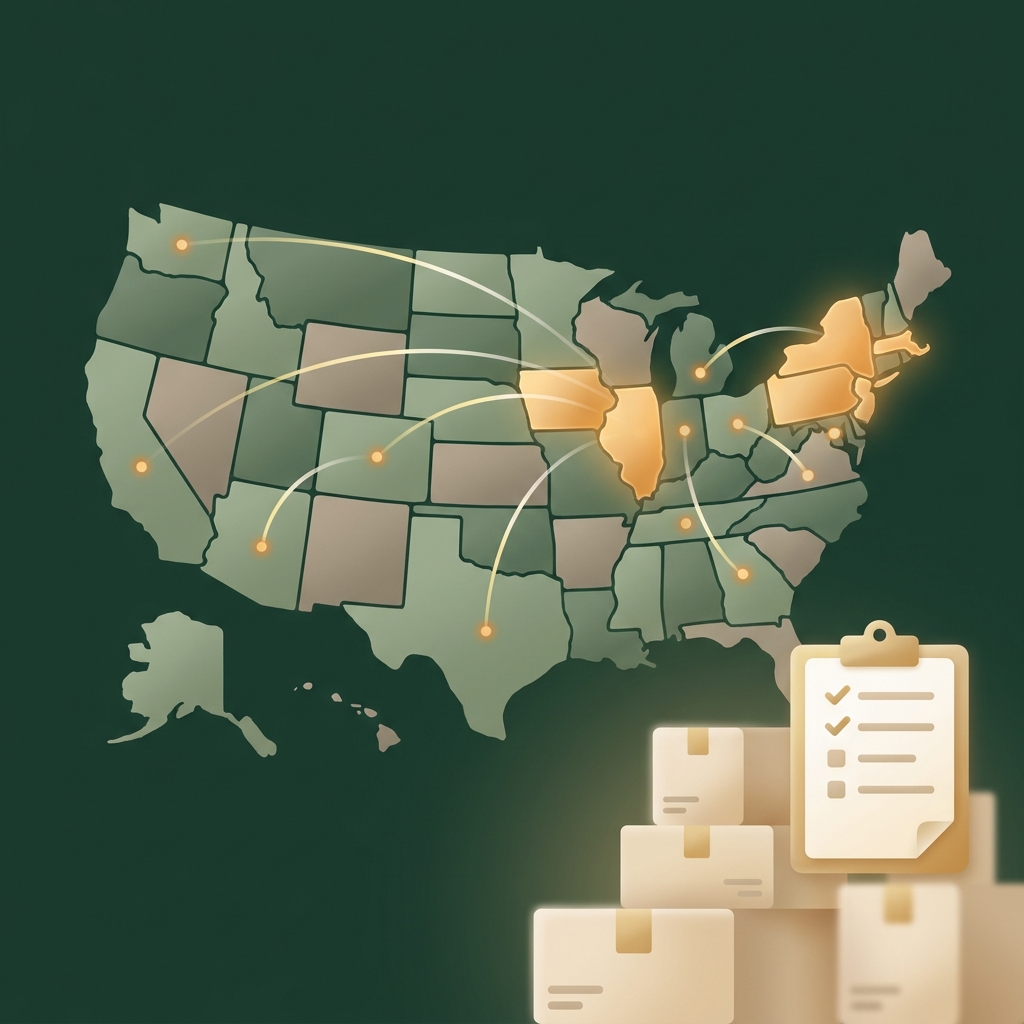
Transparent state licensing tiers. The pharmacy publishes a three-tier shipping map so patients can quickly determine eligibility:
- Fully licensed states: sterile and non-sterile compounds available
- Non-sterile only states: sterile licensure pending
- Pending or unlicensed states: sterile and non-sterile service not yet available
This structure helps patients self-qualify before initiating a transfer, which reduces the risk of a rejected prescription later.
Service overlap with Pencol’s specialties includes:
- Bioidentical hormone replacement therapy, with formulas adjustable at each refill based on lab results
- Pain management topicals (creams, gels, ointments) designed to localize treatment
- Dermatology formulations for acne, rosacea, eczema, psoriasis, and aging skin
- Pediatrics, with kid-friendly dosage forms and flavors
- Sports medicine
- GLP-1 and peptide support
Operational differentiators include a 1 to 2 business day turnaround (with same-day pickup for some medications), independent third-party testing, chemicals sourced from FDA-inspected and cleared vendors, and secure Provider and Patient Portals.
Why PCAB matters. PCAB accreditation is voluntary and is held by fewer than 1% of U.S. compounding pharmacies. For patients comparing options, it is a meaningful and independently verifiable trust signal.
Pencol vs. Nationwide Compounding Rx: Side-by-Side Shipping & Credential Comparison
The comparison below is intended to help patients evaluate fit based on location and needs, not to rank one pharmacy as categorically better than the other.
| Factor | Pencol Compounding Pharmacy | Nationwide Compounding Rx® |
|---|---|---|
| Location | Denver, CO | Scottsdale, AZ |
| Regulatory classification | Section 503A pharmacy | Compounding pharmacy (classification not specified) |
| State shipping footprint | ~13 states (plus Indiana recently added) | Multiple states, published in three tiers |
| PCAB accreditation | Not documented in available research | Yes |
| USP <800> compliance | Not documented in available research | Yes |
| Sterile compounding | Yes | Yes (by state licensing tier) |
| Turnaround time | Not publicly specified | 1 to 2 business days |
| Core specialties | Men’s health, BHRT, cosmeceuticals, dermatology, pain management, veterinary | BHRT, pain management, dermatology, pediatrics, sports medicine, GLP-1/peptide support |
The central takeaway holds: geographic licensing, not brand reputation, determines whether a pharmacy can legally serve a given patient. A Colorado resident may find Pencol a convenient local choice, while a patient in Texas or California will need a pharmacy licensed in their state.
How to Transfer a Compounded Prescription to a Multi-State Pharmacy
Moving a compounded prescription is usually straightforward when handled in order:
- Confirm current state licensing. Verify that the new pharmacy is actively licensed in the patient’s state for the specific type of compound (sterile or non-sterile).
- Involve the prescriber. The prescriber can send a new prescription directly or authorize a transfer from the current pharmacy.
- Set up a patient account. Creating a portal account early streamlines communication, refills, and support requests.
- Confirm formulation details. Strength, dosage form, base, flavor, and any allergen-free requirements should carry over accurately.
Patients on ongoing therapies, such as hormone regimens, pain management protocols, or veterinary compounds, should coordinate timing with their prescriber to avoid gaps in treatment.
Nationwide Compounding Rx’s Provider Portal allows prescribers to submit and manage prescriptions and track orders, while the Patient Portal lets patients manage account details, refills, and support requests, both of which simplify the transfer process.
Frequently Asked Questions
Can Pencol Compounding Pharmacy ship a prescription out of state?
It depends on the destination. Pencol can ship only to states where it holds an active non-resident license, which industry research places at roughly 13 states. Patients should confirm current coverage directly with the pharmacy.
What is the 503A 5% rule, and why does it limit interstate shipping?
Section 503A caps a pharmacy’s out-of-state distribution of compounded drugs at 5% of total prescription orders unless its home state has an FDA MOU in place. Because the standard MOU has been in legal limbo since a 2021 court remand, non-resident licensing in each destination state is the practical requirement for interstate shipping.
Is PCAB accreditation required for compounding pharmacies?
No. PCAB accreditation is voluntary, which is precisely why it carries weight. Fewer than 1% of U.S. compounding pharmacies hold it, and it requires meeting rigorous quality and safety standards.
What should a patient do if their state isn’t on Pencol’s shipping list?
They should look for a compounding pharmacy with verified non-resident licensure in their state, ideally one with broader multi-state coverage and independent quality credentials such as PCAB accreditation.
How can someone confirm a compounding pharmacy’s current licensed states?
Search the destination state’s Board of Pharmacy non-resident license database, call the pharmacy directly, and cross-reference other sources such as BBB listings. Licensing status can change, so recent confirmation is important.
Conclusion
Pencol Compounding Pharmacy is a legitimate, long-standing Denver-based 503A pharmacy with roots dating back to 1925 and a broad service menu that includes significant veterinary compounding. For most out-of-state patients, however, the deciding factor is its roughly 13-state shipping footprint.
Interstate shipping of compounded prescriptions is governed by state-specific non-resident licensure, not by a pharmacy’s willingness or reputation. Patients and caregivers should verify licensing directly before transferring any prescription. For those living outside Pencol’s coverage area, a PCAB-accredited pharmacy with a broader, multi-state licensing footprint, such as Nationwide Compounding Rx®, offers a practical path to consistent care.
Ready to Confirm Your State Is Covered?
Before transferring a compounded prescription, patients and providers can review Nationwide Compounding Rx’s current state licensing tiers to see whether sterile, non-sterile, or both types of compounds are available in their state.
- Providers can use the Provider Portal to submit prescriptions, track orders, and ask licensing questions.
- Patients can use the Patient Portal to manage accounts, refills, and support requests.
Contact Nationwide Compounding Rx®:
- Phone: (480) 499-8379
- Fax: 480-699-5341
- Hours: Monday to Friday, 7:00 AM to 3:30 PM (Arizona time)
- Online: Submit an inquiry through the website contact form; email inquiries receive a response within one business day.
Related Posts

As GLP-1 use surges in 2026, not all tirzepatide compounding pharmacy options are equally safe. This article breaks down FDA's 2026 adverse event data and shows exactly how PCAB accreditation—not facility type—prevents dangerous dosing errors.

Searching for CareFirst Specialty Pharmacy can lead to three unrelated businesses: CareFirst BlueCross's ESPN network, an independent New Jersey compounder, and a Charlotte community pharmacy. This guide explains how to tell them apart and navigate BHRT coverage gaps in 2026.

Choosing a compounding pharmacy in Asheville NC requires more than hometown branding—it demands legal verification. This 2026 guide walks through North Carolina's pharmacy statutes, USP <797>/<800> enforcement, and how to use the NCBOP's online portal to confirm a pharmacy's license before trusting it with your prescription.
Choosing between BHRT pellets, creams, troches, and capsules can feel overwhelming without clear facts. This 2026 guide compares how each delivery method works, what the FDA and NASEM research says, and why pharmacy quality matters most when evaluating BHRT pellets.