
CareFirst Specialty Pharmacy: Same Name, Three Pharmacies in 2026
Introduction: One Name, Three Different Pharmacies
A search for “CareFirst Specialty Pharmacy” seems straightforward. In practice, it can lead to three different businesses that have nothing to do with one another.
The first is CareFirst BlueCross BlueShield’s Exclusive Specialty Pharmacy Network (ESPN), a specialty drug benefit run in partnership with CVS for members in Maryland, Washington, D.C., and Virginia. The second is CareFirst Specialty Pharmacy, LLC, an independent compounding pharmacy in Mount Laurel and Cinnaminson, New Jersey. The third is a separate community pharmacy in Charlotte, North Carolina, that uses the same name.
Most online content about CareFirst’s specialty pharmacy covers only the ESPN and CVS insurance mechanics and does not mention the naming collision. This article explains how to tell the three apart.
It also covers a second problem. Even after a CareFirst member finds the correct ESPN pharmacy, many bioidentical hormone replacement therapy (BHRT) prescriptions still cannot be filled with coverage, because CVS Caremark’s prior authorization criteria exclude key compounding ingredients. The later sections explain that gap and what patients can do about it.
Specialty drugs are projected to exceed 60% of total U.S. pharmacy spending in 2026, while accounting for fewer than 5% of prescriptions written. With that much money tied to so few prescriptions, choosing the right pharmacy and coverage path has real financial and clinical consequences.
Disambiguating the Three “CareFirst Specialty Pharmacy” Entities
The following reference helps readers confirm which entity they are dealing with. These three businesses have no corporate, ownership, or operational relationship with one another. The shared name is a coincidence.
1. CareFirst BlueCross BlueShield’s Exclusive Specialty Pharmacy Network (ESPN)
The ESPN is the insurance side of the name. It is not a single pharmacy but a network of accredited specialty pharmacies that CareFirst built with CVS to give members in Maryland, D.C., and Virginia access to specialty medications. CareFirst serves about 3.5 million individuals and groups in Maryland and the Washington metropolitan area, so the network covers a large population.
CareFirst’s 2026 benefit documents set a firm rule: benefits for covered specialty drugs apply only when the drugs are purchased from and dispensed by a pharmacy in the Exclusive Specialty Pharmacy Network. Specialty drugs obtained outside the network are not covered.
CVS Caremark administers the benefit. CareFirst’s own documents describe CVS Caremark as an independent company that provides pharmacy benefit management (PBM) services to CareFirst BlueCross BlueShield and CareFirst BlueChoice, Inc. members. In that role, CVS Caremark applies prior authorization criteria and network rules on CareFirst’s behalf.
CareFirst’s Medicaid plan uses a different arrangement. CareFirst Community Health Plan Maryland (CHPMD) contracts with CVS Specialty Pharmacy and select CareFirst and University of Maryland pharmacies for specialty services. This network is narrower than the commercial ESPN and operates separately from it.
2. CareFirst Specialty Pharmacy, LLC: Mount Laurel/Cinnaminson, NJ
The second entity is an independent pharmacy that compounds medications for both humans and animals. Its services include hormone replacement, dermatology, dental, and pain formulations. It has no corporate ties to CareFirst BlueCross BlueShield and is not part of the ESPN.
Its regulatory history is public. The FDA inspected the firm from November 15 to November 30, 2022. In 2023, the agency issued a state referral letter after the inspection found practice deficiencies, and the firm committed to correcting them. A state referral letter means the FDA has referred oversight of the issues to the state board of pharmacy.
This matters to searchers comparing compounding pharmacies: patients can make better decisions when they have the full public record for every option under consideration.
3. CareFirst Specialty Pharmacy: Charlotte, NC
The third entity is a community and retail pharmacy in Charlotte, North Carolina, founded in 2012. It offers compounding, medication therapy management (MTM), and home delivery.
It has no affiliation with CareFirst BlueCross BlueShield or with the New Jersey compounding pharmacy. It serves the Charlotte market, which is outside CareFirst’s mid-Atlantic service area. A Maryland, D.C., or Virginia patient who reaches this pharmacy while looking for insurance benefits has most likely landed in the wrong place.
How Patients Can Confirm Which “CareFirst Specialty Pharmacy” Entity Applies
Patients can use a few checks to avoid sharing personal or insurance information with the wrong business:
- Check the source of the reference. If “specialty pharmacy” appears on an insurance card, an explanation of benefits, or the CareFirst member portal, it almost certainly refers to the ESPN. A standalone pharmacy website or storefront is a separate business.
- Confirm the state of operation. The ESPN serves CareFirst members in MD, D.C., and VA. The independent pharmacies operate from New Jersey and North Carolina.
- Compare against the official directory. CareFirst publishes ESPN information at carefirst.com/espn. A pharmacy that does not appear there is not part of the network.
- Call the number on the insurance card. When coverage is the goal, member services is more reliable than search engine results.
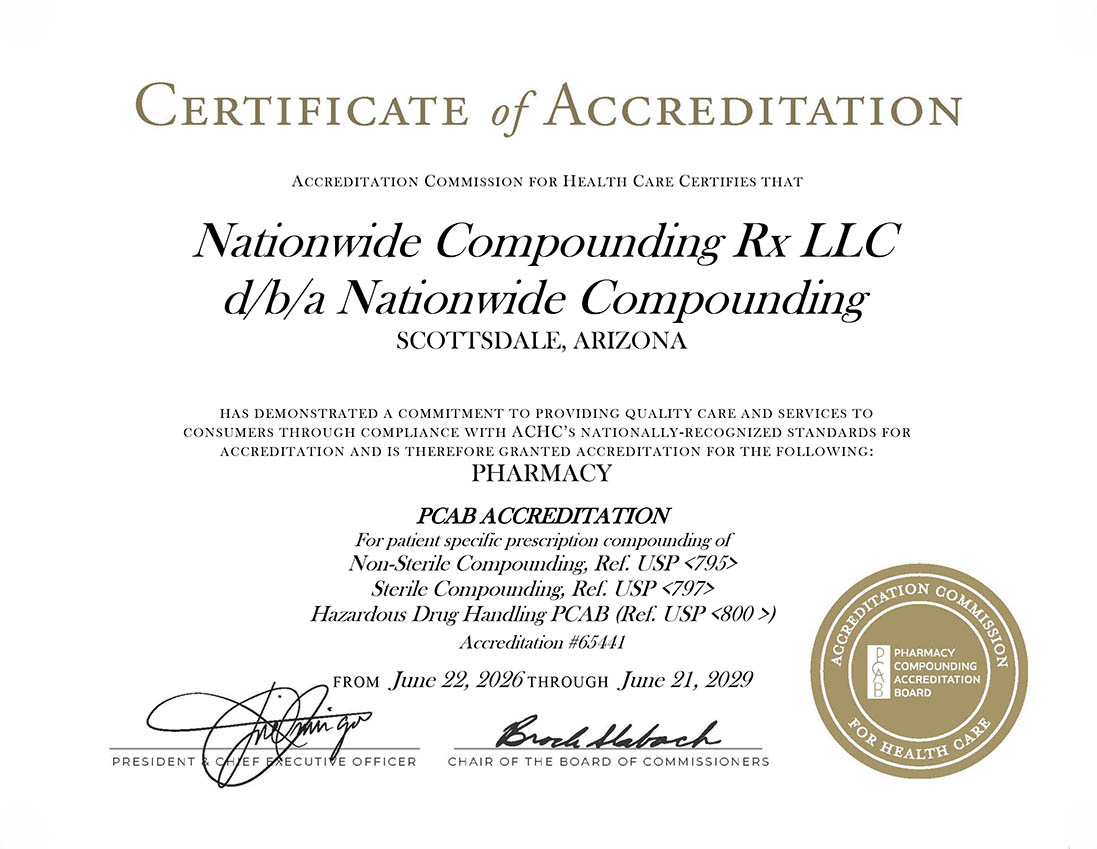
- For compounding, evaluate credentials rather than the name. Patients looking for a compounding pharmacy, as opposed to an insurance network, should check accreditation (such as PCAB), USP compliance, state licensing, and regulatory history.
The Real Problem: Even the “Right” ESPN Pharmacy Often Can’t Fill BHRT Prescriptions
Sorting out the name is only the first step. Many patients in Virginia, Maryland, and D.C. correctly identify the ESPN, submit through CVS Caremark, and then find that their prescription still is not covered.
Existing CareFirst and ESPN content explains how coverage works but rarely explains what is excluded. For patients using compounded hormones, the exclusions are what determine whether a prescription gets filled.
CVS Caremark’s Prior Authorization Exclusions for Compounded Drugs
CVS Caremark’s prior authorization criteria for compounded drug products, published on CareFirst’s provider site, set strict conditions. A compounded drug is covered only if:
- Its ingredients match FDA-approved routes of administration and dosages, and
- It does not contain excluded bulk powders, which include estriol, fentanyl, and other listed substances.
Estriol is a core ingredient in many bioidentical hormone formulas, especially combination estrogen preparations used during menopause. Because it is on the exclusion list, a large share of compounded hormone prescriptions are excluded from coverage no matter which in-network pharmacy the member uses. Changing pharmacies within the ESPN does not change the result.
Cost rules apply as well. CareFirst requires prior authorization for all compounds over $300. When compound ingredients are not covered, the member pays the full cost of those ingredients.
The same pattern applies to other compounded drugs. CareFirst does not cover compounded semaglutide or tirzepatide under any plan type, because compounded medications are not FDA-approved and fall outside its pharmacy benefit structure. CareFirst’s policy limits compounded drugs generally, not only BHRT.
Why Denials Compound the Frustration
Prior authorization denials are common across specialty medications. First-submission denial rates for specialty drugs run between 25% and 40%, and many patients expect that an initial denial can be reversed with additional paperwork.
For BHRT formulas that contain estriol or other excluded bulk powders, that expectation usually does not hold. The exclusion is a written policy, not a missing form or chart note. Additional documentation does not change the fact that an excluded ingredient is in the formula. For many patients, a final denial, rather than a successful appeal, is the realistic outcome.
What This Means for Virginia, Maryland, and D.C. Patients Specifically
The ESPN serves CareFirst’s MD, D.C., and VA service area, so this coverage gap directly affects the insurer’s core membership. Many patients in these areas have been prescribed estriol-containing BHRT, been routed through CVS Caremark, and been denied.
When these patients look outside the insurance network, they face another requirement that most BHRT marketing does not mention, and it applies specifically to Virginia.
The Virginia Nonresident Pharmacy Registration Requirement
Under Code of Virginia § 54.1-3434.2 and related Article 2.1 provisions, any out-of-state pharmacy that ships prescriptions to Virginia residents must hold a Nonresident Pharmacy Registration issued by the Virginia Board of Pharmacy. The registration must be renewed every year.
Many BHRT and compounding websites claim to “ship nationwide” without addressing state registration. A patient who orders from an unregistered out-of-state pharmacy may receive medication through a channel that does not meet Virginia law, and may not learn this until after the order.
Before ordering BHRT from any out-of-state compounding pharmacy, Virginia patients should ask: Does this pharmacy hold a current Virginia Nonresident Pharmacy Registration? A reputable pharmacy should be able to answer that question directly.
Nationwide Compounding Rx®: A Mid-Atlantic-Licensed, PCAB-Accredited Alternative
For patients whose BHRT prescriptions fall outside CVS Caremark’s prior authorization criteria, Nationwide Compounding Rx® is one option. It is a compounding pharmacy based in Scottsdale, Arizona, that prepares customized medications under individual prescriptions.
Nationwide Compounding Rx® is not affiliated with CareFirst BlueCross BlueShield, the ESPN, CVS, CVS Caremark, or any of the three “CareFirst Specialty Pharmacy” entities described above.
Accreditation and Compliance Credentials
Because the New Jersey entity’s regulatory history is public, patients comparing compounders may reasonably want to see quality credentials for other options as well. Nationwide Compounding Rx® holds:
- PCAB accreditation from the Pharmacy Compounding Accreditation Board, an independent accreditation focused on compounding quality.
- USP 800 compliance, the standard governing safe handling of hazardous drugs.
- Independent third-party testing to verify quality and consistency.
- Ingredient sourcing of high-grade chemicals exclusively from FDA-inspected and cleared vendors.
The pharmacy ships nationwide, including to Maryland, D.C., and Virginia, with availability varying by medication type and state regulations. Its website uses a tiered state map that shows where it is fully licensed, where it is licensed for non-sterile preparations only, and where licensing is pending.
BHRT Formulations Built Around Lab Results, Not PBM Exclusion Lists
Nationwide Compounding Rx® prepares customized bioidentical hormone formulations for menopause, andropause, and other hormonal imbalances. When a prescriber calls for it, these can include ingredients such as estriol that CVS Caremark’s criteria exclude from coverage.
Its formulas can be adjusted at each refill based on updated lab results. Insurance formularies, by contrast, are fixed and do not change in response to an individual patient’s labs. With an adjustable formula, the prescriber and pharmacy can change strengths and ratios as the patient’s hormone levels change.
Other features relevant to BHRT patients include:
- 1 to 2 business day turnaround, with same-day pickup available for some medications
- Multiple dosage forms, including capsules, liquids, topical creams and gels, troches, and sublingual tablets
- Allergen-conscious options free of dyes, fillers, and preservatives when needed
A Provider-Collaborative, Patient-Centered Process
The pharmacy describes its approach in four steps:
- Connect: The pharmacy establishes a working relationship with the prescriber and patient.
- Collaborate: The pharmacist and prescriber work through formulation needs, including strengths, dosage forms, and ingredients.
- Create: The pharmacy compounds the personalized preparation under accredited quality standards.
- Care: The pharmacy provides ongoing support, with refill adjustments as lab results change.
Two secure online portals support this process. The Provider Portal lets prescribers submit and manage prescriptions, track orders, and contact the pharmacy team. The Patient Portal gives patients access to account information and refill and support requests. The process is aimed at patients whose compounded prescriptions were denied or excluded by their insurer’s specialty network.
Conclusion
This article makes two main points.
First, “CareFirst Specialty Pharmacy” refers to three unrelated entities: CareFirst BlueCross BlueShield’s ESPN, run through CVS; an independent compounding pharmacy in New Jersey; and a community pharmacy in Charlotte, North Carolina. Searchers should confirm which one they are dealing with before sharing personal information or placing an order.
Second, using CareFirst’s ESPN and CVS Caremark correctly still often fails to cover compounded BHRT. Bulk-powder ingredients such as estriol are excluded under CVS Caremark’s prior authorization criteria, and that exclusion is policy, not a paperwork problem. This creates a real coverage gap for patients in Maryland, D.C., and Virginia.
Patients who understand the network rules, the naming confusion, and the specific exclusions can decide more quickly and with better information where to fill a BHRT or other compounded prescription. For mid-Atlantic patients affected by the bulk-powder exclusion, Nationwide Compounding Rx® offers an accredited, licensed option. It is not a replacement for insurance coverage in general. It addresses the specific situation where coverage is categorically unavailable.
Talk to Nationwide Compounding Rx® About Your BHRT Options
Virginia, Maryland, and D.C. patients whose compounded hormone prescriptions were denied or excluded under CareFirst and CVS Caremark can contact Nationwide Compounding Rx® to discuss formulation options with its pharmacy team.
- Phone: (480) 499-8379
- Website: nationwidecompounding.com
- Hours: Monday through Friday, 7:00 AM to 3:30 PM
Prescribers can submit and manage prescriptions through the Provider Portal. Patients can manage accounts and refill requests through the Patient Portal.
Before transferring a prescription to any compounding pharmacy, patients should confirm that the pharmacy is licensed in their state and, for Virginia residents, that it holds a current Nonresident Pharmacy Registration.
Related Posts

Choosing a compounding pharmacy in Asheville NC requires more than hometown branding—it demands legal verification. This 2026 guide walks through North Carolina's pharmacy statutes, USP <797>/<800> enforcement, and how to use the NCBOP's online portal to confirm a pharmacy's license before trusting it with your prescription.
Choosing between BHRT pellets, creams, troches, and capsules can feel overwhelming without clear facts. This 2026 guide compares how each delivery method works, what the FDA and NASEM research says, and why pharmacy quality matters most when evaluating BHRT pellets.

The Woodlands Compounding Pharmacy has served the area since 2008, offering customized medications from hormone therapy to pediatrics. This 2026 trust check breaks down the credentialing and regulatory questions patients should ask before choosing a compounder.
Most compounding pharmacy Austin Texas searches turn up PCAB badges but skip the real regulatory backbone: the Texas State Board of Pharmacy. This guide breaks down TSBP license classes, sterile compounding rule §291.133, and a 2026 FDA warning letter case, plus a document checklist for vetting any pharmacy.