What Are Bioidentical Hormones Made From? A 2026 Science Guide
Introduction: The Question Behind the Question
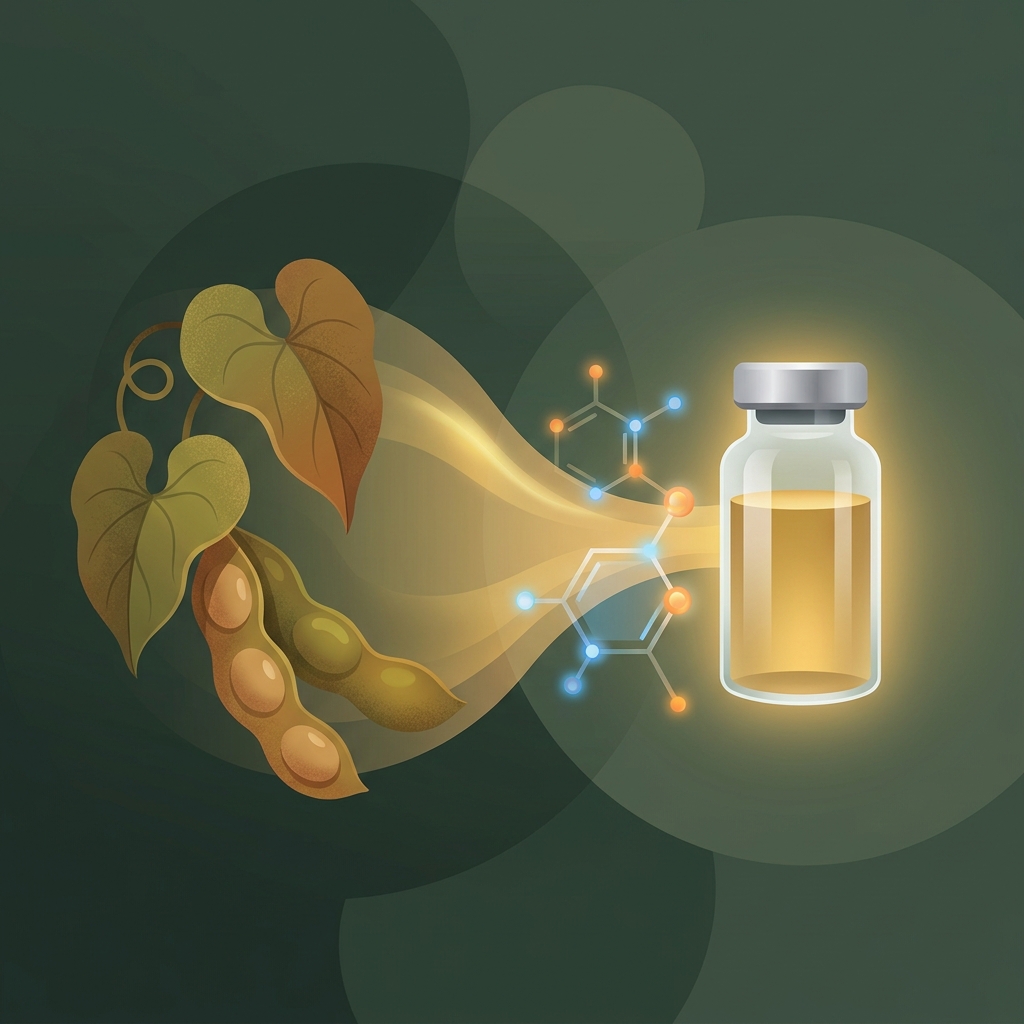
Anyone who searches for the origins of bioidentical hormones quickly finds the same answer: they come from soy or wild yam. That answer is accurate, but it is only the first step of a much longer story. A plant does not become a prescription hormone by being picked, dried, and packaged. Between the field and the pharmacy counter lies a series of chemical transformations, quality checks, and regulatory touchpoints that most consumer explanations skip.
For most patients, the search is not really about botany. The underlying questions are more personal: Is this treatment actually natural? Is it safe? How can someone know whether the pharmacy preparing it is legitimate?
This guide goes beyond the generic plant-to-lab summary. It covers the biochemistry that allows plant compounds to become human hormones (the cholesterol and mevalonate pathway), the historic Marker degradation process that made hormone synthesis practical, and the modern FDA-regulated supply chain of active pharmaceutical ingredients that stands between raw plant material and a prescribable medication. In 2026, with federal regulators continuing to scrutinize compounded hormones, transparency about sourcing has never been more relevant.
The Short Answer: Plant Precursors, Not Ready-Made Hormones
Bioidentical sex hormones, including estrogen, progesterone, and testosterone, are synthesized starting from plant sources, typically soybeans or wild yams.
There is an important clarification, however. These plants do not contain human hormones. Instead, they contain a steroidal compound called diosgenin, which can be chemically converted into molecules that are structurally identical to the hormones the human body produces.
The phrase “chemically converted” is doing a great deal of work in that sentence. Understanding what that conversion involves is the key to understanding, and trusting, the final product.
The Deeper Science: Why Plants and Humans Share the Same Chemical Backbone
Most explanations never address a basic puzzle: why can a compound from a yam become a human hormone at all? The answer lies in molecular biology that plants and animals share.
The Cholesterol/Mevalonate Pathway Explained
According to peer-reviewed plant biochemistry research published through the National Institutes of Health, diosgenin biosynthesis in plants originates from cholesterol. That cholesterol is itself built from small five-carbon building blocks called isopentenyl pyrophosphate (IPP) and dimethylallyl pyrophosphate (DMAPP), which are produced through the cytosolic mevalonate (MVA) pathway.
Humans also produce their steroid hormones from cholesterol through a related biosynthetic route. This shared ancestry is the reason plant-derived steroids can be converted into human-identical hormones in a laboratory.
A helpful way to picture it: plants and humans use the same chemical alphabet but write different sentences. Both start with the four-ring steroid backbone built from cholesterol. Plants arrange that backbone into compounds like diosgenin, while the human body arranges it into estradiol, progesterone, and testosterone. Chemists can “edit” the plant’s sentence into the human one because the underlying letters are the same.
How Diosgenin Forms in Plants
In its natural state, diosgenin is a steroidal saponin. It is linked to sugar molecules at two positions on its structure (known as C-3 and C-26) through chemical connections called glycosidic bonds.
This detail matters. Inside the plant, diosgenin is bound to carbohydrates and is not usable as a hormone. It must be chemically liberated from those sugars and then restructured in a laboratory before it resembles anything the human body recognizes as estrogen or progesterone.
This also explains why over-the-counter “natural” wild yam creams cannot deliver hormonal effects on their own. The raw plant compound simply is not a hormone.
Why This Shared Chemistry Matters for “Bioidentical” Claims
The science points to a clear conclusion. “Bioidentical” does not mean “untouched by a lab.” It means the final molecule matches the structure of the hormone the body naturally produces.
Getting from diosgenin to that final molecule was not obvious or easy. It required one of the most important breakthroughs in twentieth-century chemistry.
From Yam to Hormone: The Marker Degradation Breakthrough
The story of how wild yams became the foundation of hormone medicine is rarely told in patient education, yet it explains nearly everything about where bioidentical hormones come from today.
Russell Marker and the Discovery That Changed Hormone Medicine
In the 1940s, American chemist Russell Earl Marker perfected a method for synthesizing progesterone from diosgenin found in wild yam. According to the Science History Institute, Marker focused on two Mexican yam species: Dioscorea macrostachya, which was easier to harvest, and D. barbasco, which was richer in diosgenin. He sourced plant material directly from Mexico.
This was not a minor footnote in the history of hormone therapy. Diosgenin extracted from Mexican yam became the main precursor for the synthesis of most steroidal drugs, including hormonal contraceptives and corticosteroid anti-inflammatory medications. Marker’s work is widely regarded as the founding moment of the modern steroid hormone industry.
The Chemical Conversion Process
The method became known as the Marker degradation. In accessible terms, it is a multi-step series of laboratory chemical transformations that strips away the sugar-related side structures and restructures the diosgenin backbone into progesterone.
This is a genuine chemical synthesis, not an extraction. Progesterone does not exist in the yam waiting to be squeezed out. It has to be built in a lab from the plant’s raw steroid framework.
How This Made Hormone Therapy Commercially Viable
Before Marker’s process, hormones were extraordinarily expensive to produce. His method reduced the price of progesterone from roughly $80 per gram in early 1944 to about $2 per gram by 1951.
That dramatic drop in cost transformed hormone therapy from a laboratory curiosity into a widely accessible medical treatment. The same affordability later helped make the birth control pill possible, reshaping medicine and society alike.
From Wild Yam to Soybeans: Why Modern Sourcing Shifted
Progesterone continued to be manufactured from wild yam for decades until a cheaper, more scalable raw material was found in cultivated soybeans.
This history explains why modern literature refers to both wild yam and soy as “sources” of bioidentical hormones. They serve the same role as plant-based steroid precursors, simply in different eras and supply chains.
Debunking the “Natural” Myth
The word “natural” causes more confusion around bioidentical hormones than almost any other term. The truth sits in a nuanced middle ground: these hormones are neither as natural as some marketing suggests nor as artificial as some critics imply.
Why the Body Can’t Make This Conversion Itself
While diosgenin can be chemically converted into progesterone in a lab, the human body cannot perform this conversion on its own. The body lacks the specific chemical machinery to transform plant diosgenin into human hormones.
The practical implication is significant. Eating soy or yams, or applying over-the-counter wild yam creams, does not raise hormone levels. This remains one of the most common and persistent misconceptions in women’s health.
Processed in a Lab: What “Natural Origin” Really Means
Bioidentical hormones are often marketed as “natural” because their precursors come from plants. Yet they are processed and chemically altered in a lab, which means they are not purely natural in the way marketing sometimes implies.
Cleveland Clinic states the point plainly: although plant-derived products are often advertised as natural choices, once they are altered in a lab, they are no longer considered natural.
This should not alarm patients. Laboratory processing is not a red flag. It is the same standard required to produce any precise, consistently dosable medication. In fact, it is the lab work that makes accurate dosing possible.
“Bioidentical” Is a Molecular Term, Not a Regulatory One
“Bioidentical” is not an official FDA or regulatory designation. It is a descriptive term for lab-made hormones that are chemically identical in structure to the hormones naturally produced in the human body.
Because the word describes molecular structure rather than regulatory approval, patients need to look elsewhere to judge quality and safety. That is where the supply chain comes in.
From Raw Precursor to Prescribable Medicine: Inside the Modern Supply Chain
Saying “soy becomes a hormone” skips the most important part of the journey. Between diosgenin extraction and a safe, prescribable hormone lie several manufacturing steps, quality checks, and regulatory safeguards.
What Happens After Diosgenin Extraction: API Manufacturing
After chemical conversion, the resulting compound becomes an Active Pharmaceutical Ingredient (API), manufactured to pharmaceutical-grade purity standards. Examples include:
- Estradiol USP
- Progesterone USP
- Testosterone USP
These are the same active ingredients found in FDA-approved commercial drugs. While a finished compounded preparation is not individually FDA-approved, the active ingredients inside it are pharmaceutical-grade substances meeting United States Pharmacopeia (USP) standards.
FDA Oversight of Active Pharmaceutical Ingredients
This regulatory nuance is often misunderstood. The FDA has oversight of the integrity and safety of the APIs used in compounded preparations, even though it does not approve the finished compounded product.
In other words, the hormone substance used in a compounded cream or capsule is FDA-regulated. For cautious patients, this closes an important gap in the “is this safe?” question.
Certificates of Analysis and Ingredient Vetting
Industry best practice calls for APIs to come from FDA-registered or otherwise trusted suppliers, accompanied by certificates of analysis (COAs) verifying identity, strength, and purity.
Quality-focused pharmacies go further. They quarantine incoming ingredients until those ingredients pass internal checks, then store them under controlled conditions to preserve potency. Many patients never realize this level of rigor exists behind a single prescription.
How a PCAB-Accredited Pharmacy Chooses Its Suppliers
Nationwide Compounding Rx®, a PCAB-accredited compounding pharmacy in Scottsdale, Arizona, offers a real-world example of this vetting process. The pharmacy sources high-grade chemicals exclusively from FDA-inspected and cleared vendors.
That sourcing standard is supported by additional quality infrastructure:
- Independent third-party testing to verify quality and consistency
- USP <800> compliance for the safe handling of hazardous drugs
- Modern, high-tech methodologies designed for accuracy, consistency, and speed
This vendor-vetting layer is precisely what is missing from most consumer explanations of where bioidentical hormones come from. The plant is the starting point, but the supplier and pharmacy determine the quality of what a patient actually receives.
FDA-Approved vs. Compounded Bioidentical Hormones: Know the Difference
Consumer content frequently blurs two distinct categories. A clear framework helps.
FDA-Approved Bioidentical Products
Several FDA-approved products contain hormones identical in structure to those made by the body. Examples include estradiol-based products such as Estrace, Climara, and Vivelle, and progesterone in Prometrium.
These products differ from compounded versions mainly in regulatory pathway and standardized dosing, not necessarily in molecular structure.
Compounded BHRT: Why Patients and Providers Choose It
Compounded bioidentical hormone replacement therapy exists for legitimate clinical reasons, including:
- Custom dosing when standard commercial strengths do not fit a patient’s needs
- Alternative delivery forms, such as creams, troches, or capsules
- Allergen-free formulations without certain dyes, fillers, or preservatives
- Personalized adjustment based on lab results
Nationwide Compounding Rx® builds this last point into its BHRT service, with formulas that can be adjusted at each refill based on updated lab work. The demand is substantial: an estimated 1 to 2.5 million U.S. women use compounded bioidentical hormone therapy annually.
What NAMS and NASEM Say About Safety
A balanced discussion requires acknowledging the official cautions. The FDA states that it does not have evidence that compounded bioidentical hormones are safe and effective, or safer or more effective than FDA-approved hormone therapy.
The North American Menopause Society (NAMS), in its 2022 position statement, flagged safety concerns with compounded BHRT, including minimal government regulation and monitoring, the risk of overdosing or underdosing, and the potential presence of impurities or lack of sterility in some cases.
The 2020 National Academies of Sciences, Engineering, and Medicine (NASEM) report found insufficient evidence to support broad use of compounded bioidentical hormones. It raised concerns about dose inconsistency, noting that some compounded pellets delivered supraphysiologic testosterone levels, and recommended restricting compounding to documented medical need.
These findings are not a reason to avoid compounded BHRT outright. They are the reason ingredient sourcing and pharmacy accreditation matter so much.
2026 Regulatory Outlook: What’s Changing for Compounded Hormones
The FDA has been reviewing whether to add estradiol, estriol, and progesterone to its “Difficult to Compound” list. As of 2026, this remains a live, developing regulatory issue.
In plain terms, such a designation could bring tighter restrictions or additional requirements for pharmacies compounding these specific hormones. The final outcome is still uncertain.
For patients, the practical takeaway is straightforward. Choosing a pharmacy that already operates at a high compliance bar, with PCAB accreditation and adherence to USP <795>, <797>, and <800> standards, offers the best protection against regulatory disruption.
How to Vet a Compounding Pharmacy Before Starting BHRT
Understanding the science and regulation is valuable, but the real payoff is knowing what to look for.
Questions to Ask About Ingredient Sourcing
Patients can use this short checklist when speaking with a prescriber or pharmacy:
- Does the pharmacy source APIs from FDA-registered or FDA-inspected vendors?
- Can the pharmacy provide or confirm certificates of analysis for its ingredients?
- Does the pharmacy conduct independent third-party testing of its preparations?
Supplier transparency should be treated as a baseline standard, not a bonus. A reputable pharmacy will welcome these questions.
Why PCAB Accreditation Matters
PCAB-accredited compounding pharmacy status is held by fewer than 1% of pharmacies in the United States. That rarity makes it a meaningful differentiator rather than a marketing formality.
Accreditation involves on-site visits from industry-expert surveyors who audit specific areas of performance. It also requires annual revalidation to ensure continued compliance, with a level of rigor comparable to FDA regulation.
Nationwide Compounding Rx® holds PCAB accreditation and is USP <800> compliant. These are concrete credentials patients can verify rather than take on faith.
USP Compliance and Third-Party Testing as Additional Safeguards
All compounding pharmacies must meet USP <795>, <797>, and <800> standards along with state licensing requirements, and they are subject to State Pharmacy Board inspections for safety, sterility, and traceability.
Independent third-party testing adds a further layer of verification beyond a pharmacy’s internal checks. It helps confirm that what appears on the label matches what is actually in the preparation.
Conclusion
The journey of a bioidentical hormone begins with diosgenin in soybeans or wild yams. It is made possible by the cholesterol and mevalonate biochemistry that plants and humans share, and by Russell Marker’s historic laboratory conversion process. Today, that journey continues through FDA-regulated API manufacturing and the careful vetting performed by accredited compounding pharmacies.
The balanced takeaway is clear. Bioidentical hormones are plant-derived in origin but lab-synthesized in reality. That is not a weakness. It is what allows for precision, purity, and consistent dosing.
The most important safety question is not “Is it natural?” The better question is “Who is sourcing and compounding it, and how rigorously are they held accountable?”
Talk to a PCAB-Accredited Compounding Pharmacy About BHRT Options
Patients considering bioidentical hormone therapy should start with a conversation with their prescriber about personalized, lab-adjusted formulations.
Nationwide Compounding Rx® supports that process with:
- PCAB accreditation, a distinction held by fewer than 1% of U.S. pharmacies
- USP <800> compliance
- High-grade ingredients sourced exclusively from FDA-inspected and cleared vendors
- Independent third-party testing for quality and consistency
- Refill-based dose adjustments informed by updated lab results
- 1 to 2 business day turnaround and nationwide shipping (availability varies by medication type and state regulations)
Providers and patients can begin the Connect, Collaborate, Create, Care process by contacting the pharmacy directly or through its secure Provider and Patient Portals.
Nationwide Compounding Rx®
14000 N. Hayden Rd., Suite 104, Scottsdale, AZ 85260
Phone: (480) 499-8379
Website: nationwidecompounding.com
Hours: Monday through Friday, 7:00 AM to 3:30 PM
Related Posts
North Carolina's compounding pharmacy rules have tightened significantly since 2023, directly affecting anyone searching for a triangle compounding pharmacy. This guide breaks down the 2026 regulatory landscape and gives Triangle-area patients a practical checklist for vetting licensed, PCAB-accredited options in Raleigh-Durham-Chapel Hill.

Confused by search results for "coastal compounding pharmacy"? At least five unrelated businesses share similar names across four states. This guide helps you find the right one and shows how to evaluate any compounding pharmacy's safety and quality standards.

Searching for a compounding pharmacy in Houston, Texas? This 2026 guide breaks down TSBP regulations, sterile compounding rules, and GLP-1 enforcement changes shaping the market. Get a practical framework to vet any compounder with confidence.

PantheRx Specialty Pharmacy is a trusted name in rare disease treatment, but its model focuses narrowly on orphan drug delivery. Discover why many patients pair it with a compounding pharmacy to manage side effects, dosing, and comorbidities in 2026.