University Compounding Pharmacy San Diego: 2026 Accreditation Guide
University Compounding Pharmacy San Diego: What You Need to Know in 2026
For anyone searching for University Compounding Pharmacy in San Diego, here is the direct answer. University Compounding Pharmacy (UCP) is a real, independently owned compounding pharmacy at 1875 3rd Ave, San Diego, CA 92101, in the Bankers Hill area just north of downtown.
UCP was founded in 1993 by brothers John and Joe Grasela, who moved the business from Detroit, Michigan to San Diego. As of 2026, the pharmacy has operated for roughly 33 years, making it one of the longer-running independent compounders in Southern California.
This guide is organized into four parts:
- Part 1 confirms UCP’s identity, specialties, and stated credentials.
- Part 2 separates the San Diego pharmacy from similarly named entities.
- Part 3 offers a framework for verifying any compounding pharmacy’s accreditation and compliance.
- Part 4 explains when an out-of-state alternative, such as Nationwide Compounding Rx®, may be a better fit, and when it is not.
The guide relies on documentation rather than marketing. Every pharmacy’s claims, including those of the companies it names, are treated as items to verify before they are trusted.
University Compounding Pharmacy (UCP) San Diego: Location, Specialties, and PCAB Status
Business profile at a glance:
- Name: University Compounding Pharmacy (UCP)
- Address: 1875 3rd Ave, San Diego, CA 92101
- Founded: 1993
- Better Business Bureau listing: Describes the company as offering hormone therapy, urology, ophthalmology, dermatology, and holistic medicine services
Core specialties include:
- Bioidentical hormone replacement therapy (BHRT)
- Dermatology compounds
- Urology preparations, including Tri-Mix and Caverject-related therapies
- Interstitial cystitis treatments
- Compounded semaglutide and tirzepatide
UCP’s own website says its semaglutide and tirzepatide compounds are “Also available in CA.” As a California-resident pharmacy, UCP can serve patients in its home state, which matters more each year as California tightens its rules for out-of-state pharmacies.
UCP’s marketing states that it holds PCAB accreditation for both sterile and non-sterile compounding. The pharmacy also says it delivers to roughly 41 to 44 states, depending on which page or year is referenced, and reports a 24-hour average prescription turnaround.
Reputation signals are mixed. UCP holds a 3.6-star Yelp rating across more than 110 reviews. Some reviewers describe the service as “OUTSTANDING.” Others complain of a “corporate feel” and say they felt “lost in the masses.”
UCP also has real strengths. Third-party industry roundups, including Newtropin’s 2026 list of the top 15 compounding pharmacies for hormone replacement therapy, describe UCP as a San Diego institution with deep expertise in dermatological and hormone compounding. Its decades of specialty experience are a genuine asset.
Clearing Up the Brand Confusion: San Diego UCP vs. the Michigan UCP/MediVera Rebrand
A common source of confusion is that two unrelated pharmacies have used the name “University Compounding Pharmacy.”
- The San Diego UCP was founded in 1993 and is located at 1875 3rd Ave.
- A separate Michigan pharmacy of the same name was founded in 1999 in Troy, Michigan. It rebranded to MediVera in 2024 and has no connection to the San Diego business.
This causes practical problems. A patient might read a review, a licensing record, or an accreditation claim tied to the Michigan company and assume it applies to the San Diego pharmacy. Searchers who think “UCP” is one national brand are the most likely to make this mistake.
A third name adds to the mix. UC San Diego’s Skaggs School of Pharmacy and Pharmaceutical Sciences, established in 2002, sometimes appears in the same search results. It is an academic institution and is not affiliated with University Compounding Pharmacy.
Practical takeaway: Anyone researching “University Compounding Pharmacy” should confirm which entity a source describes, the San Diego pharmacy or the former Michigan pharmacy now called MediVera, and should check the street address before trusting any review, license record, or accreditation claim.
How to Independently Verify a Compounding Pharmacy’s Accreditation and Compliance (Using UCP as a Worked Example)
The steps below work for any compounding pharmacy, not only UCP. They rest on three areas of due diligence:
- Accreditation: confirming PCAB status independently
- Compliance: confirming adherence to the relevant USP chapters and state licensure
- Sourcing and testing: confirming where ingredients come from and how finished compounds are tested
Step 1: Verify PCAB Accreditation Directly
PCAB stands for the Pharmacy Compounding Accreditation Board. Its accreditation program is administered through ACHC (Accreditation Commission for Health Care), so a pharmacy’s status is something that can be checked independently, rather than taken solely from the pharmacy’s own marketing page.
PCAB accreditation is uncommon. Fewer than 1% of U.S. pharmacies hold it, with roughly 68 actively PCAB-accredited pharmacies nationally, which makes it a meaningful differentiator worth confirming. For a deeper look at what this credential actually covers, see this explanation of compounding pharmacy accreditation.
What to verify:
- Request the pharmacy’s current accreditation certificate, including the expiration date.
- Confirm that the accreditation covers the type of compounding needed (sterile, non-sterile, or both).
- Check with ACHC directly if anything is unclear.
- Treat a logo on a website as a claim, not proof.
Applied to UCP: UCP advertises PCAB accreditation for sterile and non-sterile compounding. Patients and prescribers should request documentation that confirms this claim before relying on it, as they would with any other pharmacy.
Step 2: Confirm USP <795>, <797>, and <800> Compliance
The United States Pharmacopeia (USP) publishes the standards that govern compounding:
- USP <795> covers non-sterile compounding, such as creams, capsules, and oral liquids.
- USP <797> covers sterile compounding, such as injectables.
- USP <800> covers the safe handling of hazardous drugs.
Documentation worth requesting:
- The most recent compliance audit summary
- State board of pharmacy inspection reports
- Environmental monitoring results for sterile compounding areas
Many pharmacies do not publish detailed USP compliance documentation on their websites, and UCP’s public site is no exception. Pharmacies that share this documentation readily stand apart from those that do not, and strong quality control practices in a compounding pharmacy are often a sign of this transparency.
Licensure should also be confirmed independently. For California pharmacies, the California Board of Pharmacy license search shows whether a license is active and whether it carries any restrictions or disciplinary history. Most other states offer similar lookup tools. For reference, FDA records on compounding facility inspections and actions list other San Diego-area 503A facilities, such as La Vita Compounding Pharmacy, as examples of what public inspection data can look like.
Step 3: Scrutinize Sourcing and Testing Claims
Three things are worth examining:
- API sourcing: whether active pharmaceutical ingredients come from FDA-inspected or FDA-registered vendors
- Independent testing: whether a third-party lab tests potency and, for sterile products, sterility
- Batch documentation: whether testing records can be traced to specific lots
A useful direct question is: “Can you provide a Certificate of Analysis or third-party test results for this compound?”
This step matters most for GLP-1 medications. In 2026, compounded semaglutide and tirzepatide have faced heightened FDA scrutiny:
- March 2026: The FDA issued 30 warning letters to telehealth companies, signaling escalating enforcement.
- April 1, 2026: The FDA clarified its enforcement policy on compounded drugs that are “essentially a copy” of approved products. In the same month, it proposed excluding semaglutide, tirzepatide, and liraglutide from the 503B bulks list.
- June 2026: The FDA issued 25 more warning letters.
- September 18, 2026: The FDA issued a warning letter addressing tirzepatide and semaglutide combination products.
The patient-specific 503A compounding pathway, which both UCP and Nationwide Compounding Rx® use, remains in place. Even so, sourcing transparency is especially important for these compounds.
Documentation should be requested in writing. If a pharmacy refuses or gives vague answers, that should be treated as a red flag, regardless of which pharmacy is being evaluated.
Why California’s Regulatory Landscape Changes the Calculus for Out-of-State Pharmacies
Several recent California rules explain why patients there have fewer options than patients elsewhere.
October 1, 2025: New California Board of Pharmacy rules took effect. They redefine what counts as “essentially a copy” of a commercially available drug and add documentation requirements for non-resident pharmacies, meaning pharmacies located outside California that ship into the state.
July 1, 2026 (AB 1503): Every non-resident pharmacy shipping into California must designate a California-licensed pharmacist as its Pharmacist-in-Charge (PIC). The California Board of Pharmacy’s policy statement says a non-resident pharmacy must identify a California-licensed pharmacist to serve in this role.
Additional requirements for sterile compounders:
- A separate Non-Resident Sterile Compounding Pharmacy License
- An on-site inspection, with the pharmacy paying the Board’s inspection costs before the license is issued
- An $8,500 fee
California is widely regarded in 2026 as one of the strictest enforcement states for non-resident pharmacy shipping, along with Texas, Florida, and New York.
What this means for patients: UCP is a California-resident pharmacy, so it does not face these non-resident requirements in the same way. For California patients, that is a lasting advantage that out-of-state pharmacies cannot easily match.
When an Out-of-State Alternative Makes Sense: Introducing Nationwide Compounding Rx®
For patients and prescribers in California, UCP’s in-state status is a real advantage under the 2026 rules. Outside California, the comparison looks different.
Nationwide Compounding Rx® (NCRx) is a 503A compounding pharmacy in Scottsdale, Arizona. It serves 46 states plus Washington, D.C., and focuses on BHRT, GLP-1 and peptide support, pain management, dermatology, pediatrics, and sports medicine. More on the company’s background is available on its who we are page.
NCRx’s stated credentials:
- PCAB accredited, through ACHC
- USP <800> compliant
- More than 40 years of combined team experience
- High-grade chemicals sourced from FDA-inspected and cleared vendors
- Independent third-party testing to verify quality and consistency
- Both sterile and non-sterile compounding capabilities
Operational features:
- 1 to 2 business day turnaround, with same-day pickup available for some medications
- A secure Provider Portal for submitting and tracking prescriptions, and a secure Patient Portal for refills and support
- A provider partnership model built around four steps: Connect, Collaborate, Create, Care
- BHRT formulas that can be adjusted at each refill based on updated lab results
- Allergen-free options (no dyes, fillers, or preservatives) and pediatric flavors
Where NCRx does not ship: NCRx does not currently ship to California, Alabama, North Carolina, or South Carolina. The company names the California Board of Pharmacy rule changes effective October 1, 2025 as the reason for its decision not to serve California.
Stating these limits openly is part of what sets NCRx apart. A clear list of the states a nationwide-shipping compounding pharmacy serves, and why it skips others, is more useful to patients than a broad “we ship everywhere” claim.
Decision Framework: Which Pharmacy Fits Your Situation?
For patients and prescribers in California:
UCP, or another pharmacy that is California-licensed and compliant with the non-resident rules, remains the practical choice. AB 1503 and the sterile licensing requirements limit which out-of-state pharmacies can legally serve the state.
For patients and prescribers in one of the other 46 states or D.C.:
NCRx is a PCAB-accredited, USP <800>-compliant option worth evaluating alongside local or regional pharmacies.
For everyone:
Steps 1 through 3 should be applied to whichever pharmacy is chosen. Accreditation, compliance, and sourcing should be verified before any prescription is filled.
Other San Diego compounding pharmacies deserve the same scrutiny:
- San Diego Compounding Pharmacy (United Drugs)
- San Diego Optimum Compounding Pharmacy (Poway)
- Good Pharma Compounding Pharmacy
- La Vita Compounding Pharmacy
Conclusion: Verify First, Choose with Confidence
Key takeaways:
- UCP is legitimate. It is a long-standing San Diego pharmacy at 1875 3rd Ave, founded in 1993.
- UCP is not MediVera. The Michigan pharmacy that once shared its name rebranded to MediVera in 2024 and is a separate company. UC San Diego’s pharmacy school is also unrelated.
- Every claim should be verified. Accreditation and compliance statements from any pharmacy should be checked using the three-step framework in this guide.
- California’s rules shape the options available. Regulations effective October 1, 2025 and July 1, 2026 explain why some well-documented pharmacies, such as NCRx, choose not to serve California, while resident pharmacies like UCP are well positioned to.
A trustworthy compounding pharmacy in 2026 is open about both its strengths and its limits, and backs its claims with documents rather than marketing alone.
Next Steps: Verify Your Compounding Pharmacy or Explore a Documented Alternative
For California patients and prescribers:
UCP can be contacted directly, or the California Board of Pharmacy license lookup can be used, to confirm current accreditation and licensure before filling a prescription.
For patients and prescribers in the other 46 states and D.C.:
Nationwide Compounding Rx®’s PCAB-accredited, USP <800>-compliant services can be reviewed through the following:
- Website: nationwidecompounding.com
- Phone: (480) 499-8379
- Hours: Monday through Friday, 7:00 AM to 3:30 PM (Arizona time)
- Prescribers: The Provider Portal can be used to submit prescriptions, track orders, and ask documentation questions.
- Patients: The Patient Portal can be used to manage refills and request support.
Before choosing any pharmacy, the following should be requested in writing:
- A current accreditation certificate with its expiration date
- A compliance audit summary
- Sourcing and third-party testing documentation for the specific compound in question
Related Posts
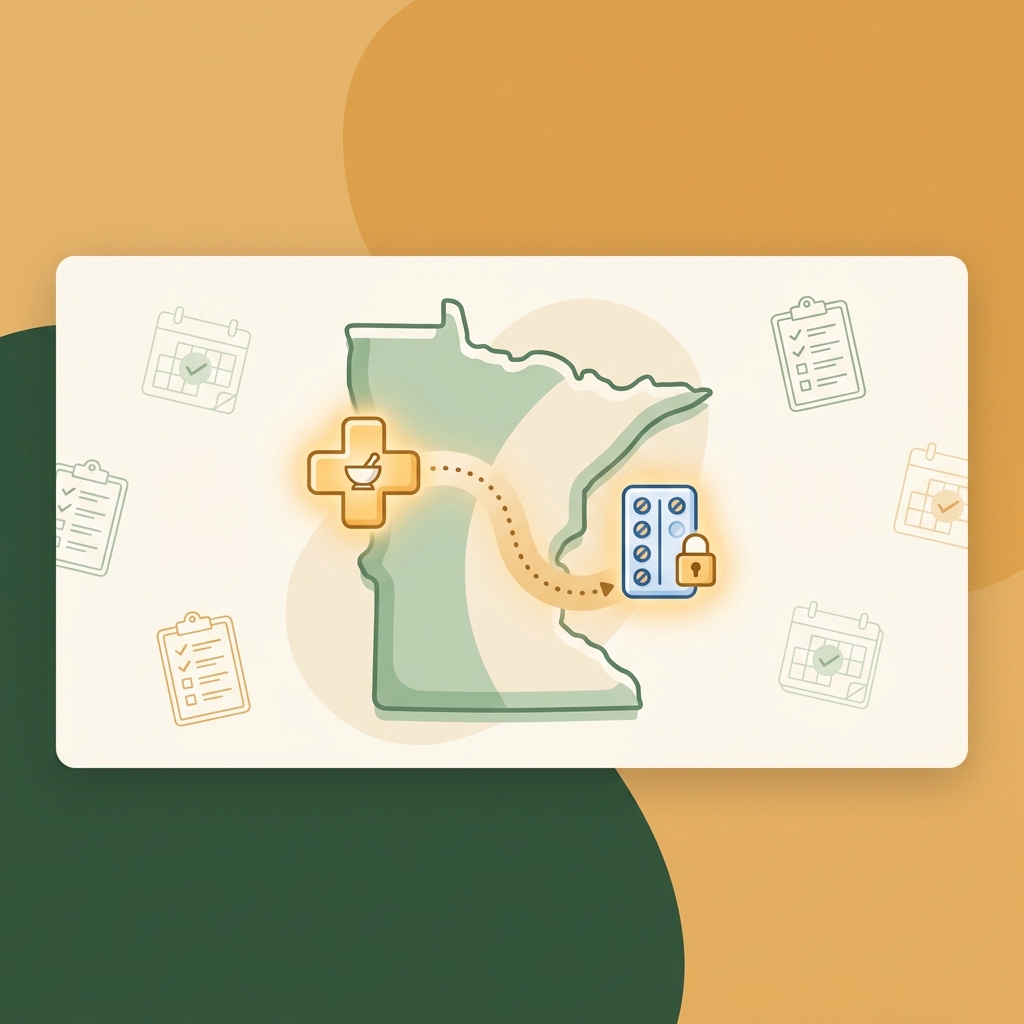
Fairview Specialty Pharmacy will be out-of-network for UnitedHealthcare Medicare Advantage starting January 1, 2027, affecting up to 125,000 Minnesota patients. This guide breaks down what specialty medication users need to know before the enrollment deadline and how to build a backup plan.
Senderra Specialty Pharmacy is a major player in dispensing biologic therapies for dermatology, rheumatology, and oncology patients. This article breaks down what Senderra does well, where patients often hit friction, and how PCAB-accredited compounding pharmacies can complement—not replace—biologic treatment plans in 2026.

Ever wondered what are bioidentical hormones made from? This 2026 guide goes beyond 'soy or wild yam' to explain the biochemistry, the Marker degradation process, and the regulated supply chain behind every prescription. Learn how plant compounds become identical to human hormones.
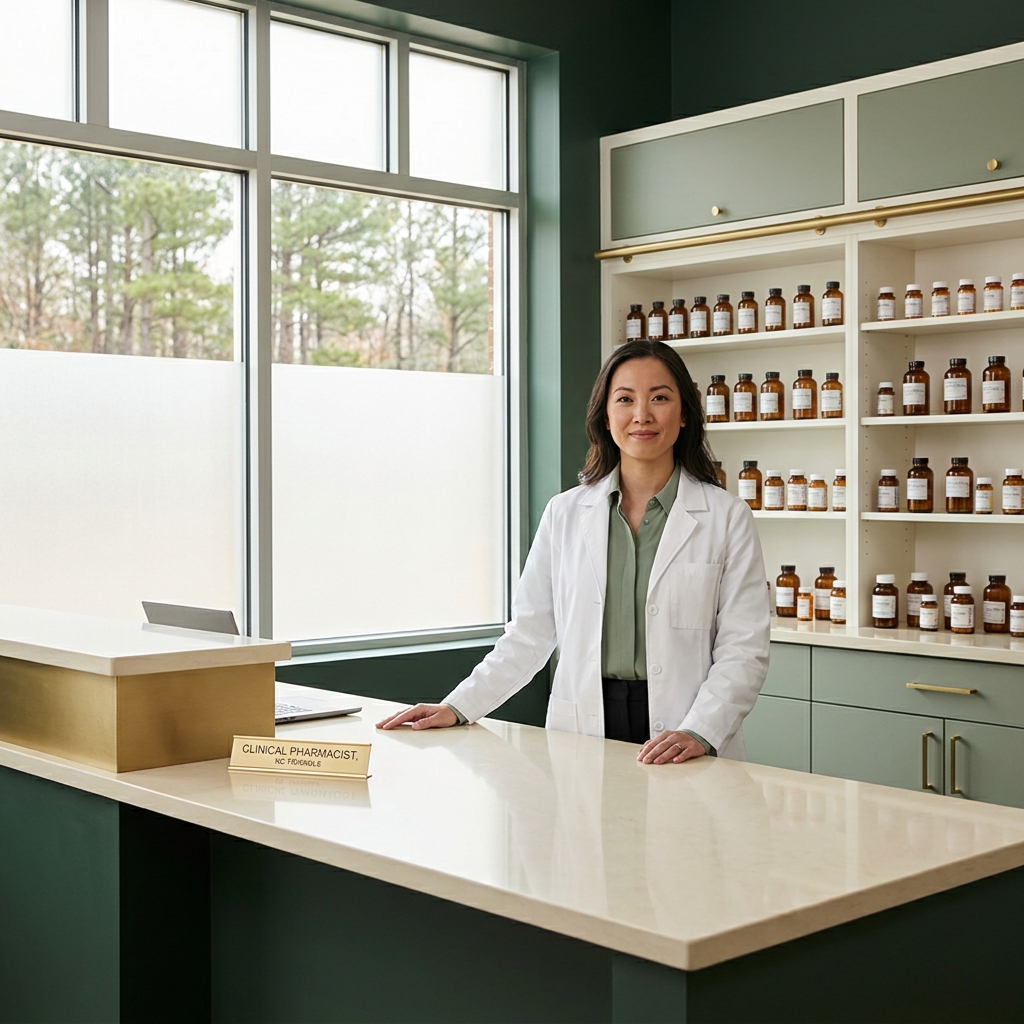
North Carolina's compounding pharmacy rules have tightened significantly since 2023, directly affecting anyone searching for a triangle compounding pharmacy. This guide breaks down the 2026 regulatory landscape and gives Triangle-area patients a practical checklist for vetting licensed, PCAB-accredited options in Raleigh-Durham-Chapel Hill.