
Alternative to Commercial Medication: When Compounding Is the Answer
Introduction: When the Pharmacy Shelf Lets You Down
Picture the moment: a patient stands at the pharmacy counter, prescription in hand, only to hear that the medication is unavailable, has been discontinued, or is triggering an uncomfortable reaction because of a dye or filler they never thought to question. It is a frustrating, disorienting experience that leaves many people feeling as though the healthcare system has quietly closed a door on them.
The truth is that the commercial pharmaceutical system, for all its scale and sophistication, was never designed to serve every individual. Mass manufacturing optimizes for the majority. That approach works beautifully for most patients, but it inevitably leaves a meaningful number of people without a viable option for their specific biology, dosage requirements, or physical ability to take a medication.
This is where compounding becomes the answer. Compounding is not a workaround or a gray-market shortcut. It is a legitimate, FDA-recognized pathway with a long and respected history in American pharmacy. When a commercial product cannot meet a genuine medical need, a licensed pharmacist can prepare a customized medication tailored to that patient.
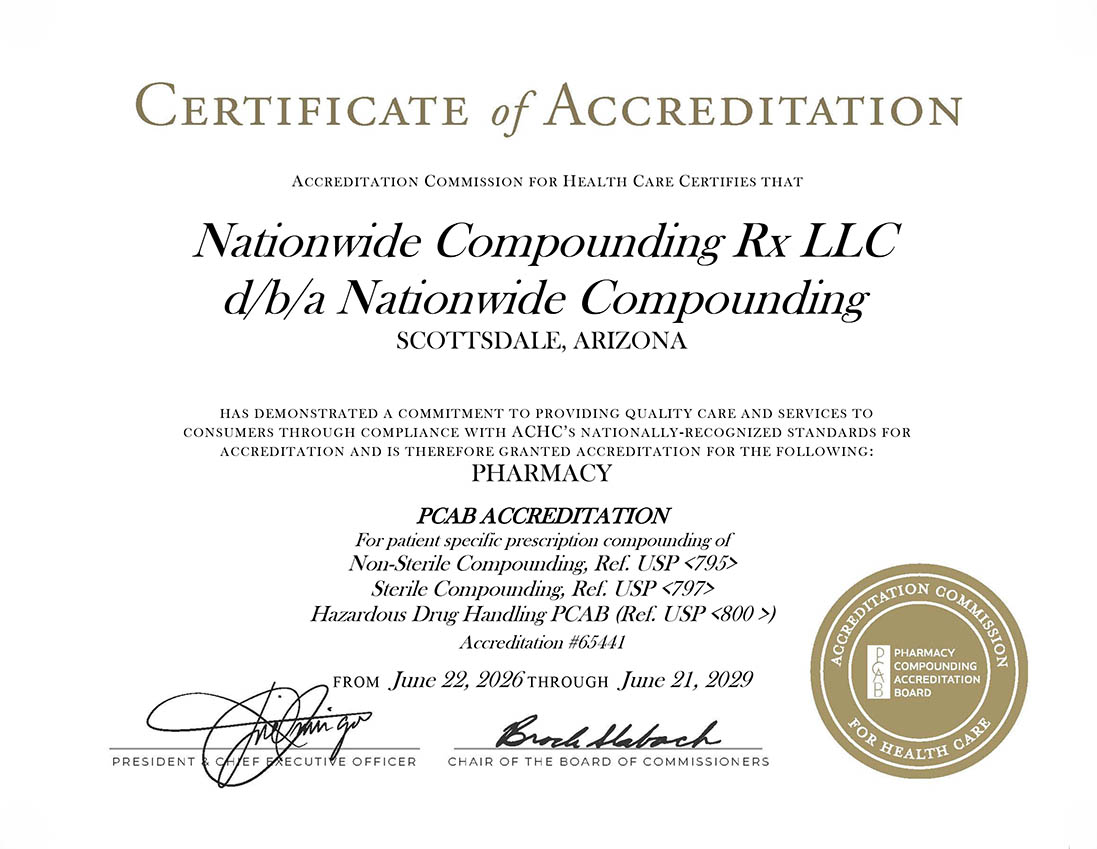
This article walks through the four core situations where compounding becomes the right solution: allergies to inactive ingredients, discontinued drugs, unavailable dose forms, and active drug shortages. Throughout, Nationwide Compounding Rx®, a PCAB-accredited pharmacy based in Scottsdale, Arizona, serves as a trusted reference point for what safe, compliant compounding looks like.
Why Commercial Medications Fail Some Patients
There is a fundamental tension at the heart of modern pharmaceutical production. Drug companies manufacture medications at enormous scale, designing each product to satisfy the broadest possible patient population. That efficiency keeps costs down and supply steady, but it also means anyone who falls outside the average is left underserved.
The numbers tell the story. Compounded prescriptions account for an estimated 1 to 3 percent of all U.S. prescriptions, according to the Alliance for Pharmacy Compounding’s 2025–2026 Snapshot. That may sound small, but it represents a substantial population of patients whose medical needs simply cannot be met by commercially available products.
For anyone who has felt failed by a standard medication, this is important validation: the problem is systemic, not personal. The demand is real and growing. The U.S. compounding pharmacy market was valued at roughly $6.98 to $7.42 billion in 2025–2026 and is projected to reach $12.79 billion by 2035. That kind of expansion reflects genuine, widespread need for personalized medication solutions.
The following four scenarios illustrate exactly when and why compounding steps in.
Scenario 1: Allergies to an Inactive Ingredient
Commercial drugs contain far more than their active ingredient. Fillers, dyes, binders, lactose, gluten, and preservatives are all standard components, and any one of them can trigger an allergic or intolerant reaction in a sensitive patient.
The experience can be maddening. A patient knows their body is reacting to something, yet they are often told the medication is fine because the active ingredient is not the culprit. That dismissal is both common and deeply frustrating.
The FDA itself recognizes compounding as appropriate precisely in this situation, noting that a drug may be compounded for a patient who has an allergy to a certain dye and needs the medication made without it. A 2023 study reinforced the value of this approach, finding that 85 percent of patients with allergies to commercial drug fillers experienced better adherence and fewer side effects after switching to compounded versions.
A compounding pharmacy like Nationwide Compounding Rx® can formulate the same active ingredient while removing the offending excipient entirely, eliminating lactose, dyes, gluten, or sugar as needed. This process requires a valid prescription and close collaboration among the patient, prescriber, and compounding pharmacist.
Scenario 2: A Medication Has Been Discontinued
Few things feel more disheartening than learning that a medication someone depends on has been discontinued, not because it stopped working, but because it was no longer profitable enough for a large manufacturer to produce.
Pharmaceutical companies make business decisions, and low-volume drugs are routinely pulled from production despite ongoing patient need. For the people who relied on those medications, the loss is real and immediate.
Compounding offers a genuine lifeline here. As long as pharmaceutical-grade ingredients remain available, compounding pharmacists can recreate a discontinued medication based on the original prescription and ingredient profile. The experienced team at Nationwide Compounding Rx® specializes in exactly this kind of formulation replication.
There is an important limitation worth stating plainly: compounding cannot replicate complex biologics such as insulin, monoclonal antibodies, or vaccines, which require advanced manufacturing that only large laboratories can provide. Patients in this situation should act proactively, speaking with their prescriber and contacting a PCAB-accredited compounding pharmacy well before their current supply runs out.
Scenario 3: The Right Dose Form Does Not Exist Commercially
Sometimes the active ingredient exists, but not in a form the patient can actually use. The swallowing barrier alone affects an enormous population: approximately 30 percent of seniors struggle to swallow pills, and roughly 40 percent of children cannot swallow tablets at all.
The FDA recognizes compounding as appropriate when a drug only comes in a form a patient cannot use, such as a pill when a liquid is needed, or when the required dose strength is not commercially available.
For parents, the pediatric angle is especially meaningful. Anyone who has battled to get a child to take an unpalatable medicine understands the stakes. Research shows that flavoring in pediatric compounded medications boosts adherence by 73 percent, a statistic that turns a daily struggle into a manageable routine.
The geriatric angle matters just as much. Elderly patients managing polypharmacy (multiple medications at once) can benefit from compounded combinations that reduce pill burden and simplify their regimen.
Compounding makes a wide range of dose forms possible, including:
- Troches (sublingual lozenges)
- Transdermal creams, gels, and ointments
- Capsules
- Gummies, particularly suited for pediatric dosing
- Oral liquids, including suspensions and sublingual solutions
- Suppositories
As published research notes, compounding is an important therapeutic option across all areas of medicine, with particular relevance in pediatric and geriatric specialties that the pharmaceutical industry often underserves.
Scenario 4: A Medication Is in Short Supply
Drug shortages are not rare emergencies. They are a persistent, structural feature of the U.S. pharmaceutical supply chain. In 2025, more than 350 drug shortages hit U.S. pharmacies, leaving patients without critical treatments ranging from thyroid hormones to antibiotics.
The FDA officially recognizes compounding as appropriate when a drug appears on its drug shortage list. The speed advantage is significant: while large manufacturers may need months to scale production, compounding pharmacies can often begin producing alternative formulations within days. More than half of compounding pharmacies reported compounding copies of FDA-approved drugs during active, FDA-recognized shortages, underscoring compounding’s role in sustaining continuity of care.
A note on the GLP-1 context is warranted for accuracy. After resolving the shortage status of semaglutide and tirzepatide in 2025–2026, the FDA ended mass compounding of those specific drugs. However, the broader shortage landscape continues, and compounding remains a critical safety net for many other medications. A PCAB-accredited pharmacy operates strictly within legal boundaries, compounding shortage medications only under FDA-recognized circumstances.
What Compounding Actually Is, and What It Is Not
In plain terms, compounding is the practice of a licensed pharmacist preparing a customized medication for an individual patient based on a valid prescription from a licensed prescriber.
Two regulatory frameworks govern the field. 503A pharmacies handle patient-specific, prescription-based compounding, while 503B outsourcing facilities operate at a larger scale, often supplying hospitals and clinics. Most patients interact with 503A pharmacies, which dominate the market with roughly 73 percent of revenue share.
Patients deserve a clear, honest distinction: compounded drugs are not FDA-approved. The FDA does not verify their safety, effectiveness, or quality before they are dispensed. That said, this refers specifically to the pre-market review process. Compounding pharmacies remain regulated by state boards of pharmacy, must follow United States Pharmacopeial Convention (USP) standards, and accredited facilities undergo rigorous third-party quality review.
Published guidance is clear that compounded medications should be prescribed only when an FDA-approved medication cannot be used and the benefits outweigh the risks. Compounding is not a loophole. It is a legally recognized, medically validated practice overseen by the FDA and state boards, and the regulatory environment continues to evolve in 2026, which makes working with a compliant, accredited pharmacy more important than ever.
The Regulatory Landscape: What Patients Need to Know in 2026
The rules around compounding have grown more complex, and patients deserve plain-language guidance rather than dense legal analysis.
Several developments define the current environment. The FDA ended mass compounding of GLP-1s like semaglutide and tirzepatide after resolving their shortage status. California finalized new “essentially a copy” rules in October 2025. The SAFE Drugs Act (H.R. 6509) was introduced in December 2025.
In practical terms, “essentially a copy” restrictions mean a pharmacy cannot simply duplicate a commercially available, non-shortage drug without a patient-specific clinical reason. There must be a genuine unmet medical need, such as a documented excipient allergy or a dose strength not commercially available.
There is positive movement as well. The Drug Shortage Compounding Patient Access Act (H.R. 5316), introduced in September 2025 by the only two pharmacists serving in the U.S. House, would expand compounding access during shortages and mandate 60-day transition periods after a shortage resolves. Meanwhile, the FDA’s Pharmacy Compounding Advisory Committee is scheduled to meet on July 23–24, 2026, to discuss seven peptides for potential inclusion on the 503A bulks list, a sign that the list of legally compoundable substances keeps evolving.
These changes exist to protect patients from bad actors, not to eliminate legitimate access. A compliant, PCAB-accredited pharmacy navigates these rules on the patient’s behalf, and patients should feel free to ask their pharmacy directly about its compliance with current federal and state regulations.
How to Find a Compounding Pharmacy Worth Trusting
Not all compounding pharmacies are equal. Quality, safety, and compliance vary widely across the roughly 7,500 compounding pharmacies operating in the United States.
PCAB (Pharmacy Compounding Accreditation Board) accreditation is the gold standard for patient safety. Only about 1,200 of those 7,500 pharmacies hold PCAB certification, which makes careful vetting essential. PCAB accreditation is a voluntary, rigorous third-party review that assesses a pharmacy’s safety protocols, quality standards, and compliance with USP guidelines.
A practical vetting checklist includes:
- Look for PCAB accreditation as a baseline marker of quality.
- Verify state licensure to confirm the pharmacy can legally serve the patient’s location.
- Confirm USP compliance, including USP 795 for non-sterile and USP 800 for hazardous drugs.
- Ask about ingredient sourcing from FDA-inspected vendors.
- Inquire about turnaround times and how the pharmacy collaborates with prescribers.
Patients can also verify a pharmacy’s standing through their state board of pharmacy.
Nationwide Compounding Rx® meets these benchmarks. It has maintained PCAB accreditation since its early days of operation, runs a USP 800 compliant facility, and sources all chemicals exclusively from FDA-inspected and cleared vendors. Its staff brings a combined 40 years of compounding experience, and the pharmacy offers a one to two business day turnaround, both practical indicators of reliable quality.
What to Expect: The Compounding Process Step by Step
For anyone who has never used a compounding pharmacy, the process can feel unfamiliar. In reality, it follows a clear and predictable path.
- Talk to the prescriber. Compounding requires a valid prescription, so the first step is a conversation about why a commercial medication is not working and whether a compounded alternative is clinically appropriate.
- The prescriber contacts the compounding pharmacy. The prescription is sent directly to the pharmacy, typically specifying the active ingredient, dose strength, dose form, and any excipient restrictions.
- The pharmacist reviews and prepares the formulation. A licensed compounding pharmacist confirms the formulation is safe and appropriate, sources pharmaceutical-grade ingredients, and prepares the medication in a compliant facility.
- Quality review and dispensing. Reputable pharmacies conduct quality checks before dispensing, and PCAB-accredited facilities maintain documented quality assurance protocols.
- Delivery or pickup. Compounded medications can be shipped directly to the patient (Nationwide Compounding Rx® ships to 47 states plus Washington, D.C.) or picked up in person.
Ongoing collaboration is part of the value. For therapies like bioidentical hormone replacement, the formulation can be adjusted at each refill based on updated lab results, a level of personalization that commercial medications simply cannot match.
Understanding the Costs and Insurance Reality
Cost is a legitimate concern, and patients deserve transparency. Most insurance companies do not cover compounded medications, which creates a real access barrier that requires planning.
Pricing varies widely depending on the complexity of the formulation, the ingredients required, and the dose form, so patients should always request a cost estimate upfront. In some cases, compounding can be more cost-effective. Combining multiple medications into a single compounded formulation can reduce the total number of prescriptions and associated costs.
In other cases, compounding costs more than commercial alternatives. When that happens, patients should weigh the clinical benefit against the out-of-pocket expense in consultation with their prescriber. Practical steps help: ask the pharmacy for transparent pricing before committing, check whether a Health Savings Account (HSA) or Flexible Spending Account (FSA) can be applied, and discuss the cost-benefit directly with the prescriber.
For patients who have exhausted commercial options, the cost of a compounded medication must be measured against the physical, emotional, and financial cost of going without effective treatment.
Therapeutic Areas Where Compounding Makes the Biggest Difference
Patients who recognize their own condition below may find compounding especially relevant to their care.
- Hormone Replacement Therapy (BHRT): One of the most common uses of compounding, allowing doses to be precisely calibrated to individual lab results and adjusted over time in a way no commercial product can replicate. Learn more about bio-identical hormone replacement therapy and how personalized formulations work.
- Pain Management: The largest revenue share in compounding at over 32 percent, driven by topical formulations such as creams and gels that deliver medication directly to the site of pain while minimizing systemic side effects like addiction, dizziness, nausea, and fatigue.
- Dermatology: Formulations tailored to an individual’s skin type, condition severity, and lifestyle, addressing rosacea, acne, scarring, eczema, psoriasis, and more.
- Pediatrics: Flavored liquids, gummies, and appropriate pediatric dosing solve the adherence challenges that make standard medications so difficult for children.
- Geriatrics: Compounded combinations help address polypharmacy and swallowing difficulties, simplifying complex regimens.
- Oncology and Hospice: Precise dosing, alternative delivery methods, and symptom-management formulations are often essential in these sensitive areas of care.
Across specialties including hormone therapy, pain management, dermatology, pediatrics, geriatrics, oncology, ophthalmology, and hospice care, compounding fills gaps the pharmaceutical industry leaves open.
Conclusion: Patients Deserve a Medication That Works
Return for a moment to that patient at the pharmacy counter, frustrated and seemingly out of options. That patient deserves to know that a legitimate, medically sound alternative exists.
Compounding addresses four clear scenarios: allergies to fillers, discontinued drugs, unavailable dose forms, and active shortages. It is not a last resort born of desperation. It is a recognized, regulated, and increasingly vital pillar of personalized medicine.
Doing it right matters. Working with a PCAB-accredited pharmacy, obtaining a valid prescription, and maintaining open communication with a prescriber are the cornerstones of safe compounding. The pharmaceutical landscape is evolving, personalized medicine is growing, and patients who advocate for their own needs by asking the right questions and seeking the right partners are the ones who ultimately receive the care they deserve.
Nationwide Compounding Rx® stands as one such partner: a PCAB-accredited, USP 800 compliant pharmacy with 40 years of combined expertise, serving patients across 47 states plus Washington, D.C.
Ready to Explore a Compounded Alternative? Nationwide Compounding Rx® Is Here to Help.
Navigating compounding for the first time can feel overwhelming. The team at Nationwide Compounding Rx® is here to make the process straightforward.
The best starting point is a conversation with a prescriber. Patients are encouraged to bring this article to their next appointment and ask whether a compounded medication might address their specific unmet need.
Healthcare providers and patients alike can reach out directly:
- Toll-Free: 1-833-650-9836
- Local: 480-499-8379
- Website: www.NationwideCompounding.com
With a one to two business day turnaround and nationwide shipping to 47 states plus Washington, D.C., help is both accessible and fast. Please note that the pharmacy does not currently ship to Alabama, California, North Carolina, or South Carolina.
When a commercial medication has failed a patient, a personalized solution may be one conversation away.
Related Posts

Searching for Las Colinas Pharmacy Compounding & Wellness in Irving, TX? This 2026 guide gives you the address, hours, and phone number up front, then breaks down the accreditation and safety standards DFW patients should check before trusting any compounding pharmacy with hormone, peptide, or custom medication needs.

Searching for Jefferson Specialty Pharmacy turns up two unrelated organizations—one in Pennsylvania, one in Washington State. This guide clarifies which is which and explains what to do in 2026 when a prescribed medication can't be filled by either.

Searching for Marty's Compounding Pharmacy but not sure if a local Mississippi storefront fits your needs? This guide compares Marty's Pharmacy & Compounding Center to nationwide compounding options using a five-point credential checklist covering accreditation, testing, and shipping licenses in 2026.

The term 'board of specialty pharmacy' actually refers to four distinct organizations, each serving a different purpose. This article breaks down BPS, SPCB, state boards, and PCAB to reveal which body truly governs compounding pharmacy quality in 2026.