
Anti-Aging Medicine Compounding Pharmacy: What Clinics and Patients Need to Know in 2026
Introduction: Why 2026 Is a Pivotal Year for Anti-Aging Medicine Compounding
Three major forces are converging to reshape the anti-aging medicine compounding landscape in 2026. The FDA peptide reclassification initiative under HHS Secretary RFK Jr., the removal of boxed warnings from hormone replacement therapy products, and the explosive growth of longevity clinics (with headcount increasing 37% year over year) have created unprecedented momentum in this sector.
The numbers confirm that personalized longevity medicine has moved from niche to mainstream. The U.S. compounding pharmacy market is projected at $7.42 billion in 2026, while the global anti-aging industry is estimated at $82.8 billion. These figures signal that anti-aging medicine has achieved legitimate standing in the healthcare ecosystem.
Yet a core tension remains. Practitioners and patients want access to personalized longevity protocols, but the regulatory and clinical landscape is shifting rapidly. This creates confusion about what is legal, safe, and evidence-supported.
This article serves as a clinically grounded, regulatory-aware guide for both longevity medicine practitioners and proactive patients evaluating an anti-aging medicine compounding pharmacy partnership. The discussion covers what compounding pharmacies can legally deliver in 2026, the peptide reclassification developments, BHRT cost realities, personalized protocol design, and how to evaluate a pharmacy partner.
What Is an Anti-Aging Medicine Compounding Pharmacy?
A compounding pharmacy prepares customized medications tailored to an individual patient’s clinical needs. This includes adjusting dosage, modifying delivery form, and excluding specific ingredients when commercially manufactured products cannot meet those needs.
This approach aligns philosophically with longevity medicine. Anti-aging and healthy longevity medicine is inherently personalized, requiring hormone levels, peptide protocols, and nutrient interventions calibrated to biomarker data rather than population averages.
An anti-aging medicine compounding pharmacy differs from a general compounding pharmacy through its specialization. These pharmacies focus on BHRT, peptides, NAD+ injectables, rapamycin, low-dose naltrexone (LDN), and custom topical formulations rather than pediatric flavoring or wound care.
Physician adoption has accelerated significantly. A March 2026 study published in PubMed/PMC found that 96.5% of surveyed physicians reported increased confidence in healthy longevity medicine knowledge, with over 55.8% already integrating these principles into routine patient care.
The evidence landscape requires honest acknowledgment. Some compounds (BHRT for menopause symptoms, sermorelin for GH signaling) have meaningful clinical data, while others (most peptides, methylene blue) remain largely experimental. A trustworthy pharmacy partner should make this distinction clear.
The 503A vs. 503B Distinction: Which Model Applies to Your Practice?
Section 503A of the FD&C Act permits patient-specific compounding by a licensed pharmacist based on a valid prescription for an identified individual patient. This is the dominant model for personalized BHRT and longevity protocols.
Section 503B outsourcing facilities compound in bulk for healthcare providers without patient-specific prescriptions. These facilities are subject to FDA registration and Current Good Manufacturing Practice standards, making them more appropriate for clinic stocking of standardized formulations.
This distinction matters significantly for anti-aging clinics. A 503A pharmacy like Nationwide Compounding Rx® is the appropriate partner for individualized, biomarker-guided prescriptions. The 503B pathway is better suited for high-volume, less-personalized dispensing.
A common source of confusion exists among practitioners. Many do not realize that 503A pharmacies cannot compound certain substances (including currently restricted peptides) without specific regulatory authorization. The rules differ between 503A and 503B pathways.
Under January 2025 FDA guidance, 503A pharmacies can compound substances that are the active ingredient in an FDA-approved drug, have a USP monograph, or are on the Category 1 Bulk Drug Substances list. Understanding which compounding model a practice needs is the first step in selecting the right pharmacy partner. Learn more about what is compounding and how these regulatory distinctions affect patient care.
The 2026 FDA Peptide Reclassification: What Clinics and Patients Need to Know Right Now
In September 2023, the FDA moved 19 peptides to “Category 2” (prohibited for compounding), citing safety concerns and insufficient clinical trial data. This effectively shut down a significant segment of the anti-aging compounding market.
In February 2026, HHS Secretary RFK Jr. announced plans to reclassify approximately 14 of these 19 peptides back to Category 1, potentially restoring compounding access. This represents the single most significant regulatory development in the space.
The market context is substantial. The global peptide market already accounts for $60 billion and could triple in size if federal compounding rules are relaxed.
Legitimate safety concerns exist. Critics argue that reversing the 2023 restrictions creates public health risks, given that most peptide evidence comes from animal studies and small human trials. Responsible compounding pharmacies must acknowledge this concern. Until the PCAC meeting concludes and formal reclassification occurs, the legal status of specific peptides remains in flux. Clinics should consult their compounding pharmacy partner before prescribing or promoting peptide protocols.
Specific Peptides Under Review: Clinical Promise vs. Current Evidence
These peptides are under review precisely because their evidence base is developing, not established. The goal here is to inform, not to promote unproven therapies.
BPC-157 and TB-500: Tissue Repair and Recovery
BPC-157 (Body Protection Compound-157) has shown promise in animal studies suggesting accelerated wound healing, tendon repair, and gut mucosal protection. However, human clinical trial data remains limited as of 2026.
TB-500 (Thymosin Beta-4 fragment) has been studied for tissue repair, anti-inflammatory effects, and cardiac protection in animal models. It is currently among the seven peptides scheduled for the July 2026 PCAC review.
Both were widely used in anti-aging and sports medicine compounding before the 2023 Category 2 reclassification. The FDA’s original concern about insufficient safety and efficacy data has not been resolved by new large-scale human trials. The reclassification push is regulatory and political as much as it is evidence-driven.
Sermorelin and Ipamorelin: Growth Hormone Secretagogues
Sermorelin is a GHRH analog that stimulates the pituitary to produce growth hormone naturally. It has a longer clinical history than most peptides and is not among the 2023-restricted compounds, making it currently available for compounding.
Ipamorelin is a selective GH secretagogue with a favorable side effect profile compared to direct GH administration. It is also not currently restricted, making it a viable component of compounded longevity protocols.
The clinical rationale centers on age-related decline in GH secretion (somatopause), which contributes to reduced lean mass, increased adiposity, and impaired recovery. Secretagogue protocols aim to restore physiologic GH pulsatility rather than supraphysiologic levels.
MOTS-c, Semax, Epitalon, and KPV: Emerging Longevity Peptides
MOTS-c is a mitochondrial-derived peptide with potential roles in metabolic regulation, insulin sensitivity, and exercise mimicry. It is among the seven peptides under July 2026 PCAC review.
Semax is a neuroprotective peptide with cognitive enhancement potential, studied in Russia for stroke recovery and cognitive decline. Limited Western clinical trial data exists.
Epitalon is a tetrapeptide studied for telomere elongation and potential anti-aging effects in animal and limited human studies. It is among the most speculative of the peptides under review.
KPV is a tripeptide fragment of alpha-MSH with anti-inflammatory properties, studied for gut inflammation and wound healing. It is also under the July 2026 PCAC review.
These peptides represent the frontier of longevity medicine: intellectually compelling but requiring significantly more human clinical evidence before mainstream clinical adoption is warranted.
Compounded BHRT in 2026: The Cost Reality, the Clinical Case, and the New Regulatory Clarity
The Professional Compounding Centers of America (PCCA) estimates that one in four compounded products in the United States are a form of hormone replacement therapy. The global BHRT market is estimated to reach $9.92 billion by 2026.
In May 2026, the FDA removed boxed warnings for cardiovascular disease, breast cancer, and probable dementia from six menopausal hormone therapy products. This represents the first major HRT safety reassessment in over two decades, with direct implications for BHRT demand.
The clinical case for compounded BHRT is straightforward. Commercial HRT products come in fixed doses and limited delivery forms. Compounded bio-identical hormone replacement therapy allows prescribers to titrate estradiol, testosterone, progesterone, and DHEA individually based on serial lab results. This level of personalization is impossible with branded products.
The counterargument addresses a structural reality. Pharmaceutical companies have no incentive to fund expensive clinical trials for non-patent-protected compounds. The absence of evidence is not the same as evidence of absence.
Custom-compounded BHRT typically costs between $60 and $250 per month. A full BHRT plan including consultations and lab work averages $200 to $500 per month. Leading compounding providers have reported up to a 25% increase in demand for hormone replacement therapies tailored to elderly patients.
Compounded BHRT Formulations: What Personalization Actually Looks Like
A personalized BHRT protocol begins with comprehensive hormone panels (estradiol, total and free testosterone, progesterone, DHEA-S, SHBG, cortisol) and is adjusted at each refill based on follow-up lab results.
Formulation options available through a 503A compounding pharmacy include troches (sublingual lozenges), transdermal creams and gels, capsules, suppositories, and sublingual solutions. Each has different absorption profiles and clinical indications.
Notably, compounded testosterone is not available in any FDA-approved product for women in the United States, making compounding the only legal pathway for this increasingly evidence-supported intervention.
Compounded BHRT can be formulated without lactose, gluten, dyes, or other common excipients that cause reactions in sensitive patients. This capability is something commercial products cannot match.
Beyond Hormones: The Full Spectrum of Compounded Longevity Protocols
A sophisticated anti-aging medicine compounding pharmacy supports multi-pathway longevity interventions, reflecting the emerging scientific consensus that aging is best targeted through combined approaches.
Rapamycin: The Most Evidence-Backed Longevity Compound
Rapamycin is the most replicated lifespan-extending compound in mammalian models, consistently extending mouse lifespan by 10 to 25% across dozens of independent labs.
The 2025 PEARL trial (the first completed long-term RCT of rapamycin for longevity in healthy adults) found no significant change in visceral adiposity but showed approximately a 5% increase in lean tissue mass in women at 48 weeks.
Compounding allows precise low-dose formulations (typically 1 to 6 mg weekly) not commercially available. Rapamycin is an mTOR inhibitor with immunosuppressive effects. Potential risks include impaired wound healing, metabolic effects, and drug interactions. It is not appropriate for all patients.
Low-Dose Naltrexone (LDN): Immune Modulation and Inflammation
LDN (typically 1.5 to 4.5 mg) is not commercially available. The only FDA-approved naltrexone product is 50 mg for addiction treatment, making compounding the sole legal pathway for LDN.
LDN is hypothesized to modulate the immune system, reduce neuroinflammation, and improve quality of life in conditions associated with aging. It has a growing body of small clinical trials and observational data but lacks large-scale RCTs.
NAD+ Precursors and Injectables: Cellular Energy and Repair
NAD+ (nicotinamide adenine dinucleotide) declines with age and plays a central role in mitochondrial function, DNA repair, and sirtuin activation.
IV NAD+ infusions and injectable NAD+ preparations require sterile compounding under USP <797> standards. NAD+ protocols are often combined with BHRT and peptide therapies as part of comprehensive longevity programs.
Custom Topical Anti-Aging Formulations
Compounded topical formulations allow combinations of active ingredients not available in commercial products: tretinoin at custom concentrations, niacinamide, vitamin C (L-ascorbic acid), kojic acid, azelaic acid, and peptide-based topicals.
Patients with sensitive skin, rosacea, or specific allergies can receive formulations optimized for their skin profile. Nationwide Compounding Rx® offers dermatology compounding expertise covering rosacea, acne, aging, scarring, dark spots, and atopic dermatitis.
Quality Standards That Matter: How to Evaluate an Anti-Aging Medicine Compounding Pharmacy
The gray and black market for peptides and anti-aging compounds is a significant safety concern. Products purchased outside licensed pharmacies often lack quality assurance, regulatory oversight, and prescriber involvement.
Key quality standards include:
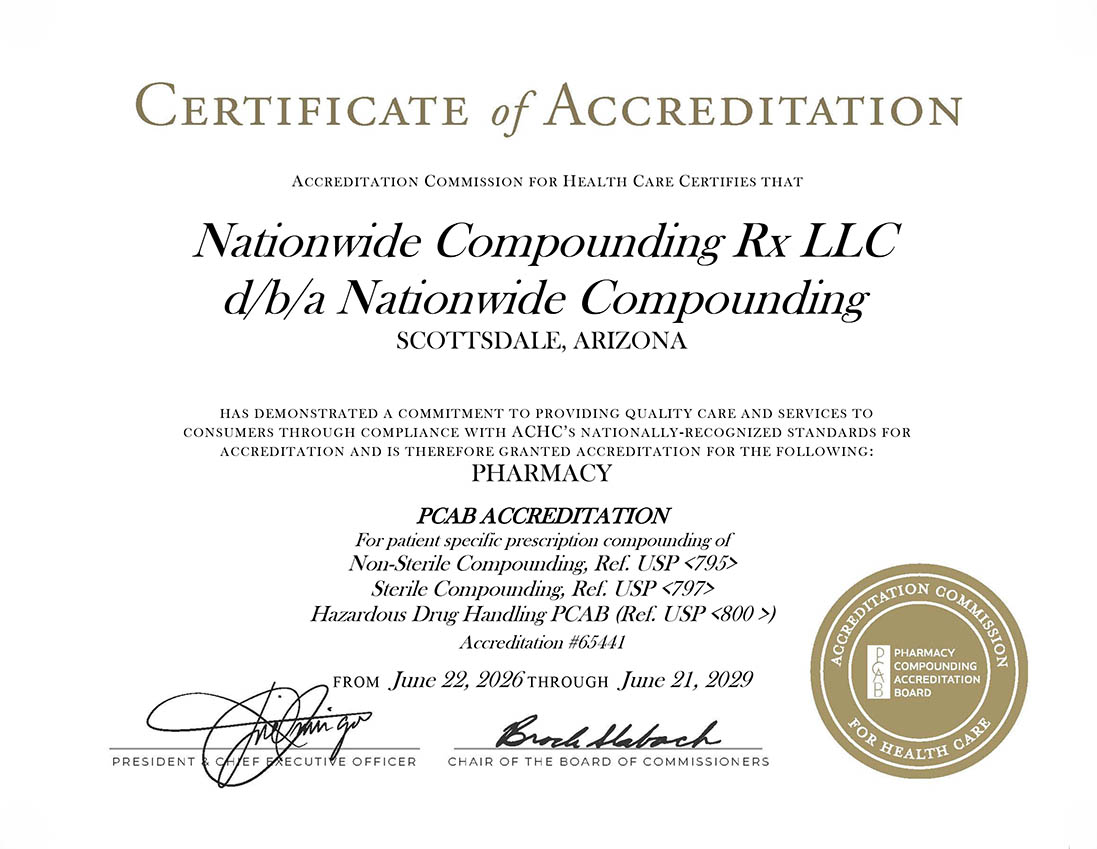
- USP compliance: USP <795> (non-sterile compounding), <797> (sterile compounding, critical for injectables), and <800> (hazardous drug handling)
- PCAB accreditation: Third-party assessment of safety and quality compliance standards based on U.S. Pharmacopeial Convention guidelines
- Ingredient sourcing: FDA-inspected and cleared vendor sourcing for active pharmaceutical ingredients
- Third-party testing: Potency, sterility, and endotoxin testing by independent laboratories
Nationwide Compounding Rx® maintains PCAB accreditation since early operations, operates a USP <800> compliant facility, sources from FDA-inspected and cleared vendors, and has 40 years of combined staff experience.
The Telemedicine and Compounding Pharmacy Integration Model
Longevity medicine is increasingly delivered through telemedicine platforms that conduct virtual consultations, order biomarker testing, and transmit prescriptions to compounding pharmacies. This creates a seamless patient experience without geographic constraints.
Multi-state licensing serves as a competitive differentiator. A compounding pharmacy that ships to 47 states plus Washington, D.C. (like Nationwide Compounding Rx®) is a more viable partner for telemedicine-based longevity practices than a pharmacy with limited geographic reach.
Who Is (and Is Not) a Candidate for Compounded Anti-Aging Protocols
Responsible anti-aging medicine compounding pharmacy partnerships require honest patient selection.
Appropriate candidates for BHRT include:
- Adults with symptomatic hormone deficiency confirmed by laboratory testing
- Peri- and post-menopausal women with vasomotor symptoms, sexual dysfunction, or mood disturbance
- Men with clinically confirmed hypogonadism
- Patients who have failed or cannot tolerate commercial HRT products
Contraindications and caution populations include:
- Active or history of hormone-sensitive cancers for BHRT
- Immunocompromised patients or those with active infections for rapamycin
- Patients with autoimmune conditions requiring careful evaluation before immune-modulating peptides
- Patients with liver or kidney disease requiring dose adjustments
Compounded anti-aging protocols should be initiated and monitored with comprehensive laboratory testing, not prescribed based on symptoms alone.
How Nationwide Compounding Rx® Supports Anti-Aging Medicine Practitioners and Patients
Nationwide Compounding Rx® operates as a specialized partner with specific capabilities aligned to the anti-aging medicine use case.
The pharmacy’s PCAB accreditation and USP <800> compliance provide concrete quality credentials that practitioners can cite to patients. The explicit rejection of “one size fits all” medicine aligns directly with the biomarker-guided, individualized approach of longevity medicine.
The benefits of compounding include dosage form flexibility (troches, transdermal creams and gels, capsules, suppositories, and oral liquids) that allows prescribers to match formulation to patient physiology, lifestyle, and preference. Formulations free of lactose, gluten, dyes, and sugar serve the health-conscious longevity medicine patient population.
Shipping to 47 states plus Washington, D.C. supports telemedicine-based longevity practices. The pharmacy does not currently serve Alabama, California, North Carolina, or South Carolina.
The 1 to 2 business day turnaround supports consistent patient care and clinic workflow, with same-day pickup available for Arizona-based patients.
The Regulatory Horizon: What to Watch in the Second Half of 2026 and Beyond
The July 23 to 24, 2026 PCAC meeting is the single most important near-term regulatory event for anti-aging compounding. The outcome will determine whether BPC-157, KPV, TB-500, MOTS-c, Semax, Epitalon, and emideltide can legally be compounded by 503A pharmacies.
The February 2027 second PCAC meeting will review five additional peptides. The full reclassification process will likely extend through 2027.
The May 2026 removal of boxed warnings from six menopausal HRT products is expected to increase both commercial and compounded HRT demand. Practitioners should establish a direct communication channel with their compounding pharmacy partner to receive timely updates on regulatory changes.
Conclusion: Navigating the Future of Longevity Medicine with the Right Compounding Partner
The year 2026 represents a genuine inflection point for anti-aging medicine compounding. The regulatory environment is shifting, the clinical evidence base is growing, and patient and practitioner demand is accelerating.
The most valuable compounding pharmacy partner is one that can tell practitioners and patients what is legally available, what has clinical evidence, what is experimental, and what is not appropriate.
The fundamental advantage of compounded anti-aging medicine is individualization: biomarker-guided BHRT titration, custom peptide protocols, and formulation flexibility that commercial products cannot provide. This advantage is only realized when working with a pharmacy that genuinely understands the clinical context.
As longevity medicine continues its transition from niche to mainstream, the practitioners and patients who build the right clinical and pharmacy partnerships now will be best positioned to benefit from what comes next.
Ready to Partner with a PCAB-Accredited Anti-Aging Medicine Compounding Pharmacy?
Medical practices and longevity clinics are invited to contact Nationwide Compounding Rx® to discuss specific compounding needs, explore formulation options, and establish a pharmacy partnership. The B2B relationship model emphasizes collaboration with prescribers.
Patients should speak with their prescriber about whether compounded anti-aging protocols are appropriate for their clinical situation and ask about Nationwide Compounding Rx® as a fulfillment partner.
Contact Information:
- Toll-free: 1-833-650-9836
- Local: 480-499-8379
- Website: www.NationwideCompounding.com
- Address: 14000 N. Hayden Rd., Suite 104, Scottsdale, AZ 85260
Nationwide Compounding Rx® ships to 47 states plus Washington, D.C. Confirm service availability for your state before initiating a prescription.
With the July 2026 PCAC meeting approaching and the regulatory landscape actively shifting, now is an ideal time for practitioners to establish a relationship with an accredited compounding pharmacy partner. The foundation of a trustworthy partnership rests on PCAB accreditation, 40 years of combined experience, USP <800> compliance, and FDA-inspected ingredient sourcing.
Related Posts

Searching for Marty's Compounding Pharmacy but not sure if a local Mississippi storefront fits your needs? This guide compares Marty's Pharmacy & Compounding Center to nationwide compounding options using a five-point credential checklist covering accreditation, testing, and shipping licenses in 2026.

The term 'board of specialty pharmacy' actually refers to four distinct organizations, each serving a different purpose. This article breaks down BPS, SPCB, state boards, and PCAB to reveal which body truly governs compounding pharmacy quality in 2026.

Many patients assume CVS Pharmacy Specialty Services can compound custom medications simply because it holds PCAB accreditation—but the reality is more nuanced. This article breaks down what the accreditation actually covers, how the FDA's 503A/503B rules apply, and what it means for prior authorizations on oncology, MS, and RA prescriptions in 2026.

Many patients land on Accredo after a physician, insurer, or PBM directs them there. This guide breaks down what specialty pharmacy Accredo actually does—and the critical compounding limitations you need to know about in 2026.