Over-the-counter stretch mark creams can't deliver prescription-strength actives—but compounded stretch mark treatment can. This 2026 clinical guide breaks down the science behind custom multi-ingredient formulas, the best evidence-backed ingredients, and how to access a personalized formula through a PCAB-accredited compounding pharmacy.

Not every prescription needs a compounding pharmacy—but some patients have no better option. This 2026 decision framework maps the six specific clinical scenarios where compounding outperforms commercial pharmacy, plus transparent guidance on when it doesn't. Learn how to make the right choice for your situation.

FDA regulations governing compounding pharmacies have never been more complex or more consequential. This 2026 guide breaks down the full regulatory framework—from federal law and FDA enforcement to state board oversight—so patients and providers can confidently identify compliant compounding partners. Whether you're navigating GLP-1 enforcement or custom hormone formulations, this is your complete reference.

Compounded medications are not FDA-approved — but that answer alone misses what actually matters for patient safety. This guide breaks down the 2026 federal regulatory framework governing compounded drugs, the real risks worth understanding, and how to identify pharmacies that meet rigorous quality standards.

Most compounding pharmacies claim 'experienced staff' without ever defining what that means. Nationwide Compounding Rx® benchmarks its combined 40 years compounding pharmacy experience against verified industry data—including the APC's 2026 national average—to show exactly why it matters. Discover how decades of hands-on expertise translate into safer formulations, greater reliability, and a true clinical partnership.

Troches are reshaping hormone therapy in 2026, driven by rising BHRT demand, telehealth growth, and evolving FDA policy. This guide covers sublingual delivery, key formulations like Biest and progesterone, and exactly what to look for in a quality troches compounding pharmacy. Get the pharmacokinetics-first, clinically honest breakdown patients and providers need.

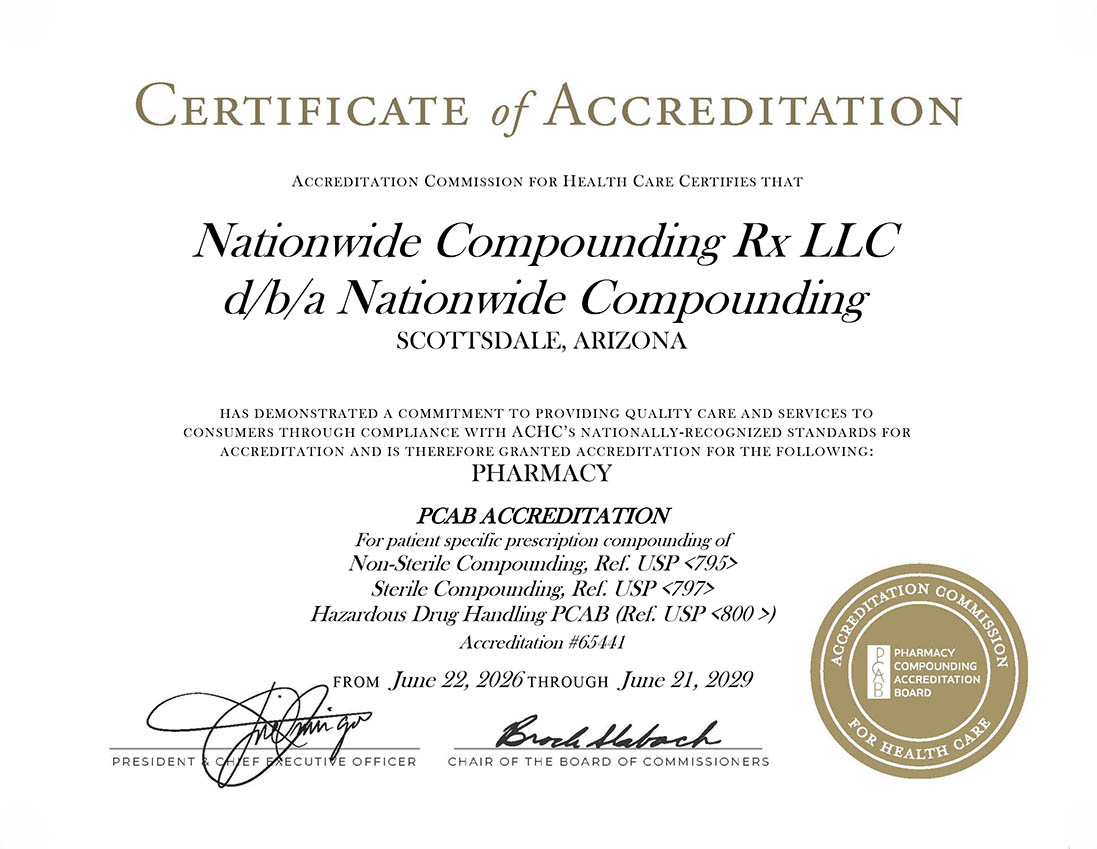
Fewer than 1% of U.S. pharmacies hold PCAB accreditation, yet it remains the most reliable quality credential in compounding. This 2026 guide shows patients and providers exactly how to verify accreditation status, identify false claims, and understand why it matters for safety and liability.
Cross contamination prevention in compounding pharmacy is more critical than ever as 30–40 million compounded prescriptions are filled annually in the U.S. This 2026 guide delivers an integrated breakdown of USP 795, 797, and 800 standards alongside NIOSH drug classification gaps that create real patient risk. Use it to verify safety practices whether you're a provider, patient, or telehealth user.

New York's compounding pharmacy landscape is evolving fast in 2026, with new legislation, nonresident registration rules, and post-shortage semaglutide regulations reshaping how patients access custom medications. This guide breaks down every critical regulatory development patients and providers need to know. Stay compliant, stay informed, and find a trusted compounding pharmacy partner in New York.

Custom tretinoin cream compounding offers patients personalized concentrations, unique bases, and combination formulas unavailable on retail shelves. This 2026 guide covers FDA 503A regulations, clinically validated formulations, and quality benchmarks to help patients and prescribers navigate the compounding landscape confidently. Learn how to evaluate compounding pharmacies and make informed treatment decisions.

At Nationwide Compounding Rx®, we partner with prescribing practices to provide personalized medications with quality, safety, and patient care at the forefront. We offer convenient pickup, free standard shipping, same-day pickup on select medications, and a 1–2 business day turnaround on most orders.
At Nationwide Compounding Rx®, we partner with prescribing practices to provide personalized medications with quality, safety, and patient care at the forefront. We offer convenient pickup, free standard shipping, same-day pickup on select medications, and a 1–2 business day turnaround on most orders.
Quick Links
Accredited & Compliant