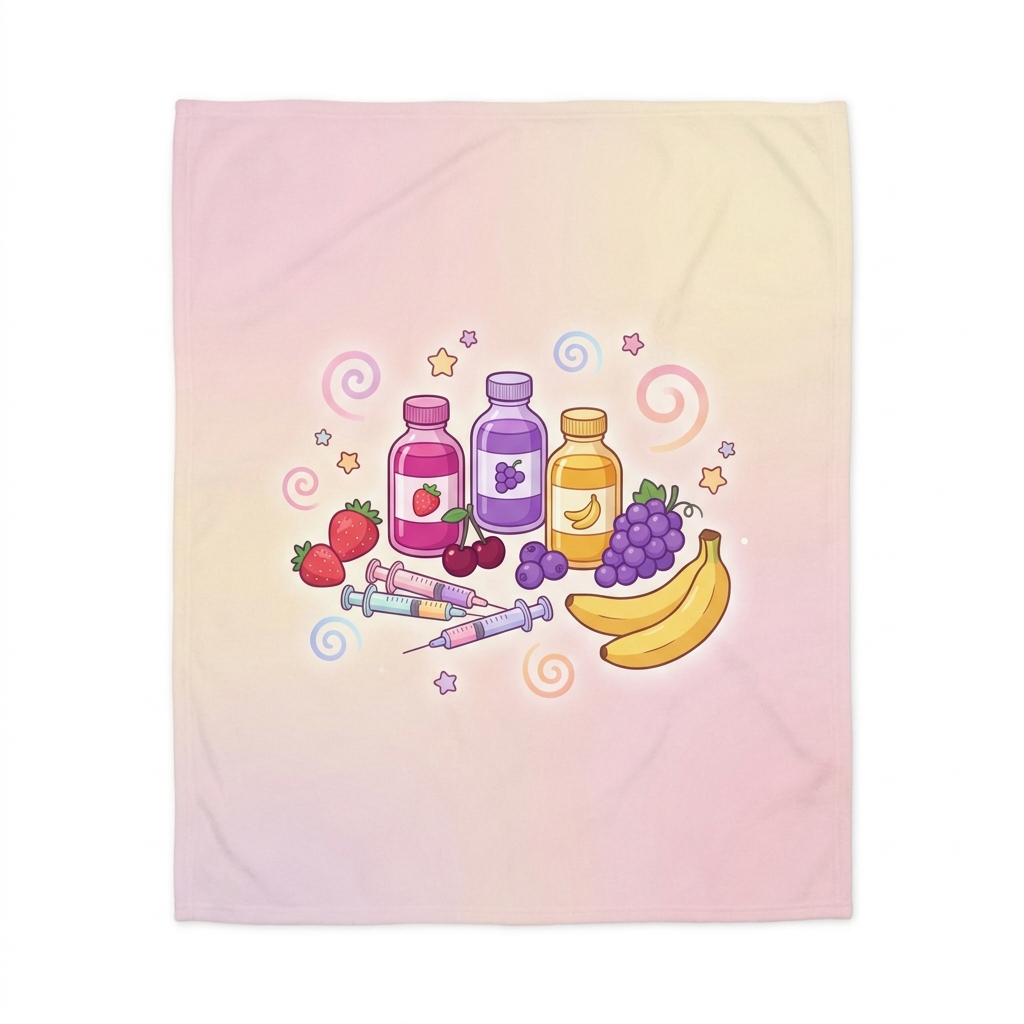
Pediatric Medication Flavoring Options: A Parent’s Complete Guide
Introduction: Why Medicine Time Is a Battle and How Flavor Science Wins It
Picture this scenario: a parent holds a small medicine cup while a child clamps their mouth shut, tears streaming down their face. The medication that could help them feel better sits untouched because the taste is simply unbearable. This scene plays out in households across the country every single day.
Research confirms what parents already know: 7 out of 10 parents struggle during medicine time, with taste being the primary driver of that struggle. The consequences extend far beyond a stressful few minutes. Pediatric medication adherence rates typically hover around 60%, creating a dangerous compliance gap that affects treatment outcomes for both acute illnesses and chronic conditions.
This guide offers something different from a simple list of available flavors. It explains the science of why certain flavors work for certain medications, empowering parents to make informed decisions about their child’s treatment. Understanding pediatric medication flavoring options transforms medicine time from a daily battle into a manageable routine.
Compounding pharmacy services make personalized pediatric flavoring possible. Nationwide Compounding Rx®, with over 40 years of combined compounding expertise, serves as the expert guide throughout this exploration of how flavor science can improve a child’s medication experience.
The Real Cost of Bad-Tasting Medicine: What the Research Actually Shows
The impact of unpalatable medications extends well beyond a child’s grimace. According to a 2025 scoping review published in Frontiers in Drug Delivery, poor taste was reported as a barrier to adherence in 27% of reviewed studies, correlating with incomplete dose administration in both acute and chronic conditions.
Incomplete dosing carries serious clinical implications. When children do not finish antibiotic courses, they risk developing antibiotic resistance. Undertreated chronic conditions lead to disease progression, return doctor visits, and increased healthcare costs for families already stretched thin.
The challenge intensifies when considering that an estimated 10% of children between ages 6 and 11 cannot swallow a pill. This makes liquid formulations and effective flavoring even more critical for pediatric populations.
The good news is substantial. When medications are custom flavored, adherence rates can increase from roughly 60% to 90% or higher. This is not a marginal improvement; it represents a clinically meaningful intervention that can determine whether a treatment succeeds or fails.
The Flavor-Medication Matching Science: Why Not Every Flavor Works for Every Medicine
Effective pediatric medication flavoring requires more than simply adding a pleasant taste. Medications fall into distinct taste categories, primarily bitter, salty, and sour. Successful flavor masking requires matching the right flavor profile to the right taste category.
The sensory science behind this matching involves taste receptors for sweet, salty, bitter, sour, and umami. These receptors interact differently with flavoring compounds. The goal is to neutralize or override the dominant unpleasant taste signal through strategic flavor selection.
The University of Maryland School of Pharmacy developed the Ew Meds List™, an evidence-based tool that pairs the worst-tasting pediatric medicines with proven flavor-masking strategies. This resource gives pharmacists and prescribers a science-backed approach to flavor selection.
Retronasal olfaction also plays a crucial role. This refers to how aroma compounds travel from the back of the throat to the nose, significantly influencing how children perceive the overall palatability of a medication. Understanding the medication’s taste category is the first step in selecting an effective flavor.
Masking Bitter Medications: The Chocolate, Mint, and Cherry Advantage
Common bitter pediatric medications include prednisone, many antibiotics, antihistamines, and certain ADHD medications. Bitter is the hardest taste to mask because humans have approximately 25 types of bitter taste receptors (TAS2Rs), an evolutionary defense against toxins that makes bitterness highly persistent.
Evidence-based flavor matches for bitter medications include chocolate, mint (particularly peppermint), and wild cherry. These flavors contain compounds that compete with or suppress bitter receptor activation. The Ew Meds List™ specifically recommends chocolate or mint for prednisone.
Nationwide Compounding Rx® offers Cherry and Peppermint among their flavoring options, both scientifically appropriate choices for bitter medications.
Emerging research explores “bitter blockers,” compounds like sodium acetate, sodium gluconate, and adenosine 5′ monophosphate that block bitterness perception at a molecular level. This represents the next frontier beyond traditional flavor masking.
Masking Salty Medications: Why Sweet Fruity Flavors Are the Best Option
Medications with predominantly salty taste profiles include certain electrolyte preparations, some liquid antibiotics, and specific mineral supplements. Sweet flavors create a contrast effect that suppresses the perception of saltiness, a well-documented phenomenon in food science applied to pharmaceutical flavoring.
Strawberry, raspberry, watermelon, and other sweet fruity flavors prove most effective at masking salty medications. Nationwide Compounding Rx® offers Strawberry, Raspberry, Banana Crème, and Tutti Frutti, all appropriate choices for salty-tasting medications.
The intensity of the sweet flavor matters significantly. A mild fruit flavor may not fully overcome a strongly salty medication, which is why compounding pharmacists adjust concentration levels based on the specific formulation.
Masking Sour Medications: Berry, Fruit, and Vanilla Profiles That Work
Sourness often results from the chemical composition of the active pharmaceutical ingredient itself. Real citrus flavors are generally avoided in compounding because natural citric acids can affect drug absorption rates. Simulated or artificial citrus flavors are used instead when a citrus note is desired.
Berry flavors, mixed fruit profiles, and vanilla work well for sour medications. The Ew Meds List™ specifically recommends berry or vanilla for amoxicillin. Nationwide Compounding Rx® offers Grape, Raspberry, Strawberry, and Vanilla Butternut, all well-suited to sour-profile medications.
Flavor selection is not arbitrary. It is a science-backed decision that a compounding pharmacist makes based on the specific medication’s taste chemistry.
The Complete Flavor Menu at Nationwide Compounding Rx®: What Is Available and Why It Was Chosen
Nationwide Compounding Rx® offers eight carefully selected flavors and dosage forms:
- Banana Crème: Excellent for salty medications
- Cherry: Ideal for bitter medications
- Grape: Effective for sour medications
- Peppermint: Superior choice for bitter medications
- Raspberry: Works well for both salty and sour medications
- Strawberry: Versatile option for salty and sour profiles
- Tutti Frutti: Sweet profile suited for salty medications
- Vanilla Butternut: Effective for sour medications
This curated selection covers the full spectrum of pediatric medication taste profiles rather than simply offering the most popular options. Children can be involved in choosing their preferred flavor from the available options. Giving children agency in their treatment is a proven compliance strategy that increases buy-in.
Over 200 million medications have been flavored using professional flavoring systems, validating the widespread clinical acceptance of this approach.
Safety First: What Parents Need to Know About Flavoring Agents
Parents naturally want to know what is being added to their child’s medication. Flavoring agents used by compounding pharmacies are independently tested, manufactured in FDA-registered facilities, and considered chemically inert. They do not alter the medication’s therapeutic effectiveness.
USP General Chapter <795>, updated November 1, 2023, classifies the addition of flavoring agents as compounding subject to nonsterile compounding standards. However, 48 out of 50 State Boards of Pharmacy do not regulate flavoring as full compounding.
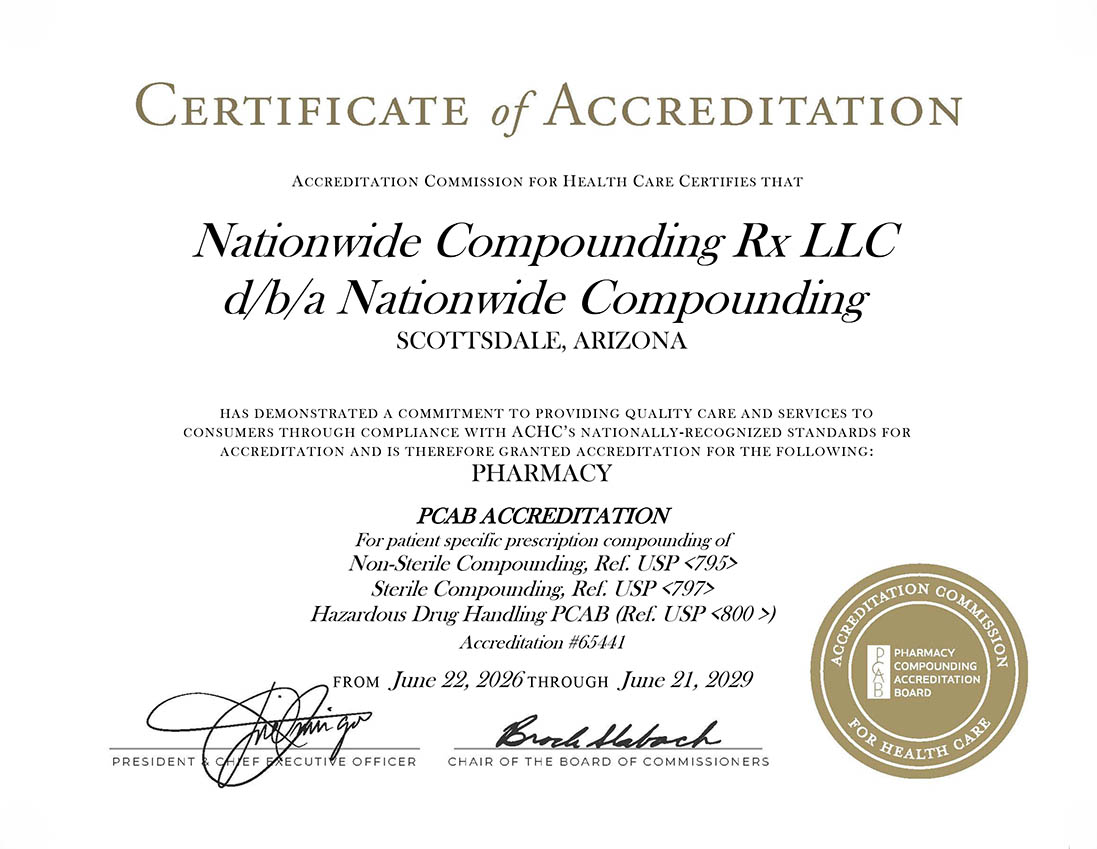
Nationwide Compounding Rx®’s PCAB accreditation and USP 800 compliance serve as third-party validations of safety and quality that exceed minimum regulatory requirements. All chemicals are sourced from FDA-inspected and cleared vendors, providing supply-chain transparency that parents can trust.
Allergens, Dyes, and Dietary Restrictions: The Questions Most Pharmacies Do Not Answer
This concern ranks among the most common yet underserved issues for parents researching pediatric medication flavoring options.
Coloring agents can be added to match a flavor visually, but dyes such as FD&C Yellow 5, Yellow 6, Red 36, and Blue 1 have been associated with hypersensitivity reactions in some children. Parents should always request dye-free formulations when in doubt.
Leading professional flavoring systems are available as sugar-free, dye-free, gluten-free, and casein-free, making them safe for children with common dietary sensitivities.
Children with special needs such as autism or ADHD often have heightened sensory sensitivities. They may require medications simultaneously free of casein, soy, sugars, gluten, dyes, and heavy metals. Compounding can address all of these requirements simultaneously.
Nationwide Compounding Rx® can eliminate lactose, dyes, gluten, sugar, and other common allergens from formulations. Parents should communicate all known allergies, dietary restrictions, and sensitivities to their compounding pharmacist before a formulation is prepared.
Special Considerations: Infants, Toddlers, and Children With Complex Needs
Infants under 6 months should not receive medications with preservatives, making compounding especially critical for this age group. Medications can be delivered via specially designed pacifiers or bottles, making administration possible even for infants who cannot yet take oral syringes.
Flavored dosage forms available beyond liquids include oral suspensions, solutions, syrups, chewable tablets, gummy troches, lollipops, freezer pops, chocolate cubes, and dissolvable strips. Nationwide Compounding Rx® offers gummies and oral liquids including suspensions and sublingual solutions, particularly suited for pediatric dosing.
For children with chronic conditions requiring long-term medication storage, flavoring agents can affect stability and beyond-use dating. A compounding pharmacist will account for this in the formulation. Parents managing chronic conditions should ask about storage requirements.
Appropriate dosing for children, not just flavor, is part of what compounding addresses. Commercially available doses are often calibrated for adults.
How the Flavoring Process Works at a Compounding Pharmacy
Understanding the process can reduce hesitation about trying compounded flavored medications.
Step 1: The prescriber writes a prescription that may specify a flavor preference, or the compounding pharmacist recommends a flavor based on the medication’s taste profile.
Step 2: The pharmacist selects a flavoring agent scientifically matched to the medication’s dominant taste category and compatible with the child’s dietary restrictions.
Step 3: The flavoring agent is incorporated into the formulation at a concentration calibrated to effectively mask the unpleasant taste without overwhelming the child.
Automated flavoring technology can reconstitute and flavor a medication in approximately 10 seconds, making the process fast and minimizing human error.
Nationwide Compounding Rx® offers 1-2 business day turnaround on all medications, with same-day pickup available for some formulations. The flavoring process does not change the medication’s therapeutic effectiveness; the active pharmaceutical ingredient remains unchanged.
Frequently Asked Questions About Pediatric Medication Flavoring
Will flavoring change how the medication works? No. Flavoring agents are chemically inert and do not affect the therapeutic action of the active ingredient.
Can a specific flavor be requested? Yes. Parents and children can participate in flavor selection from the available options, which increases the child’s willingness to take the medication.
Is flavored medication safe for a child with food allergies? Professional flavoring systems are available in sugar-free, dye-free, gluten-free, and casein-free formulations. Parents should disclose all allergies to the pharmacist.
How long does a flavored compounded medication last? Beyond-use dating depends on the specific formulation and flavoring agent used. The compounding pharmacist will provide specific storage and expiration guidance.
Does insurance cover flavored compounded medications? Coverage varies by plan. Parents should check with their insurance provider.
What if a child does not like the flavor chosen? A different flavor can typically be requested for the next fill. Involving the child in the selection process from the start helps avoid this issue.
Is medication flavoring available for infants? Yes, with important caveats. Infants under 6 months require preservative-free formulations, and delivery methods such as specially designed pacifiers or bottles may be used.
Conclusion: Flavor Science Is Pediatric Healthcare
Pediatric medication flavoring is not a cosmetic add-on but a science-backed clinical strategy that can raise adherence rates from 60% to 90% or higher. The flavor-medication matching framework provides clear guidance: bitter medications respond best to chocolate, mint, and cherry; salty medications to sweet fruity flavors; sour medications to berry, fruit, and vanilla profiles.
Safety concerns are addressable. Dye-free, sugar-free, gluten-free, and allergen-free formulations are available through professional compounding. The right compounding pharmacy does more than add flavor; it customizes the entire formulation to the child’s age, weight, dietary needs, and sensory preferences.
Nationwide Compounding Rx® brings all of this together: PCAB-accredited, USP 800 compliant, with 40 years of combined compounding expertise and nationwide shipping to 47 states plus Washington, D.C. Medicine time does not have to be a battle, and the science to change that is available today.
Ready to Make Medicine Time Easier? Contact Nationwide Compounding Rx® Today
Parents and healthcare providers are invited to contact Nationwide Compounding Rx® to discuss pediatric medication flavoring options for a child’s specific medication and needs.
Contact Information:
- Toll-Free: 1-833-650-9836
- Main Line: 480-499-8379
- Website: www.NationwideCompounding.com
With 1-2 business day turnaround and same-day pickup availability for some medications, parents dealing with a sick child can access a fast solution. Nationwide Compounding Rx® ships to 47 states plus Washington, D.C., making the service accessible to families across the country.
Healthcare providers interested in establishing a compounding relationship for their pediatric patients are encouraged to reach out. Parents may also explore other pediatric compounding services available, including customized dosage forms, allergy-friendly formulations, and age-appropriate dosing beyond flavoring alone.
Related Posts

Searching for Marty's Compounding Pharmacy but not sure if a local Mississippi storefront fits your needs? This guide compares Marty's Pharmacy & Compounding Center to nationwide compounding options using a five-point credential checklist covering accreditation, testing, and shipping licenses in 2026.

The term 'board of specialty pharmacy' actually refers to four distinct organizations, each serving a different purpose. This article breaks down BPS, SPCB, state boards, and PCAB to reveal which body truly governs compounding pharmacy quality in 2026.

Many patients assume CVS Pharmacy Specialty Services can compound custom medications simply because it holds PCAB accreditation—but the reality is more nuanced. This article breaks down what the accreditation actually covers, how the FDA's 503A/503B rules apply, and what it means for prior authorizations on oncology, MS, and RA prescriptions in 2026.

Many patients land on Accredo after a physician, insurer, or PBM directs them there. This guide breaks down what specialty pharmacy Accredo actually does—and the critical compounding limitations you need to know about in 2026.