
Pencol Compounding Pharmacy: The 2026 FDA History & Trust Guide
Introduction
Patients who search for “Pencol Compounding Pharmacy” usually land on a scattered set of directory listings: Yelp, the Better Business Bureau, Birdeye, Chamber of Commerce pages, and assorted pharmacy aggregators. Each repeats the same name, address, and phone number, shows a different star rating, and offers almost no explanation of the pharmacy’s credentials or regulatory background.
This guide brings that information together in one place. It covers Pencol’s company history, its PCAB accreditation, its Colorado Section 503A licensure, its roughly 13-state shipping limit, and its documented FDA compliance record, which includes a 2016 Form 483, a 2017 Warning Letter, and a repeat Form 483 in 2019.
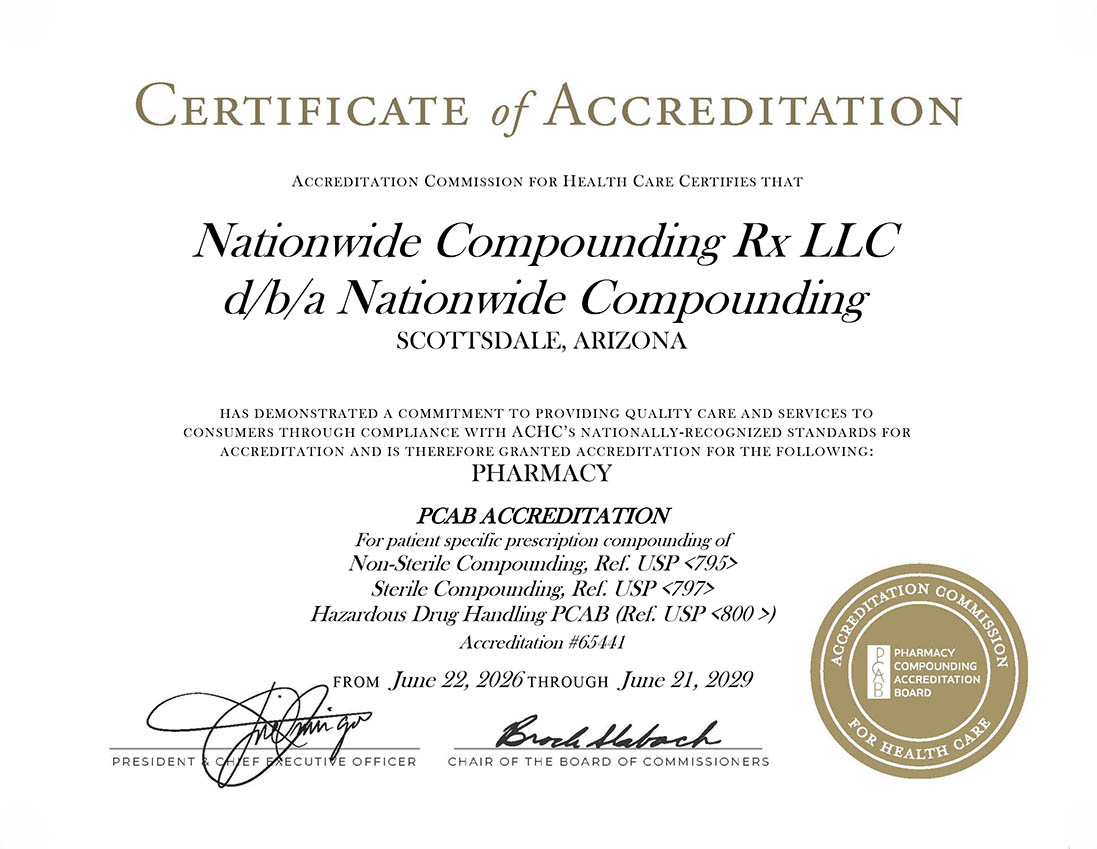
This is not an attack piece. It is a transparency resource meant to help patients, caregivers, and pet owners make an informed decision before trusting any pharmacy with a prescription. The guide also introduces Nationwide Compounding Rx®, a PCAB-accredited, USP <800>-compliant pharmacy that ships across a broad multi-state footprint, as an option for readers outside Colorado or those seeking a pharmacy without an open FDA compliance history.
What Is Pencol Compounding Pharmacy?
Pencol Compounding Pharmacy, which also operates as Pencol Specialty Pharmacy and Pencol Pharmacy, is a Denver-based Section 503A compounding pharmacy. It prepares customized medications for both human and veterinary patients.
A Century-Linked Name: Company History
The Pencol name traces back to a pharmacy that opened in 1925 at the corner of Pennsylvania and Colfax in Denver, which explains the “Pen” and “Col” in the brand. In 1985, owner Marshall Tobin merged operations into “PenCol Medisave Pharmacy.” The business was later renamed Pencol Compounding Pharmacy after relocating to its current address.
Readers should note one discrepancy. BBB records list the business as started locally on January 21, 1974 and incorporated on September 29, 2008. These dates do not align neatly with the 1925 and 1985 brand narrative. The difference likely reflects changes in ownership and legal entities over time rather than a contradiction, but it is worth knowing that the brand’s history and the current legal entity’s history are not the same thing.
Legal Entity, Location & Contact Details
- Legal name: Maplerose / Maple Rose Enterprises, Inc., doing business as Pencol Pharmacy
- Address: 1325 S Colorado Blvd, Suite B-024, Denver, CO 80222
- Phone: (303) 388-3613
According to Crunchbase and a Pencol Specialty Pharmacy LinkedIn post, Pencol has been linked to Revelation Pharma, a Denver-based network of compounding pharmacies. For patients, a network ownership structure can mean access to shared resources and standardized processes. It can also mean that policies, staffing, and service decisions are influenced at a corporate level rather than solely by local pharmacists. Prospective patients may wish to ask who currently owns and operates the location.
Is Pencol Compounding Pharmacy Legitimate? Credentials & Licensing
The short answer is yes: Pencol holds real, verifiable credentials. However, legitimacy and a clean compliance record are two different things, and patients benefit from understanding both.
PCAB Accreditation Explained
The Pharmacy Compounding Accreditation Board (PCAB), administered through ACHC, accredits pharmacies that meet established compounding quality standards. According to Pencol’s own FAQ page, PCAB accreditation confirms compliance with USP <795> (non-sterile compounding) and USP <797> (sterile compounding) standards.
PCAB accreditation is meaningful, but it reflects adherence to process standards as assessed at a point in time. It does not override or erase a facility’s FDA inspection history.
Nationwide Compounding Rx® also holds PCAB accreditation. That makes PCAB a shared baseline credential between the two pharmacies rather than a differentiator on its own.
Colorado 503A Licensure
Pencol is registered as a Section 503A compounding pharmacy, licensed by the Colorado Board of Pharmacy as a Prescription Drug Outlet (In-State).
For patients, 503A status matters because it defines how a pharmacy is allowed to compound:
- 503A pharmacies compound medications based on individual, patient-specific prescriptions.
- 503B outsourcing facilities may produce compounded drugs in larger batches without patient-specific prescriptions, under stricter federal oversight.
This distinction becomes important when reviewing Pencol’s FDA history below.
BBB Rating and Accreditation Status
Pencol is not BBB accredited and carries a B- rating, which the BBB attributes to a failure to respond to a filed complaint.
Services and Specialties Offered at Pencol
Pencol advertises a broad compounding menu, including:
- Sterile and non-sterile compounding
- Bioidentical hormone replacement therapy (BHRT)
- Pain management formulations
- Dermatology and cosmeceuticals
- Veterinary medications
Dosage forms include troches, suppositories, lollipops, topicals, and other specialty formats. Veterinary compounding is a notable part of Pencol’s service mix, which explains why many pet owners search for the pharmacy by name.
Pencol’s Shipping Limitation: Who Can Actually Use This Pharmacy?
According to its own FAQ page, Pencol is licensed to ship to roughly 13 states:
- Arizona
- Colorado
- Delaware
- Florida
- Georgia
- Illinois
- Kentucky
- New Mexico
- New York
- Pennsylvania
- Rhode Island
- Wisconsin
- Wyoming
The pharmacy separately notes a recent addition of Indiana.
This matters in practical terms. A patient referred to Pencol by an out-of-state provider, or a patient who moves or travels, may find that a prescription cannot legally be filled or shipped to their state. Pharmacy licensing is state-specific, and a pharmacy cannot ship compounded medications into states where it is not licensed. This state-limited model stands in contrast to pharmacies with broader, multi-state shipping footprints.
Pencol’s Documented FDA Regulatory History
This section addresses the central trust gap that directory listings leave open: no consumer-facing source currently explains Pencol’s FDA inspection record in plain language.
Everything below is drawn from publicly available FDA.gov records, including the FDA’s Compounding: Inspections, Recalls, and other Actions registry, which lists Maplerose Enterprises, LLC (dba Pencol Pharmacy), Denver, CO as a 503A facility with multiple Form 483s issued. For context:
- Form 483: A list of observations FDA investigators record at the end of an inspection when conditions may violate federal law.
- Warning Letter: A formal notice that FDA considers the violations significant and expects corrective action.
- Untitled Letter: Follow-up correspondence that communicates violations or concerns without the escalation level of a Warning Letter.
2016 FDA Inspection and Form 483
FDA investigators inspected Pencol’s facility from August 8 to August 22, 2016, and issued a Form 483 on August 22, 2016. The observations included:
- Unsterile and insanitary manufacturing conditions
- Drug products that did not qualify for the Section 503A exemption
2017 FDA Warning Letter
On August 2, 2017, FDA issued a formal Warning Letter to Maplerose Enterprises, LLC, dba Pencol Pharmacy, citing the 2016 violations. The letter, published on FDA.gov, stated that the facility appeared to have produced drug products that violate the Federal Food, Drug, and Cosmetic Act.
Among the specific citations was the compounding and distribution of cisapride products outside valid patient-specific prescriptions. This is significant because 503A protections depend on compounding for individually identified patients. When a pharmacy compounds without patient-specific prescriptions, those products fall outside the 503A exemptions and become subject to stricter federal drug requirements. Pharmaceutical Technology, an industry trade publication, also covered the action, reporting that FDA had warned the pharmacy about violations of sterile manufacturing practices.
2019 Repeat Form 483 and 2020 Follow-Up Letter
FDA conducted a follow-up inspection and issued another Form 483 on February 26, 2019. It cited the same category of issue: compounding non-sterile drug products without valid prescriptions for individually identified patients.
In August 2020, FDA sent an Untitled Letter to Maple Rose Enterprises, Inc., dba Pencol Pharmacy, reiterating unresolved concerns about non-patient-specific compounding.
The repeat finding is the most important detail. It indicates that the concerns raised in the 2017 Warning Letter had not been fully resolved as of the 2019 follow-up inspection.
What This Regulatory History Means for Patients Today
Balanced context is essential here. FDA Form 483s and Warning Letters are not uncommon in the compounding industry, and a past citation does not necessarily mean a pharmacy is non-compliant today.
Still, the pattern in Pencol’s case (an initial finding, a formal Warning Letter, a repeat finding, and a follow-up letter) is a stronger signal than a single isolated incident. Patients considering Pencol in 2026 should:
- Ask the pharmacy directly about its current FDA compliance status and corrective actions.
- Ask their prescribing provider whether they have concerns or recent experience with the pharmacy.
- Check the FDA’s compounding inspections database themselves for any newer filings.
Why Pencol’s Review Ratings Vary So Widely by Platform
At the time of research, Pencol’s ratings looked like this:
| Platform | Rating | Review Count |
|---|---|---|
| Birdeye | 4.1 / 5 | 238 |
| PharmacyPool | 4.0 / 5 | 183 |
| Chamber of Commerce | 3.7 / 5 | 165 |
| Yelp | 2.7 / 5 | 46 |
Platform-by-Platform Breakdown
Review volume and audience shape these scores. Yelp’s smaller sample of 46 reviews means a handful of negative experiences can pull the average down sharply, while Birdeye’s 238 reviews smooth out individual outliers. Platforms also differ in how reviews are collected. Some aggregate reviews solicited directly by businesses, which tend to skew positive, while Yelp users often post unprompted, frequently after a frustrating experience.
Employee feedback offers another angle. On Indeed, Pencol holds a 3.6/5 management rating, with some comments describing a “close-knit group” culture and inconsistent management support. This does not speak directly to patient care, but workplace culture can affect service consistency.
Recurring Complaint Themes Across Platforms
Across multiple sources, the same complaints appear repeatedly:
- Slow prescription processing
- Poor communication with patients and providers
- Shipping and refill problems affecting both human and veterinary prescriptions
Because these themes surface regardless of a platform’s overall star rating, they point to a genuine, recurring service pattern rather than platform-specific noise.
Weighing the Full Trust Picture: A Balanced Assessment
Pencol has real strengths. It holds legitimate PCAB accreditation and Colorado 503A licensure, and its brand history stretches back nearly a century. It also offers veterinary compounding, which many pharmacies do not.
At the same time, it carries a documented and repeated FDA compliance history, a non-accredited B- BBB rating, and inconsistent service reviews with recurring operational complaints. Its roughly 13-state shipping footprint is a deciding factor on its own for many prospective patients.
No single data point tells the whole story. Readers are best served by weighing accreditation, regulatory history, service area, and review consistency together.
A Nationally-Licensed Alternative: Nationwide Compounding Rx®
For readers who live outside Pencol’s shipping area, or who prefer a pharmacy without an open FDA compliance history, Nationwide Compounding Rx® is a relevant option. Based in Scottsdale, Arizona, it is a PCAB-accredited, USP <800>-compliant compounding pharmacy.
Credentials and Compliance Comparison
- PCAB accreditation: Both pharmacies hold it.
- USP <800> compliance: Nationwide Compounding Rx® is compliant with USP <800>, the standard governing safe handling of hazardous drugs, adding a compliance layer beyond the USP <795> and <797> standards referenced in Pencol’s PCAB description.
- FDA history: No FDA Form 483s or Warning Letters were identified for Nationwide Compounding Rx® in available public records, giving readers a clear point of contrast for their own due diligence.
Service Area: Nationwide Shipping vs. 13-State Limit
Nationwide Compounding Rx® uses a multi-tier shipping model that distinguishes between fully licensed states, states where non-sterile shipping is available while sterile licensure is pending, and states that are pending or unlicensed. This structure extends well beyond Pencol’s roughly 13-state footprint, although availability still depends on medication type and state regulations.
This broader reach is especially relevant for patients who have relocated, travel frequently, or were referred to Pencol but live outside its licensed states.
Specialties and Turnaround
Both pharmacies offer BHRT, pain management, and dermatology compounding. Nationwide Compounding Rx® adds dedicated focus areas in pediatrics, sports medicine, and GLP-1/peptide support, with dosage forms including capsules, liquids, topicals, troches, tablets, suppositories, and kid-friendly flavored options.
Operational quality signals include:
- 1 to 2 business day turnaround, with same-day pickup available for some medications
- Independent third-party testing for quality and consistency
- High-grade chemicals sourced from FDA-inspected and cleared vendors
- Secure provider and patient portals for prescriptions and refills
For healthcare providers evaluating a compounding partner, the pharmacy follows a structured partnership model: Connect, Collaborate, Create, Care.
Pencol vs. Nationwide Compounding Rx®: Quick Comparison
| Factor | Pencol Compounding Pharmacy | Nationwide Compounding Rx® |
|---|---|---|
| Headquarters | Denver, CO | Scottsdale, AZ |
| PCAB Accreditation | Yes | Yes |
| USP Standards Cited | USP <795> and <797> | USP <800> compliant |
| BBB Rating | B-, not accredited | Not specified in available records |
| Shipping Reach | About 13 states, plus Indiana | Multi-tier, broad multi-state footprint |
| Documented FDA History | 2016 Form 483, 2017 Warning Letter, 2019 repeat 483, 2020 Untitled Letter | None identified in available public records |
| Specialties | BHRT, pain, dermatology, veterinary | BHRT, pain, dermatology, pediatrics, sports medicine, GLP-1/peptides |
Frequently Asked Questions
Is Pencol Compounding Pharmacy legitimate?
Yes. Pencol is PCAB-accredited and licensed as a 503A pharmacy by the Colorado Board of Pharmacy. However, it has a documented and repeated FDA compliance history that patients should review.
What states does Pencol Compounding Pharmacy ship to?
According to its FAQ: Arizona, Colorado, Delaware, Florida, Georgia, Illinois, Kentucky, New Mexico, New York, Pennsylvania, Rhode Island, Wisconsin, and Wyoming, with Indiana recently added.
Has Pencol Compounding Pharmacy had FDA violations?
Yes. FDA issued a Form 483 in August 2016, a Warning Letter in August 2017, a repeat Form 483 in February 2019, and an Untitled Letter in August 2020, primarily concerning insanitary conditions and non-patient-specific compounding.
Why do Pencol’s reviews differ so much between Yelp, Birdeye, and the BBB?
Differences in sample size, user base, and how reviews are collected all play a role. Even so, complaints about slow processing, communication, and shipping recur across platforms.
Is there an alternative to Pencol for patients outside Colorado?
Nationwide Compounding Rx® offers a broad, multi-tier shipping model that reaches many states outside Pencol’s licensed footprint.
Conclusion
Directory listings provide a phone number and a star rating, but little else. This guide consolidates Pencol’s history, credentials, shipping limits, and regulatory record into one objective overview.
The balanced takeaway is clear. Pencol is a licensed, accredited, long-standing pharmacy, but it carries a documented and repeated FDA compliance history and serves a narrow, roughly 13-state area that many prospective patients fall outside of. Patients should base their decision on full information, including accreditation, current regulatory status, service area, and review consistency, and should consider alternatives when any of those factors fall short.
Considering the Options? Connect with Nationwide Compounding Rx®
Patients outside Pencol’s shipping area, and those who prefer a compounding pharmacy without an open FDA compliance history, can explore Nationwide Compounding Rx®:
- PCAB accredited
- USP <800> compliant
- Broad, multi-state shipping footprint
Providers and patients interested in BHRT, pain management, dermatology, pediatric, sports medicine, or GLP-1/peptide compounding can contact Nationwide Compounding Rx® at (480) 499-8379 or visit nationwidecompounding.com to access the provider or patient portal. The pharmacy is open Monday through Friday, 7:00 AM to 3:30 PM, at 14000 N. Hayden Rd., Suite 104, Scottsdale, AZ 85260.
Related Posts

Thinking about trusting Saveway compounding pharmacy with a prescription? This 2026 guide offers a due-diligence framework covering its Myonex acquisition, FDA recall data, and accreditation gaps. It also includes a rare look at veterinary compounding risks most guides skip.

"Specialty solutions pharmacy" actually points to two different things: a Las Vegas compounding pharmacy and a broad industry term. This guide untangles the confusion and breaks down how specialty pharmacies compare to compounding pharmacies in 2026.

Louisville providers often struggle to find a compounding pharmacy that explains how true partnerships work. This 2026 guide breaks down the Connect → Collaborate → Create → Care framework, covering BHRT, pediatrics, dermatology, and pain management compounding for local practices.

This 2026 guide to the community compounding pharmacy in Lake Oswego covers more than an address and phone number. It breaks down Oregon's nonresident pharmacy rules, GLP-1 compounding enforcement, and USP compliance standards every patient should understand before having medication shipped.