The Specialty Pharmacy List 2026: Categorized by Type & Role
Introduction: Why ‘Specialty Pharmacy List’ Searches Deserve a Better Answer
Searching for a “specialty pharmacy list” usually returns one of two things. The first is a revenue-ranking listicle from an industry outlet such as Becker’s Hospital Review or Drug Channels. The second is an insurer’s in-network PDF. Neither helps someone decide which type of pharmacy actually fits their situation.
A ranking based on pharmacy benefit manager (PBM) dispensing dollars answers the question “who is biggest?” It does not answer “who is right for this patient and this prescription?”
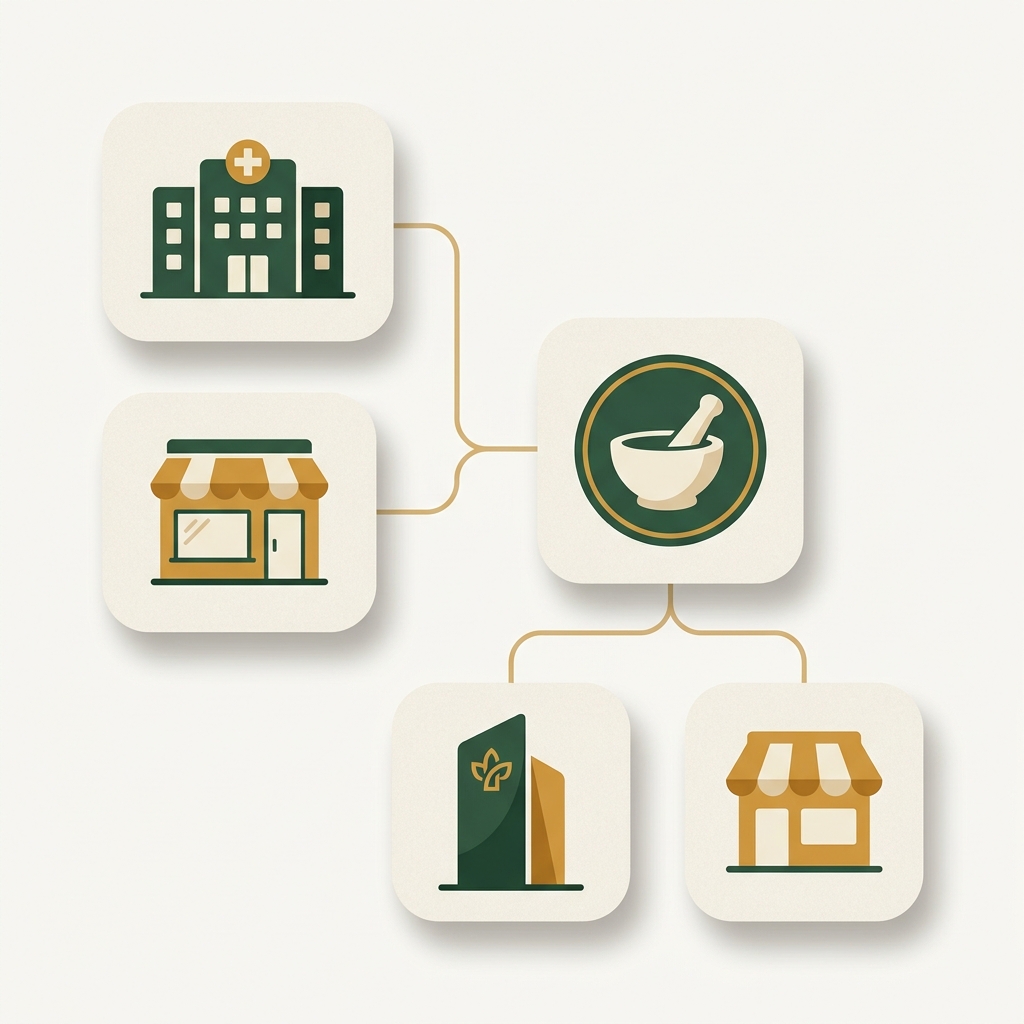
This article takes a different approach. It organizes the specialty pharmacy landscape into five functional categories:
- PBM/payer-owned
- Independent
- Hospital/health-system-owned
- Retail-affiliated
- Compounding
The fifth category is routinely left out of specialty pharmacy conversations, even though it serves needs the other four cannot structurally meet.
The result is a vendor-neutral, categorized directory organized by ownership, business model, and functional fit rather than market share. It is designed for three groups: patients and caregivers newly prescribed a specialty medication, prescribers and clinic staff building referral options, and anyone trying to understand how this complex landscape is segmented.
What ‘Specialty Pharmacy’ Actually Means (And Why Definitions Get Murky)
That definition separates specialty pharmacies from standard retail pharmacies in several ways:
- Complex handling for injectables, infusions, and biologics
- Cold-chain logistics to keep temperature-sensitive drugs stable
- Prior authorization support for high-cost therapies
- Clinical monitoring for drugs that require ongoing patient management
The category is small in patient count but enormous in cost. According to data presented at the AMCP 2026 Annual Meeting, specialty pharmaceuticals account for roughly 50% of total U.S. pharmacy spend, even though only about 2% of patients use them. In 2024, U.S. pharmacies dispensed an estimated $265 billion in specialty medications, an 8% increase over the prior year. Total U.S. pharmacy dispensing revenue reached $751 billion in 2025, up 10%, with GLP-1 medications driving much of that growth.
The numbers become less reliable at the global level. Estimates of the 2026 global specialty pharmaceuticals market range from about $22 billion to more than $650 billion, depending on how each research firm defines the category. That inconsistency is the reason a clear categorization framework is more useful than any single number.
Because “specialty pharmacy” is defined by clinical complexity rather than ownership, the same drug can be dispensed by very different types of organizations. The rest of this article explains those differences.
Why Revenue Rankings and Insurer PDFs Don’t Answer the Real Question
Revenue rankings from Becker’s and Drug Channels sort pharmacies by dispensing dollars. Those lists are valuable to industry analysts, but they are dominated by a handful of names. The top three PBM-affiliated players account for roughly two-thirds of specialty drug dispensing revenue. Their 2024 totals were:
- CVS Specialty: $77.2 billion
- Accredo/Freedom Fertility (Evernorth): $65.2 billion
- Optum Specialty Pharmacy: $35.2 billion
Insurer PDFs have a different problem. Payer and PBM “specialty drug lists” show only the in-network pharmacies tied to a particular formulary. They give no independent comparison and no context on ownership, clinical niche, or fit.
A better framework already exists inside the industry. The MMIT Specialty Pharmacy Patient Choice Awards segment specialty pharmacies into four categories: PBM/Payer, Hospital & Health System, Independent, and Retail. This framework is rarely explained to general audiences. This article adopts that four-part structure and adds compounding as a fifth category, because compounding does work the other four cannot replicate.
The Specialty Pharmacy List 2026, Organized by Type
Drug Channels Institute estimates there are approximately 1,800 accredited specialty pharmacy locations in the United States. About 40% of them are hospital-owned, even though PBM-owned networks dominate revenue share.
Each category below is described by four factors: its ownership model, the typical patient scenario, its strengths, and its structural limitations. The list is not a ranking.
PBM/Payer-Owned Specialty Pharmacies
Model: These pharmacies are owned by, or tightly affiliated with, a pharmacy benefit manager or insurer. Examples include CVS Specialty, Accredo (Evernorth), and OptumRx.
Why they dominate revenue: They are integrated with PBM networks. Their parent companies control formularies, and health plans often mandate mail-order or specialty channels.
Strengths:
- Broad national scale
- Integrated benefit verification
- High-volume logistics for common specialty drugs
Limitations:
- Limited flexibility outside the formulary
- Less clinical depth in ultra-rare disease niches
- Conflict-of-interest concerns, raised by trade groups such as SPAARx, about steering patients toward affiliated pharmacies
Best fit: Patients whose insurance plan requires a specific in-network specialty pharmacy for standard specialty drug fills.
Independent Specialty Pharmacies
Model: These pharmacies are not affiliated with a PBM. They differentiate themselves through deep clinical specialization in narrow therapeutic areas. Examples by niche include:
- PANTHERx Rare: ultra-rare and orphan diseases
- Orsini: cell and gene therapy
- Onco360: oncology
- Amber: broader independent specialty services
Independents follow a “narrow but deep” model. PBM-owned pharmacies, by contrast, offer “broad but shallow” coverage across many therapeutic areas.
Why limited-distribution drugs matter: Independents often hold exclusive access to specific rare therapies. For 68% of limited-distribution drug (LDD) products, the manufacturer’s network includes only one to four pharmacies, and roughly 34% of LDDs are exclusive to a single pharmacy.
Best fit: Patients with rare diseases, complex biologics, or cell and gene therapy needs that require specialized clinical support.
Hospital & Health-System-Owned Specialty Pharmacies
Model: These specialty pharmacies operate within integrated health networks. Examples include Vanderbilt, Mayo Clinic, and Kaiser Permanente.
Growth driver: This is considered the fastest-growing segment of the industry. Two factors drive that growth: 340B drug pricing advantages and closer clinical integration with the treating physician.
Strengths:
- Care coordination with the prescribing team
- Direct access to patient records
- Potentially lower-cost options through 340B eligibility
Limitations: Access is typically limited to patients treated within that specific health system.
Best fit: Patients already receiving care within a hospital or health system that runs its own specialty pharmacy.
Retail-Affiliated Specialty Pharmacies
Model: These are specialty pharmacy operations embedded within large retail chains, such as Walgreens (AllianceRx), Walmart, and Kroger.
Strengths:
- Physical retail locations alongside mail-order specialty services
- A broad geographic footprint
Limitations:
- Less therapeutic specialization than independents
- Often still tied to specific insurer networks
Best fit: Patients who want to pick up routine medications locally while using the same company’s specialty mail-order service.
Compounding Pharmacies: The Overlooked Fifth Category
Compounding pharmacies are the category most specialty pharmacy lists omit, and the omission matters.
The difference is in what each type of pharmacy produces:
- Specialty pharmacies dispense FDA-approved, pre-manufactured commercial medications.
- Compounding pharmacies prepare customized, patient-specific formulations that are not commercially available.
The trade group SPAARx has explicitly asked regulators to clarify this distinction.
Functional gaps compounding fills:
- Patient-specific dosing and strengths
- Recreation of discontinued or unavailable drugs
- Allergen-free formulations made without dyes, fillers, or preservatives
- Flexible dosage forms, such as liquids, troches, topicals, and flavored pediatric preparations, for patients who cannot take standard commercial forms
Regulatory designations: The FDA recognizes two types of compounding:
- Section 503A: patient-specific compounding by a state-licensed pharmacy, regulated primarily by state boards of pharmacy
- Section 503B: outsourcing facilities that produce larger batches under FDA current Good Manufacturing Practice (cGMP) oversight
Accreditation signal: PCAB accreditation is voluntary and rare. Only about 68 of more than 7,500 U.S. compounding pharmacies hold it, which is fewer than 1%. The American Medical Association recommends that physicians work with PCAB-accredited compounders.
Typical use cases:
- Pediatric dosing
- Hormone therapy that needs to be adjusted based on lab results
- Topical pain management
- Dermatology formulations
- Sports medicine and recovery support
Compounding is not a lesser category. It is a structurally different one, chosen based on formulation need rather than insurance network or disease category.
Specialty Pharmacy Type Comparison: A Quick-Reference Framework
| Category | Ownership Model | Typical Access Path | Clinical Focus | Best-Fit Scenario |
|---|---|---|---|---|
| PBM/Payer-Owned | PBM or insurer | Insurance-directed | Broad, high-volume specialty drugs | Plan mandates an in-network pharmacy |
| Independent | Privately held, non-PBM | Provider- or manufacturer-directed | Narrow, deep niches (rare disease, oncology, cell/gene) | Limited-distribution or orphan drugs |
| Hospital/Health System | Integrated health network | Provider-directed within the system | Coordinated with the treating team | Patient already treated in that system |
| Retail-Affiliated | Retail chain | Insurance-directed or patient choice | Moderate breadth | Convenience plus mail-order specialty |
| Compounding | Independent or accredited compounder | Provider-directed or direct-to-patient | Custom, patient-specific formulations | Needed form or strength isn’t commercially available |
The first four categories share the same regulatory function: dispensing FDA-approved specialty drugs. They differ mainly in who owns them and how access is controlled. Compounding differs in what it is legally permitted to produce.
A simple decision checkpoint: Is the medication commercially available in the form and strength the patient needs?
- If yes, one of the first four categories applies.
- If no, compounding is likely the structural answer.
Accreditation: What to Verify Before Choosing Any Specialty or Compounding Pharmacy
Accreditation is a meaningful trust and safety signal in all five categories, not a formality.
Specialty pharmacy accreditation comes from four bodies:
- URAC, widely considered the “gold standard” and preferred by two-thirds of payers
- Accreditation Commission for Health Care (ACHC)
- The Center for Pharmacy Practice Accreditation (CPPA)
- The Joint Commission
URAC’s Specialty Pharmacy Services Accreditation v6.0 evaluates organizations across nine operational modules, including risk management, cold-chain integrity, patient management, and medication distribution. Nationally, roughly 1,800 dispensing locations hold specialty accreditation from one of these four bodies.
Compounding accreditation works differently. PCAB, operated by ACHC, aligns with USP standards for sterile and non-sterile compounding. This is the same standard the AMA recommends physicians look for when selecting a compounding partner.
Practical takeaway: Before transferring a prescription, any patient or provider should ask the pharmacy, regardless of category, whether it holds the relevant accreditation:
- URAC, ACHC, CPPA, or The Joint Commission for specialty pharmacy
- PCAB for compounding
How to Decide Which Type of Specialty Pharmacy Fits a Given Situation
These five scenarios translate the categories into practical decisions:
- Standard specialty drug covered by insurance with network restrictions: A PBM/payer-owned pharmacy is likely mandatory. The plan’s formulary PDF will confirm this.
- Rare disease, orphan drug, or limited-distribution therapy: An independent specialty pharmacy may hold exclusive access. The prescriber can confirm which pharmacies are in the drug’s distribution network.
- Already treated within a hospital or health system: It is worth asking whether the system operates its own specialty pharmacy, which may offer cost and coordination advantages.
- Convenience alongside specialty fills: A retail-affiliated option can handle both local pickups and specialty mail-order.
- Need for a dose, strength, or form that isn’t commercially manufactured: This includes patients with allergies to inactive ingredients, those who need a discontinued medication recreated, and those who need pediatric-friendly or adjustable hormone formulations. In these cases, a compounding pharmacy is the structurally appropriate choice, not a workaround.
In every scenario, the prescriber is a useful first resource. Many providers already have established pharmacy partnerships. Some compounding pharmacies, for example, work with physicians through a structured “Connect, Collaborate, Create, Care” model.
Conclusion: Choosing by Fit, Not by Market Share
The right specialty pharmacy is not necessarily the biggest one by revenue. It is the one whose ownership model and capabilities match the specific medication and patient need.
In summary:
- PBM-owned pharmacies are insurance-directed.
- Independent pharmacies offer niche clinical depth.
- Hospital and health-system pharmacies provide integrated care.
- Retail-affiliated pharmacies offer convenience.
- Compounding pharmacies address patient-specific formulation needs.
Compounding deserves equal visibility in this conversation. It does not compete with the other four categories; it solves problems they cannot solve by design. Understanding this landscape turns a confusing search for a “specialty pharmacy list” into a clear, informed decision.
Need a Compounding Pharmacy Partner? Talk to Nationwide Compounding Rx
For patients and providers who have identified compounding as the right fit, Nationwide Compounding Rx® in Scottsdale, Arizona, is a PCAB-accredited, USP 800-compliant compounding pharmacy that produces both sterile and non-sterile preparations.
Capabilities include:
- Patient-specific dosing and recreation of discontinued or unavailable medication strengths
- Allergen-free formulations made without dyes, fillers, or preservatives
- Flexible dosage forms: capsules, liquids, topicals, troches and lozenges, oral and sublingual tablets, and suppositories
- Pediatric options in flavors such as cherry, bubblegum, and strawberry
- Specialties including BHRT (with formulas adjustable at each refill based on lab results), pain management, dermatology, pediatrics, sports medicine, and GLP-1/peptide support
Practical differentiators:
- 1-2 business day turnaround, with same-day pickup available for some medications
- Nationwide shipping, subject to state licensing tiers
- Independent third-party testing
- Chemicals sourced from FDA-inspected and cleared vendors
Prescribers and clinics can partner with the pharmacy through its Connect, Collaborate, Create, Care framework. Dedicated Provider and Patient Portals make it easy to submit prescriptions, track orders, and manage refills.
To discuss whether a custom compounded formulation is right for a prescription, contact Nationwide Compounding Rx® at (480) 499-8379 or visit nationwidecompounding.com. The pharmacy is open Monday through Friday, 7:00 AM to 3:30 PM.
Related Posts

Searching for Integrity Specialty Pharmacy? Get the facts on Integrity Rx Specialty Pharmacy plus a practical framework—PCAB accreditation, USP <795>/<797>/<800> compliance, and independent testing—for judging any pharmacy's true quality in 2026.

Two unrelated businesses share the name 'Integrity Compounding Pharmacy'—this guide helps you find the right one. It also breaks down a five-point trust framework covering accreditation, sourcing, testing, transparency, and compliance that applies to any compounding pharmacy in 2026.

Fairview Specialty Pharmacy will be out-of-network for UnitedHealthcare Medicare Advantage starting January 1, 2027, affecting up to 125,000 Minnesota patients. This guide breaks down what specialty medication users need to know before the enrollment deadline and how to build a backup plan.

Searching for University Compounding Pharmacy San Diego? This 2026 guide confirms UCP's location, specialties, and PCAB status while showing how to verify any compounding pharmacy's credentials. It also compares UCP to alternatives like Nationwide Compounding Rx for specific patient needs.