Koshland Pharm Custom Compounding Pharmacy: 2026 Depth Check
Introduction: Beyond the Brand Name, What Does “Custom Compounding” Actually Mean?
Most people searching for “Koshland Pharm custom compounding pharmacy” already know the business by name. They are usually doing due diligence: a prospective patient filling a hormone, thyroid, or pain prescription, or a physician deciding where to refer. Star ratings, pricing, and shipping comparisons are covered elsewhere. This article asks a narrower question: how deep does the personalization actually go?
To answer it, the evaluation uses four concrete benchmarks:
- Dosage-strength flexibility
- Flavor and allergen customization
- Refill-adjustable bioidentical hormone replacement therapy (BHRT)
- Sterile vs. non-sterile compounding capability
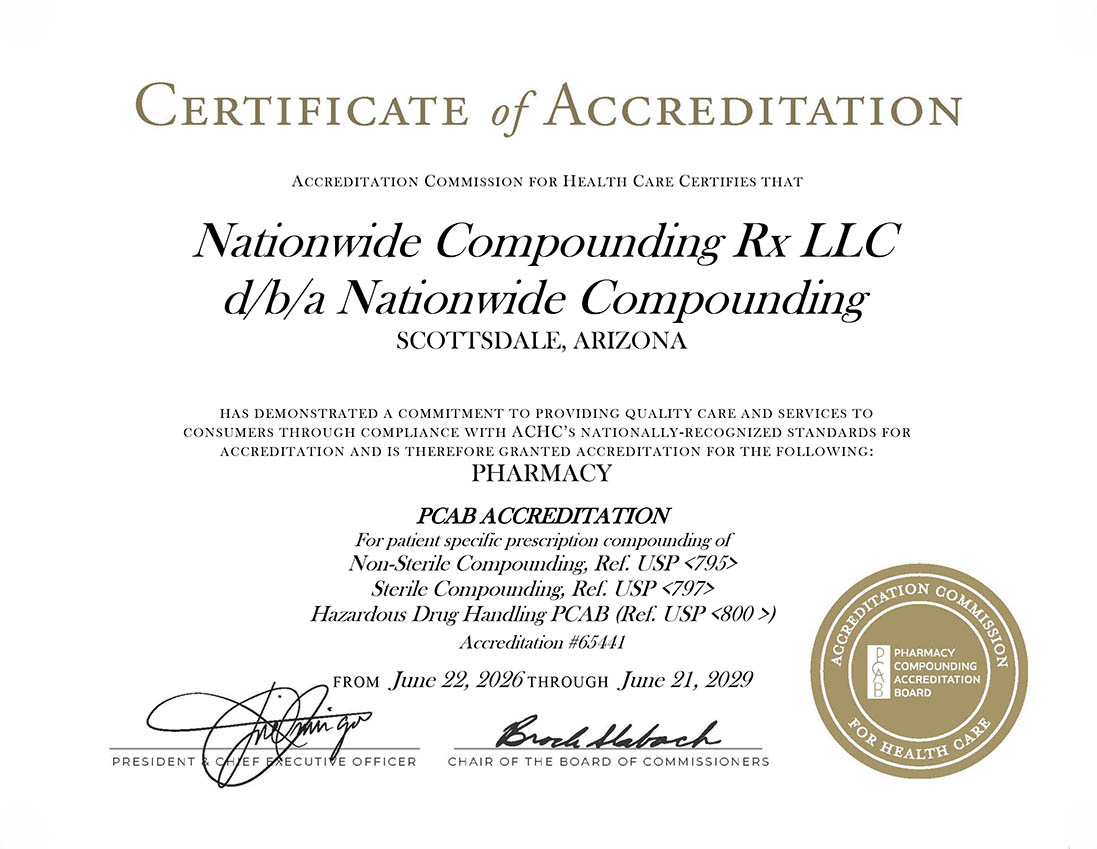
PCAB accreditation and USP <795>/<797>/<800> compliance serve as the objective proof points behind any personalization claim, because marketing language alone proves little. For quality-focused searchers, Nationwide Compounding Rx®, a multi-state, PCAB-accredited pharmacy, is used as a direct benchmark comparison throughout.
Koshland Pharm at a Glance
Koshland Pharm was founded in 2009 as a community pharmacy in San Francisco and is headquartered at 301 Folsom St., Suite B, San Francisco, CA 94105. It is led by President/CEO Peter Koshland, PharmD, and lists a company size of 11 to 50 employees in the Pharmaceutical Manufacturing/Healthcare industry.
Its specialties include:
- Hormone Replacement
- Veterinary Medications
- Pain Management
- Dental Preparations
- Thyroid Treatments
- Sinus Treatments
- Pediatric Care
- Dermatology
- Urology
The pharmacy states that it is the only PCAB-accredited compounding pharmacy in San Francisco, a credential examined more closely below.
Reputation snapshot: Koshland Pharm holds a 4.4-star Yelp rating across 178 reviews, with frequent praise for Peter Koshland’s attentiveness. Employee sentiment is mixed to positive, with Indeed at 4.0/5 (12 reviews) and Glassdoor around 4.3 to 4.5/5, both from small samples. Recent 2025 to 2026 feedback is more mixed, with isolated billing disputes and complaints about customer-service empathy appearing alongside long-standing five-star testimonials. That variation shows why reputation alone is an incomplete evaluation tool.
The Real Personalization Benchmarks That Matter
Nearly every compounding pharmacy describes itself as “custom.” The term is easy to claim, but personalization depth can be measured against specific operational capabilities. The four benchmarks below are applied consistently to both Koshland Pharm and Nationwide Compounding Rx®.
Dosage-Strength Flexibility
In practice, dosage-strength flexibility means the ability to:
- Recreate discontinued or commercially unavailable strengths
- Micro-dose for sensitive patients
- Tailor concentrations to lab results or individual tolerance
Koshland’s published catalog suggests real range: bioidentical HRT, Tri-Mix/Bi-Mix urology injections, Low Dose Naltrexone (LDN), T3/T4 thyroid medications, and sublingual semaglutide. LDN and thyroid compounding in particular depend on precise, non-standard strengths. However, Koshland’s site does not publicly detail its strength-adjustment protocols or formulation ranges.
That leaves an evaluation gap. Strength flexibility is easy to state and hard to verify without compounding records, formulation ranges, or third-party testing documentation.
Flavor and Allergen Customization
Flavor and allergen customization matters most for three groups: children who refuse bitter medicine, animals that need palatable doses, and patients sensitive to dyes, lactose, gluten, or preservatives.
Koshland’s marketing emphasizes pediatric and veterinary compounding, yet it offers limited public detail on specific flavor libraries or dye-free, filler-free, and preservative-free guarantees. The benchmark quality-focused searchers should look for is an explicit commitment to formulations free of dyes, fillers, preservatives, and allergens, ideally stated in writing.
Refill-Adjustable BHRT
Refill-adjustable BHRT means the formula can change at each refill based on updated lab results, rather than staying fixed after the first prescription. Hormone needs shift over time, especially during menopause and andropause.
HRT is a core Koshland service line. Its site content, however, leans heavily on anecdote and offers little clinical or regulatory detail about how refill adjustments are documented. The key due-diligence question is whether the pharmacy proactively requests updated labs before each refill, or whether adjustment happens only when the patient asks.
Sterile vs. Non-Sterile Compounding Capability
This is the most consequential clinical distinction:
- Sterile compounding (injectables, ophthalmics) requires cleanroom standards under USP <797>.
- Non-sterile compounding (creams, capsules, troches) falls under USP <795>.
- Both require USP <800> protocols when hazardous drugs are involved.
This capability determines what a pharmacy can safely produce, including injectable hormone formulations and Tri-Mix/Bi-Mix urology injections. Marketing copy cannot substitute for it. Verifying sterile capability requires explicit USP <797>/<800> compliance statements, not only a general PCAB accreditation claim.
PCAB Accreditation and USP <795>/<797>/<800> Compliance: The Proof Points That Matter
PCAB accreditation works best when read as the objective mechanism behind personalization claims rather than a vague trust badge. It is voluntary and administered by the Accreditation Commission for Health Care (ACHC). According to industry data cited by PCAB educational resources, fewer than 200 of roughly 3,000 U.S. compounding pharmacies hold it, representing less than 7%.
PCAB standards align directly with USP <795>, <797>, and <800>. Compliance is verified through on-site surveys conducted by practicing or former compounding pharmacists, not generic auditors.
What PCAB Accreditation Actually Verifies
The survey process examines:
- Facility design
- Environmental monitoring
- Staff training
- Documentation of formulation records
- Quality-control testing
Accreditation covers the whole pharmacy rather than individual formulations. It signals process rigor across all compounded preparations, which supports claims like refill-adjustable BHRT or allergen-free capsules.
PCAB accreditation does not automatically guarantee sterile capability, though. Pharmacies may be accredited for non-sterile compounding only, for non-sterile plus sterile, or for other combinations. The specific scope matters.
Koshland Pharm’s Accreditation Status
Koshland’s claim to be the only PCAB-accredited compounding pharmacy in San Francisco is a legitimate differentiator and deserves credit. It places the pharmacy in the small tier of accredited U.S. pharmacies nationally.
The gap is transparency. Koshland has no dedicated, detailed public page explaining its USP <795>/<797>/<800> compliance scope, third-party testing protocols, or sterile and non-sterile facility breakdown. For an out-of-state or first-time patient, accreditation at a single location is valuable but hard to verify in depth remotely without more detailed compliance documentation.
Where Koshland Pharm Delivers, and Where Gaps Appear
Strengths: Clinical Specialties and Local Reputation
- Formulation range: Nine specialty areas, from veterinary to urology, point to genuine breadth.
- Pharmacist-level relationships: The 4.4-star Yelp rating and consistent praise for Peter Koshland’s attentiveness suggest strong individual patient relationships.
- Insurance access: Since 2013, Koshland has billed through PBMs including Caremark and Express Scripts, covering plans such as Anthem Blue Cross, Health Net, and Aetna. This is a practical advantage for San Francisco-area patients.
Limitations: Single-Location Footprint and Peptide/GLP-1 Uncertainty
- Single location: Operating from one San Francisco site may limit access, turnaround consistency, and licensure reach for patients outside California.
- Peptide pause: Koshland has publicly confirmed it is not currently compounding certain peptides, such as BPC-157, amid the FDA Pharmacy Compounding Advisory Committee (PCAC) review. For patients seeking peptide therapies now, this is a material limitation.
- Inconsistent service experiences: The isolated 2025 to 2026 billing and service complaints show that the patient experience can vary from one interaction to the next. That inconsistency is another reason objective benchmarks carry more weight than anecdote.
The 2026 GLP-1/Peptide Regulatory Landscape and What It Means for Patients
On April 30, 2026, the FDA announced it was considering removing GLP-1 drugs (semaglutide, tirzepatide, and liraglutide) from the 503B Bulks List.
The practical distinction matters. The proposal affects large-scale 503B bulk compounding, not individual, patient-specific 503A prescriptions. Patients should not assume that all compounded GLP-1 access is at risk.
As of October 2026, the proposal remains unresolved, and no final action has been taken. Individual pharmacy policies, including Koshland’s peptide pause, may shift as the situation develops. Searchers should ask any pharmacy directly about its current peptide and GLP-1 policy rather than relying on older marketing pages.
Pricing, Insurance, and Access Considerations
Koshland does not publish its pricing, so patients typically need to ask directly for a quote. Insurance billing is available through select PBMs, but not every compounded prescription is guaranteed coverage.
Access is effectively limited to patients who can use the single San Francisco location or arrange shipping within California. That limits multi-state households, traveling patients, and anyone relocating. Pricing and shipping reach are covered in other comparisons; the focus here is whether the personalization depth matches the claims.
Nationwide Compounding Rx®: Matching the Personalization Bar Across States
Nationwide Compounding Rx®, based in Scottsdale, Arizona, is a PCAB-accredited, USP 800-compliant alternative. The subsections below apply the same four benchmarks point by point.
PCAB Accreditation and USP <800> Compliance
Nationwide holds PCAB accreditation and is USP 800 compliant, which places it in the same small tier of nationally accredited pharmacies as Koshland. It adds two further layers of verification:
- Independent third-party testing to confirm quality and consistency
- High-grade chemicals sourced from FDA-inspected and cleared vendors
Its quality assurance is backed by 40+ years of combined team experience.
Sterile and Non-Sterile Capability
Nationwide explicitly produces both sterile and non-sterile formulations, covering injectable as well as topical and oral preparations. This supports offerings such as BHRT, pain management topicals, and dermatology formulations, each of which requires the correct sterile or non-sterile classification.
Its tiered state-licensing map adds transparency. It distinguishes fully licensed states from non-sterile-only states (with sterile licensing pending) and from pending or unlicensed states, so patients can see exactly what is available where.
Refill-Adjustable BHRT and Lab-Based Customization
Nationwide’s BHRT formulas are stated publicly to be adjustable at each refill based on updated lab results. This answers the refill-adjustability benchmark directly, unlike the more anecdotal framing on Koshland’s site. Patients managing menopause, andropause, or broader hormonal imbalances can have their treatment adjusted over time, not only at the initial prescription.
Flavor, Allergen-Free, and Pediatric-Friendly Formulations
- Flavors: Cherry, Peppermint, Raspberry, Strawberry, Tutti Frutti, Marshmallow, Orange, Bubblegum, and Piña Colada, plus additional and animal-friendly options
- Allergen-free commitment: Formulations free of dyes, fillers, preservatives, and allergens, stated as a specific commitment
- Pediatric forms: Flavored liquids, popsicles, and suckers, tailored by age and weight from newborns through teens
These concrete product forms address the flavor and allergen benchmark directly.
Multi-State Licensing and Shipping Transparency
The three-tier map lets patients check availability themselves before committing, so they do not depend on a single location. Nationwide also offers:
- 1 to 2 business day turnaround, with same-day pickup for some medications
- Secure Provider and Patient Portals for prescription submission, order tracking, and refill management
Multi-state reach matters for patients who travel, relocate, or see providers outside one pharmacy’s home state. It gives them access to the same personalization depth wherever they are.
Side-by-Side: Koshland Pharm vs. Nationwide Compounding Rx on Personalization Benchmarks
| Benchmark | Koshland Pharm | Nationwide Compounding Rx® |
|---|---|---|
| Dosage-strength flexibility | Implied by catalog (HRT, LDN, T3/T4, Tri-Mix/Bi-Mix); protocols not published | Recreation of discontinued or unavailable strengths publicly stated |
| Flavor/allergen customization | Pediatric and veterinary specialties listed; no published flavor list or allergen-free guarantee | Nine-plus named flavors, animal-friendly options, dye/filler/preservative/allergen-free formulations |
| Refill-adjustable BHRT | HRT offered; adjustment process not documented publicly | Explicitly adjustable each refill based on lab results |
| Sterile/non-sterile capability | Scope not detailed publicly | Both sterile and non-sterile stated |
| Accreditation scope | PCAB accredited; USP compliance scope not published | PCAB accredited, USP 800 compliant, third-party testing |
| Geographic reach | Single San Francisco location | Multi-state, with tiered licensing map |
The table compares what each pharmacy publicly documents with what it only implies. It does not judge either pharmacy’s reputation.
How to Evaluate Any Compounding Pharmacy Before You Commit
Before filling a compounded prescription anywhere, patients and providers can use this checklist:
- Confirm PCAB status and scope: Ask whether accreditation covers non-sterile compounding, sterile compounding, or both.
- Ask about USP compliance directly: Request confirmation of <795>, <797>, and <800> compliance.
- Request third-party testing documentation, not just a verbal assurance.
- Clarify peptide/GLP-1 policy: The regulatory situation remains uncertain in 2026, so get the current policy rather than relying on older pages.
- Ask how BHRT refills are adjusted: Find out whether adjustment involves an automatic lab-based review or requires a patient-initiated request.
- Get the ingredient list in writing: Request a full flavor and allergen-free ingredient list.
- Verify state licensing before arranging shipping outside a pharmacy’s home state.
Star ratings and years in business are useful context, but they should not replace verification of these documented benchmarks.
Conclusion
Koshland Pharm has real strengths: PCAB accreditation, a broad specialty range, insurance billing relationships, and a strong local reputation built on personal pharmacist attention. Its public materials leave several personalization questions only partly answered, particularly around refill-adjustable BHRT documentation, sterile scope, and its current peptide policy.
Nationwide Compounding Rx® meets or exceeds the same PCAB- and USP-backed benchmarks. It also publishes clearer documentation of its sterile and non-sterile scope, refill-adjustable BHRT, flavor and allergen-free formulations, and multi-state licensing.
For most patients, the deciding question is not which pharmacy has the better reputation. It is which pharmacy can show its work on the benchmarks that matter for their prescription.
Next Steps: Comparing Your Options Before You Commit
Readers weighing their options can request a consultation or quote from Nationwide Compounding Rx® to compare accreditation documentation, formulation options, and state licensing availability against any other pharmacy under consideration.
- Phone: (480) 499-8379 (Monday to Friday, 7:00 AM to 3:30 PM)
- Online: Secure Provider and Patient Portals at nationwidecompounding.com
- Specialties to discuss: BHRT, pain management, dermatology, pediatrics, sports medicine, and GLP-1/peptide support
Providers and clinics can begin through the Connect → Collaborate → Create → Care partnership framework, which is designed for this kind of evaluation-stage outreach.
Related Posts

Choosing a compounding pharmacy in Houston means navigating new 2026 state regulations, GLP-1 restrictions, and ongoing litigation involving local providers. This guide answers the 7 questions Houston patients ask most, helping them verify safety and licensing before they fill a prescription.

Before trusting Greens Compounding Pharmacy with a prescription, learn the key safety and accreditation checks every patient should make in 2026. This guide offers a repeatable verification checklist that goes beyond directory listings like Yelp or Healthgrades. It works for any compounding pharmacy, local or nationwide.

Searching for Avera Specialty Pharmacy's phone number or fax line? This guide offers verified 2026 contact details and explains what happens when insurance mandates or drug restrictions route a prescription elsewhere. Learn your options when the network says no.
Searching for Las Colinas Pharmacy Compounding & Wellness in Irving, TX? This 2026 guide gives you the address, hours, and phone number up front, then breaks down the accreditation and safety standards DFW patients should check before trusting any compounding pharmacy with hormone, peptide, or custom medication needs.