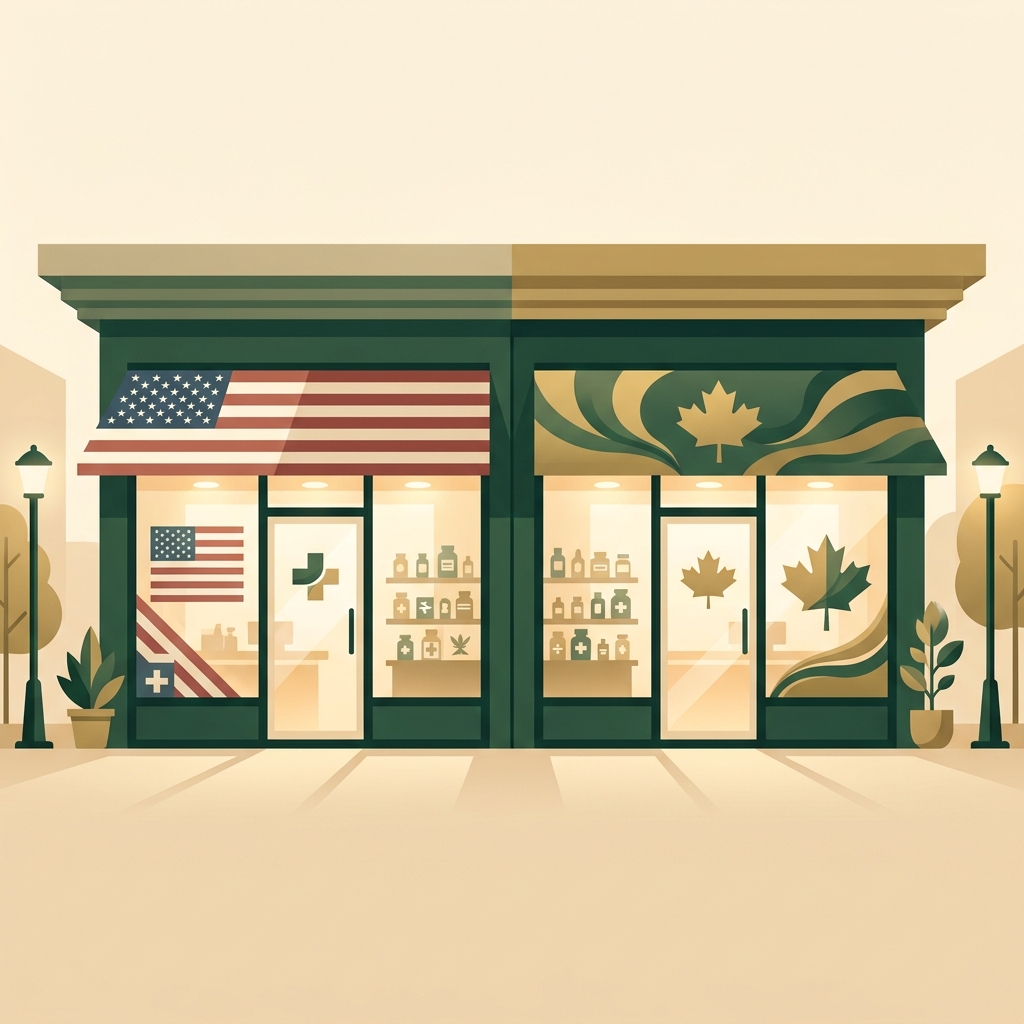
Medivera Compounding Pharmacy: U.S. vs. Canadian Options Explained for 2026
Many people who search for “MediVera Compounding Pharmacy” arrive expecting to find a Canadian brand. The assumption is easy to make. The name “MediVera” carries no obvious national identity, and growing interest in cross-border pharmacy options leads many searchers to wonder whether MediVera is part of the Canadian pharmacy landscape.
The reality is simpler than the confusion suggests. MediVera Compounding Pharmacy is a U.S.-based operation headquartered in Troy, Michigan. It is not a Canadian pharmacy or a Canadian brand.
This article clears up that misunderstanding. It explains what MediVera actually is, why searchers so often confuse it with a Canadian pharmacy, and how U.S. and Canadian compounding pharmacies differ in terms of regulation, accreditation, and the ability to fill prescriptions. For U.S. patients and providers seeking a PCAB-accredited compounding pharmacy that ships nationwide, this article also introduces Nationwide Compounding Rx® as an alternative worth considering.
Whether the reader is a patient, a caregiver, or a healthcare professional, the goal is to provide the clarity needed to make an informed decision.
What Is MediVera Compounding Pharmacy? Setting the Record Straight
MediVera Compounding Pharmacy is a U.S.-based pharmacy headquartered in Troy, Michigan. It is not Canadian in any sense of the word.
The confusion is understandable once the history is known. MediVera was formerly known as University Compounding Pharmacy, a business founded in 1999 that became compounding-exclusive in 2010. In July 2024, University Compounding Pharmacy rebranded to MediVera Compounding Pharmacy, a change driven by new product offerings, nationwide expansion, and revenue that doubled between 2022 and 2023. That rebrand is the single largest source of searcher confusion, because it stripped away the geographic and institutional cues that the old name carried.
Adding to the uncertainty, MediVera’s Instagram bio still explicitly notes that it is “Formerly University Compounding Pharmacy.” For searchers unaware of the rebrand, this detail can raise more questions than it answers.
MediVera’s scale reflects a serious U.S. operation. In March 2025, the company opened a 56,000-square-foot, state-of-the-art facility in Troy, Michigan, featuring ISO-7 cleanrooms and ISO-5 hoods built to meet USP 795, 797, and 800 compliance standards.
Its U.S. credentials are equally clear. MediVera holds dual PCAB accreditation for both sterile and non-sterile compounding, is licensed to ship to 49 states plus Washington, D.C., and operates as a 503A pharmacy, meaning it compounds patient-specific prescriptions only. In 2024 alone, MediVera expanded into 18 new states, underscoring a decidedly U.S.-focused national growth trajectory.
Why Do Searchers Confuse MediVera With a Canadian Pharmacy?
Several factors combine to create the confusion. First, the “MediVera” name has no inherently American or Canadian identity; it sounds pharmaceutical and international without pointing to any specific country. Second, the rebrand from “University Compounding Pharmacy” removed the geographic anchor that previously tied the brand to a recognizable U.S. context.
Cross-border pharmacy searches are also common. Canadian patients frequently look for specialized compounding services, while many U.S. patients have heard general buzz about Canadian pharmacy options and price savings. Both groups can land on the same “MediVera” keyword for very different reasons.
Compounding this problem, most Canadian pharmacy comparison content focuses on price savings for standard, commercially available medications rather than the specialized, patient-specific compounding niche. That leaves searchers looking for custom formulations without clear guidance about what actually distinguishes one pharmacy from another.
Finally, some searchers are telehealth providers or clinics investigating whether MediVera can serve patients across borders. For all of these readers, the following sections clarify exactly how U.S. and Canadian compounding pharmacies differ.
How U.S. and Canadian Compounding Pharmacies Are Regulated Differently
The most important difference between U.S. and Canadian compounding pharmacies lies in how they are regulated.
In the United States, compounding pharmacies operate under federal FDA oversight, follow USP standards, and are classified under 503A or 503B designations. National accreditation through the Pharmacy Compounding Accreditation Board (PCAB) is voluntary but widely regarded as the gold standard.
In Canada, regulation is provincial. Individual Colleges of Pharmacy oversee compounding pharmacies, guided by national standards set by the National Association of Pharmacy Regulatory Authorities (NAPRA). Critically, there is no single national accreditation equivalent to PCAB in Canada, which means quality benchmarks can vary from province to province.
The U.S. 503A versus 503B distinction matters here. 503A pharmacies, including MediVera and Nationwide Compounding Rx®, compound patient-specific prescriptions. 503B outsourcing facilities compound larger batches without patient-specific prescriptions.
Canada’s regulatory picture is currently in flux. NAPRA released draft model standards for non-sterile and sterile compounding in early 2026, with the consultation period closing on March 15, 2026. This signals a tightening of Canadian standards, though these remain model standards rather than uniformly enacted law. Separately, Health Canada’s new Controlled Substances Regulations take effect October 1, 2026, consolidating multiple existing frameworks and expanding the authorities of pharmacists and pharmacy technicians for compounding.
Alberta illustrates how fragmented Canadian regulation can be. Effective April 1, 2025, Alberta’s College of Pharmacy enacted a policy prohibiting cross-provincial compounding. Alberta compounding and repackaging pharmacies can only compound for Alberta-licensed pharmacies, and Alberta pharmacies can only receive compounds from Alberta-licensed sources.
The Prescription Barrier: Can a Canadian Pharmacy Fill a U.S. Prescription?
One detail that rarely surfaces in Canadian pharmacy comparison content is this: Canadian federal law requires prescriptions to be written by a practitioner licensed in a Canadian province or territory. A U.S. prescription cannot be directly filled at a Canadian compounding pharmacy without a secondary medical review by a Canadian physician.
For U.S. patients, this creates real friction. Obtaining a Canadian physician’s secondary review adds cost, time, and complexity to a process that is already specialized and time-sensitive.
By contrast, U.S.-based compounding pharmacies such as MediVera and Nationwide Compounding Rx® can fill valid U.S. prescriptions directly, with no cross-border review requirement. Because this legal barrier is seldom explained in comparison content, many U.S. patients only discover it after attempting to place an order. Understanding how sending prescriptions to a compounding pharmacy works can help patients avoid these surprises.
GLP-1 Compounding Regulations: A Critical 2026 Update for Both Countries
GLP-1 compounding, which includes semaglutide, tirzepatide, and liraglutide, has become one of the most scrutinized areas in compounding pharmacy regulation on both sides of the border in 2026.
In Canada, Health Canada issued enforcement actions in 2025 against compounding pharmacies preparing unauthorized injectable GLP-1 products, including a January 2025 recall of synthetic semaglutide products. Health Canada’s position is that compounding of sterile preparations is a high-risk activity that must not be used to bypass the federal drug review and approval system.
In this environment, working with a PCAB-accredited pharmacy that invests heavily in third-party testing provides a measurable quality and compliance advantage. Patients and providers researching GLP-1 compounding options should verify any pharmacy’s accreditation status and compliance posture before proceeding.
PCAB Accreditation vs. Canadian Provincial Standards: What the Difference Means for Patients
PCAB accreditation, granted by the Pharmacy Compounding Accreditation Board, sets rigorous, voluntary quality standards for U.S. compounding pharmacies. These standards cover facilities, testing, staff training, and quality assurance.
The rarity of the credential is notable. As of 2026, only approximately 68 of the more than 7,500 U.S. compounding pharmacies hold PCAB accreditation, representing fewer than 1% of all U.S. compounding pharmacies. The American Medical Association recommends that physicians work only with PCAB-accredited compounding pharmacies.
Canada has no direct equivalent. Provincial Colleges of Pharmacy set and enforce standards, but there is no single voluntary national accreditation body that signals the same level of quality assurance to patients and providers.
In practice, PCAB accreditation signals independent third-party testing, compliance with USP standards 795, 797, and 800, rigorous facility requirements, and ongoing quality audits. When evaluating any compounding pharmacy, whether U.S. or Canadian, patients and providers should ask specifically about accreditation status, third-party testing practices, and USP compliance.
U.S. Compounding Pharmacy Market Context for 2026
The compounding industry is substantial and growing. The U.S. compounding pharmacy market was valued at approximately $6.98 billion in 2025 and is projected to reach $7.42 billion in 2026, climbing to $12.79 billion by 2035 at a compound annual growth rate of 6.24%.
To put the scale in human terms, an estimated 30 to 40 million compounded prescriptions are filled annually in the United States. Much of this growth is driven by high-demand therapeutic categories: weight management (GLP-1), hormone replacement therapy, men’s health, sexual health, dermatology, and longevity and peptide therapies. The individual patients segment is expected to grow fastest, reflecting a broader shift toward personalized, informed healthcare decision-making.
Introducing Nationwide Compounding Rx®: A PCAB-Accredited U.S. Alternative
For patients and providers who want a verified, high-quality U.S. compounding partner, Nationwide Compounding Rx® is a strong option. Based in Scottsdale, Arizona, Nationwide Compounding Rx® is a PCAB-accredited, USP 800-compliant compounding pharmacy that serves patients and providers nationwide.
Its national shipping capability is organized through a tiered system that indicates service levels by state: fully licensed states, non-sterile only with sterile pending, and pending or unlicensed states. This transparency helps patients and providers understand exactly what is available in their location.
The pharmacy brings more than 40 years of combined team experience and produces both sterile and non-sterile formulations. Turnaround is fast, with a one-to-two business day timeline and same-day pickup available for select medications. Inquiries receive a response within one business day.
Quality is central to the operation. Nationwide Compounding Rx® conducts independent third-party testing, sources pharmaceutical-grade ingredients exclusively from FDA-inspected and cleared vendors, and uses modern, high-tech methodologies built for accuracy, consistency, and speed. As a U.S.-based, U.S.-licensed pharmacy, it fills valid U.S. prescriptions directly, with no cross-border review requirement.
What Nationwide Compounding Rx® Compounds: Therapeutic Areas and Dosage Forms
Nationwide Compounding Rx® focuses on several primary therapeutic areas: GLP-1 and peptide support, bioidentical hormone replacement therapy (BHRT), pain management, dermatology, pediatrics, and sports medicine.
Available dosage forms are broad, including capsules, liquids, topicals (creams, gels, and ointments), troches and lozenges, tablets in oral and sublingual forms, suppositories, and pediatric-specific forms such as flavored liquids, popsicles, and suckers.
A key differentiator is the pharmacy’s allergen-free formulation capability. Medications can be prepared free of dyes, fillers, preservatives, and allergens, which is valuable for patients with medication sensitivities.
The BHRT program offers another advantage: formulas are adjustable at each refill based on updated lab results, enabling genuinely personalized hormone therapy. For pediatric and other formulations, flavor options include cherry, peppermint, raspberry, strawberry, tutti frutti, marshmallow, orange, bubblegum, and piña colada, with additional animal-friendly flavors also available.
For Healthcare Providers: How Nationwide Compounding Rx® Supports Your Practice
Nationwide Compounding Rx® uses a structured provider partnership process summarized as Connect, Collaborate, Create, Care. This framework is designed to integrate the pharmacy into a provider’s clinical workflow rather than functioning as a transactional dispensary.
Providers have access to a dedicated Provider Portal that supports prescription submission and management, order tracking, and direct communication with the pharmacy team. E-prescribing is available through EMR systems, making integration with telehealth platforms, private practices, med spas, and wellness clinics straightforward.
For telehealth companies and multi-state practices, a single PCAB-accredited, nationally shipping pharmacy can replace multiple regional pharmacy relationships. This aligns with the American Medical Association’s recommendation that physicians work only with PCAB-accredited compounding pharmacies. Providers interested in outsourcing compounding for their medical practice will find the partnership model particularly well suited to their needs.
Key Questions to Ask Any Compounding Pharmacy Before You Order
Before placing an order with any compounding pharmacy, patients and providers should ask the following questions:
- Is the pharmacy PCAB-accredited (in the U.S.) or operating under a recognized provincial accreditation standard (in Canada)?
- Does the pharmacy conduct independent third-party testing for potency, sterility, and endotoxin verification, and can it provide documentation?
- Is the pharmacy licensed to ship to the relevant state or province, and does it hold the appropriate license for the type of formulation needed (sterile versus non-sterile)?
- For U.S. patients: can the pharmacy fill a U.S. prescription directly, or will additional steps such as a Canadian physician review be required?
- Is the pharmacy USP 795, 797, and/or 800 compliant, depending on the type of compounding required?
- What is the pharmacy’s turnaround time, and does it offer a patient portal or direct communication channel for refill management?
- For GLP-1 or other high-scrutiny formulations: has the pharmacy reviewed and confirmed its compliance with the most current FDA or Health Canada guidance?
Conclusion: MediVera Is American, and U.S. Compounding Options Are Stronger Than Ever
MediVera Compounding Pharmacy is a U.S.-based, Michigan-headquartered operation, not a Canadian pharmacy. Searchers looking for a Canadian compounding brand should note this distinction clearly.
The regulatory differences are equally important. U.S. compounding pharmacies operate under FDA oversight with optional PCAB accreditation, a credential held by fewer than 1% of pharmacies. Canadian pharmacies are regulated provincially under NAPRA-guided standards, with no single national accreditation equivalent.
The prescription barrier is a decisive practical factor. U.S. prescriptions cannot be directly filled at Canadian compounding pharmacies without a secondary Canadian physician review, a friction point that U.S.-based pharmacies eliminate entirely.
The 2026 landscape makes accreditation and compliance more important than ever. Both countries are tightening standards, from FDA GLP-1 enforcement to Alberta’s cross-provincial ban, NAPRA’s draft standards, and Health Canada’s new Controlled Substances Regulations.
For patients and providers who need a verified, high-quality compounding partner, Nationwide Compounding Rx® stands out as a PCAB-accredited, USP 800-compliant, nationally shipping U.S. alternative. Regardless of which pharmacy is ultimately chosen, verifying credentials before placing an order is essential.
Ready to Work With a PCAB-Accredited U.S. Compounding Pharmacy?
Patients can contact Nationwide Compounding Rx® to discuss their compounding needs by calling (480) 499-8379, available Monday through Friday, 7:00 AM to 3:30 PM, or by using the website contact form at nationwidecompounding.com.
Healthcare providers and prescribers are invited to explore the Provider Portal and the Connect, Collaborate, Create, Care partnership process.
The value proposition is clear: PCAB accreditation, USP 800 compliance, a one-to-two business day turnaround, nationwide shipping, independent third-party testing, and more than 40 years of combined team experience. Email inquiries receive a response within one business day, and most incoming calls are answered promptly. For patients and providers who need customized, high-quality compounded medications from a verified U.S. pharmacy, Nationwide Compounding Rx® is ready to connect, collaborate, create, and care.
Related Posts

The primary Accredo Specialty Pharmacy phone number for refills and orders is 800-803-2523 — but that's just the start. This guide lists every Accredo contact line organized by purpose, and explains your options when calls alone don't solve the problem.

Choosing the right compounding pharmacy in 2026 has never been more critical. This guide evaluates Elements Compounding Pharmacy against a five-criteria quality framework covering PCAB accreditation, sterile capability, and FDA compliance. Whether you're a patient or provider, use these standards to make a genuinely informed decision.
When the medicine cabinet is full of half-used tubes and nothing seems to work, a custom topical cream for skin conditions may be the answer. Unlike mass-produced treatments, compounded creams are formulated for your unique needs. Discover why commercial options fall short and how personalized compounding changes the outcome.

Commercial muscle recovery products aren't built for serious athletes—and 2026 research confirms it. This evidence-based guide explores how compounding pharmacy delivers custom formulations proven to outperform off-the-shelf options. From anti-doping compliance to the female athlete medication gap, get the clinical insights that matter.