The Community Compounding Pharmacy Model, Nationwide in 2026
Introduction: What Does “Community” Really Mean in Compounding Pharmacy?
When patients search for a “community compounding pharmacy,” many picture a single corner shop: a pharmacist who knows their name, a counter where questions get answered, and a medication made specifically for them. At the same time, many of those same patients are weighing that familiar image against large, anonymous mail-order compounders that offer reach but little personal connection.
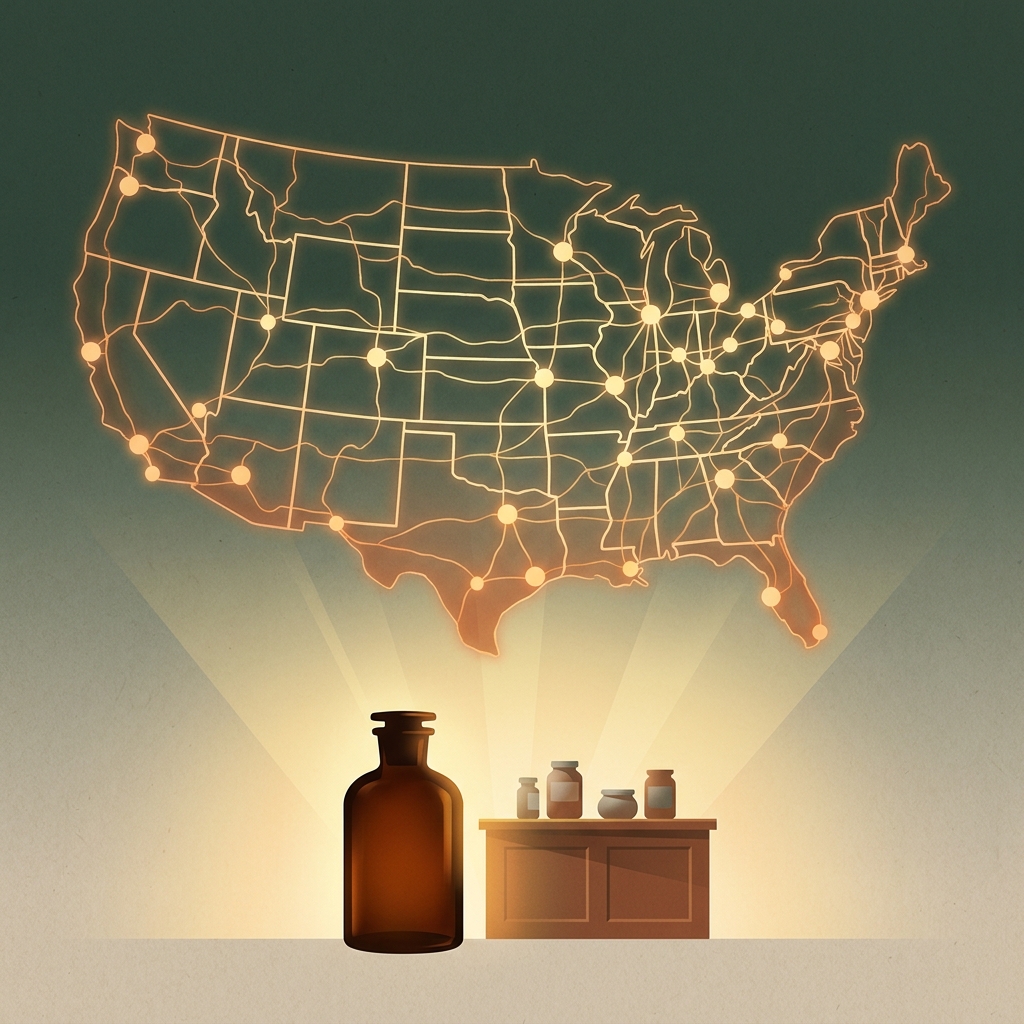
This article argues that community is a set of practices, not a ZIP code. Relationships, accessibility, collaboration, and trust are what make a pharmacy feel like part of a patient’s care team. None of these qualities depend on a storefront address.
Nationwide Compounding Rx®, a Scottsdale, Arizona compounding pharmacy licensed to serve patients and providers across multiple states, illustrates this idea. Its partnership framework, “Connect, Collaborate, Create, Care,” shows that personalization and scale can coexist.
The stakes are significant. Depending on how the market is measured, the U.S. compounding pharmacy market is estimated at between $7.42 billion and $20.2 billion in 2026. Patients and providers have more options than ever, and they need a clearer way to evaluate which pharmacies deserve their trust.
The Old Definition: Why “Community” Has Been Tied to Geography
The term “community pharmacy” has long described the neighborhood drugstore model: a local, walk-in pharmacy serving the residents around it. The phrase carries a sense of physical closeness and familiarity.
That geographic framing persists today. Several small, single-location shops literally use the word in their names, such as Community Compounding Pharmacy in Portland or Community Clinical Pharmacy. Their positioning centers on local and integrative care for the people nearby.
The model built real value. According to reporting in Pharmacy Times on Gallup data, nearly all Americans live within five miles of a community pharmacy, and pharmacists have placed in the top three of Gallup’s trust rankings for 11 consecutive years. Few professions can claim that kind of sustained public confidence.
The limitation, however, is clear. The geographic definition breaks down when a patient needs a specialized compounded formulation that no nearby pharmacy can prepare, or when a provider needs a compounding partner licensed beyond a single state. Proximity alone cannot meet those needs.
The Industry Is Shifting Under This Definition’s Feet
The neighborhood pharmacy is disappearing in many parts of the country. Consider the following data:
- Pharmacy deserts are widespread. According to the Deseret News, 48.4 million people (1 in 7 Americans) now live in a pharmacy desert, defined as more than 10 miles from the nearest pharmacy.
- Closures have accelerated. Nearly 30% of U.S. pharmacies shut down between 2010 and 2021. There are over 7,000 fewer pharmacies today than in 2019, and independent pharmacies are closing at a rate of more than one per day.
- Rural and minority communities bear the heaviest burden. A single rural pharmacy closure affects 54% of local patients, compared with just 15% in metro areas. Pharmacies in predominantly Black and Latino neighborhoods closed at a 10% higher rate in 2024.
- Remaining pharmacies are stretched thin. Prescription volume per remaining pharmacy climbed from roughly 70,000 in 2023 to 78,000 in 2026, an 11.3% increase. Fewer pharmacists are serving more patients, leaving less time for individual attention.
The conclusion is difficult to avoid. A hyperlocal-only definition of community pharmacy is structurally unsustainable for millions of Americans. For these patients, a scalable, relationship-based model is a necessity, not a convenience.
Redefining “Community Compounding Pharmacy” as a Model, Not a Map Pin
If geography no longer guarantees access, the question becomes what actually made community pharmacy valuable in the first place. The answer comes down to four traits:
- Personal relationships between pharmacists, patients, and providers
- Pharmacist accessibility when questions arise
- Collaborative care that involves the prescriber in formulation decisions
- Provider trust built over time through consistent results
Each of these is a practice. Practices can be designed into operations, workflows, and technology, regardless of how many states a pharmacy is licensed to serve.
Much of the compounding industry has not framed it this way. Many independent and regional compounders lean heavily on accreditation badges or explainer content about clinical categories, without connecting those credentials to a genuine relationship narrative. Even some national 503A pharmacies emphasize therapeutic specialties over the pharmacy, provider, and patient relationship itself.
The sections below examine how Nationwide Compounding Rx’s operating model puts this relationship-first approach into practice.
Inside the “Connect, Collaborate, Create, Care” Framework
Nationwide Compounding Rx structures its provider partnerships around four stages. Together, they form a repeatable way to replicate the closeness of a community pharmacy at a larger scale.
Connect
The relationship begins before any prescription is filled. This stage covers initial outreach, onboarding, and getting to know a provider’s practice and patient population. The goal is to establish a working relationship rather than a vendor account.
Collaborate
Pharmacists engage in direct dialogue with providers about formulation strategy, dosing, and patient-specific adjustments. Bioidentical hormone replacement therapy (BHRT) is a strong example: formulas can be adjusted at each refill based on updated lab results, which requires an ongoing exchange between the prescriber and the pharmacy.
Create
This is the compounding itself. Nationwide Compounding Rx prepares both sterile and non-sterile formulations in a range of dosage forms, including capsules, liquids, topicals, troches, sublingual tablets, and suppositories. Custom flavors are available, and the pharmacy offers a typical turnaround of 1 to 2 business days, with same-day pickup available for some medications.
Care
The final stage is ongoing support. Refill management, follow-up questions, and adjustments over time turn a single fill into continuous care.
Why Structure Matters
Academic literature supports this structured approach. A CDC case study of collaborative drug therapy management, published through NCBI, found that successful provider-pharmacist models depend on well-trained pharmacists and physician buy-in. Common barriers include lack of pharmacist compensation and provider hesitation to trust pharmacists. Ad hoc interaction rarely overcomes those barriers. A defined framework gives both parties clear expectations, which is essential to building trust at scale.
Why Trust Can’t Rest on Accreditation Badges Alone
Accreditation matters. The Pharmacy Compounding Accreditation Board (PCAB) develops standards that align directly with United States Pharmacopeia (USP) requirements:
- USP <795> for non-sterile compounding
- USP <797> for sterile compounding
- USP <800> for hazardous drug handling
PCAB accreditation is also relatively rare. Fewer than 1% of all U.S. pharmacies hold it, although roughly 21% of pharmacies with dedicated compounding volume do.
What much competitor content omits is that PCAB accreditation is voluntary. As the Health Law Alliance notes, it is not a legal operating requirement, and every compounding pharmacy still needs a license from the board of pharmacy in each state where it operates.
Accreditation is best understood as a floor, not a ceiling. It demonstrates that quality systems exist. It does not, by itself, prove that a pharmacy treats patients and providers as partners.
For Nationwide Compounding Rx, PCAB accreditation and USP 800 compliance form the credibility foundation on which its relationship model is built. They are supported by independent third-party testing and chemicals sourced from FDA-inspected and cleared vendors.
The regulatory backdrop explains why credentials carry weight. According to the FDA, compounded drugs are not FDA approved, meaning the agency does not review their safety, effectiveness, or quality before they are marketed. The FDA expanded its compounding oversight significantly after the 2012 fungal meningitis outbreak, which led to the Drug Quality and Security Act. More recently, the SAFE Drugs Act (HR 6509), introduced in December 2025, would further narrow the scope of lawful compounding and impose new inspection and reporting obligations on both 503A and 503B facilities. In this environment, credentials are essential, but they cannot be the whole story.
How Technology Makes “Community-Level” Access Possible Nationwide
Technology can either widen the gap between patients and pharmacists or close it. The difference lies in whether systems are designed around responsiveness.
Nationwide Compounding Rx operates two dedicated, secure portals:
- Provider Portal: Prescribers can submit and manage prescriptions, track orders, and communicate directly with the pharmacy team.
- Patient Portal: Patients can access account information and manage refill and support requests, replicating much of the accessibility of walking up to a local pharmacy counter.
The pharmacy also commits to responding to email inquiries within one business day. This kind of commitment is what separates a relationship-driven pharmacy from an anonymous mail-order operation.
Accessible pharmacist communication matters more than ever because of broader shifts in healthcare trust. A 2025 Gallup poll found that trust in physicians dropped 14 percentage points between 2021 and 2024, and only about 40% of surveyed adults trusted physicians and hospitals as of January 2024. Pharmacists, by contrast, remain uniquely positioned. Research from CVS Health shows that 80% of consumers view their pharmacist as one of the most credible sources of health information, and 83% say their pharmacist’s recommendations are important to them. For any compounder, local or national, making pharmacists reachable is a critical differentiator.
Community Independent vs. Anonymous Mail-Order vs. the Nationwide Model
The table below compares three common compounding pharmacy models across the factors patients and providers care about most.
| Dimension | Local Independent Compounder | Anonymous Mail-Order Compounder | Nationwide Compounding Rx Model |
|---|---|---|---|
| Relationship depth | Strong | Limited, transactional | Structured through Connect, Collaborate, Create, Care |
| Pharmacist accessibility | High, in person | Often limited | Portals plus one-business-day email response |
| Formulation customization | Varies by shop | Often standardized | Custom strengths, forms, flavors, allergen-free options |
| Licensing reach | Typically one state | Broad | Multi-state, tiered by medication type and state |
| Turnaround | Varies | Varies | 1 to 2 business days; same-day pickup for some medications |
Local independent compounders offer genuine relationship depth, but their reach is geographically capped, and they remain vulnerable to the closure trends described earlier.
Anonymous mail-order compounders offer broad reach, but interactions tend to be low-touch, with limited pharmacist accessibility or collaborative care.
The Nationwide Compounding Rx model pairs multi-state licensing with structured relationship practices. Its shipping availability uses three tiers: fully licensed states, states licensed for non-sterile preparations only (with sterile pending), and states that are pending or unlicensed. Availability depends on medication type, state regulations, and prescription requirements.
This comparison is increasingly relevant. According to IBISWorld, there are 1,784 compounding pharmacy businesses in the U.S., a number that has grown at a 10.4% CAGR between 2021 and 2026. Patient-specific 503A pharmacies accounted for more than 72.99% of revenue share in 2025. With more choices available, evaluating pharmacies by practice rather than proximity becomes essential.
Who This Model Serves, and Why It Matters
A relationship-based nationwide model serves a wide range of patients and providers:
- Patients needing non-commercial formulations. Sensitive patients may require preparations free of dyes, fillers, preservatives, or specific allergens. Compounding can also help recreate discontinued or unavailable strengths.
- Pediatric families. Children from newborns through teens often need age- and weight-specific dosing in kid-friendly forms such as flavored liquids, popsicles, or suckers, with flavors ranging from cherry and strawberry to bubblegum and piña colada.
- Patients managing hormonal health. BHRT for menopause, andropause, and other hormonal imbalances benefits from formulas adjusted at each refill based on lab results, which requires ongoing collaboration rather than a one-time fill.
- Pain management, dermatology, and sports medicine patients. Topical creams, gels, and ointments can localize treatment for pain and help limit systemic side effects. Custom topicals can also address conditions such as acne, rosacea, eczema, and psoriasis, while sports medicine formulations support recovery and inflammation management.
- Healthcare providers and clinics. Practices seeking a compounding partner can work with a team that functions as an extension of their care team rather than a faceless vendor.
- Patients in pharmacy deserts. For people in rural or underserved areas without any local compounding option, nationwide reach is not a convenience. It is a necessity.
Conclusion: Community Is How You’re Treated, Not Where You’re Located
Relationships, accessibility, collaboration, and trust define community pharmacy. These are scalable practices, not properties tied to a single address.
Nationwide Compounding Rx puts these practices into operation through its Connect, Collaborate, Create, Care framework, its dedicated Provider and Patient Portals, and its foundation of PCAB accreditation and USP 800 compliance.
The broader trends point in one direction. Pharmacy deserts are expanding, independent pharmacies continue to close, and trust in traditional healthcare institutions is eroding. A nationally licensed pharmacy built on community-level practices is well equipped for where healthcare access is headed.
Patients and providers searching for a “community compounding pharmacy” do not need to choose between a personal feel and national reach. They need to evaluate pharmacies by their practices, not their proximity.
Experience the Nationwide Compounding Rx Difference
For providers: The partnership begins with the Connect step. Practices can request access to the Provider Portal or schedule a practice consultation to discuss how Nationwide Compounding Rx can support their patients.
For patients: Patients can ask their provider about partnering with Nationwide Compounding Rx, or use the Patient Portal to manage existing prescriptions, refills, and support requests.
Credentials at a glance:
- PCAB accredited
- USP 800 compliant
- Independent third-party testing
- 1 to 2 business day turnaround, with same-day pickup available for some medications
Contact Nationwide Compounding Rx®:
- Phone: (480) 499-8379
- Fax: 480-699-5341
- Website: nationwidecompounding.com
- Address: 14000 N. Hayden Rd., Suite 104, Scottsdale, AZ 85260
- Hours: Monday through Friday, 7:00 AM to 3:30 PM
Related Posts
Searching for a compounding pharmacy in Louisville KY? Learn the 2026 Kentucky regulations that govern out-of-state shipping and compounding standards, so you can verify any pharmacy's legal authority to ship to you. Includes a look at how Nationwide Compounding Rx meets these requirements.
Koshland Pharm: Custom Compounding Pharmacy is a PCAB-accredited San Francisco institution, but its shipping reach and peptide offerings have limits. This 2026 guide verifies its credentials and highlights an alternative for broader needs.
Kentucky's 2026 USP compliance rules have raised the bar for compounding pharmacies statewide. This guide gives Louisville patients and prescribers a five-part framework to independently verify a compounding pharmacy's quality and safety credentials.
Searches for Harbor Compounding Pharmacy often turn up conflicting addresses and accreditation claims. This 2026 guide clarifies Harbor's real Santa Ana location, its shift from PCAB to NABP accreditation, and how it compares to other compounding pharmacies for specialty prescriptions.