
Compounding Pharmacy Collaboration with Healthcare Team: The Triad Model Explained for 2026
Introduction: The Compounding Pharmacist Is Not Just a Vendor
Consider a common clinical scenario. A prescriber has a patient who cannot tolerate a commercially available medication. Perhaps the patient is allergic to a dye or filler, requires a dose strength that no manufacturer produces, or depends on a drug that has been discontinued because it was no longer profitable to mass-produce. In these moments, the prescriber faces a clinical dead end, and the patient faces an interrupted treatment plan. This is precisely where a compounding pharmacist steps in: not as a simple supplier filling an order, but as a clinical partner contributing formulation expertise, stability knowledge, and safety oversight.
This collaboration is not optional or informal. It is legally required, clinically validated, and increasingly formalized through governance structures like Collaborative Practice Agreements. At its foundation sits the “compounding triad,” the three-way relationship between the prescriber, the pharmacist, and the patient that must exist before it is even legal to compound a medication.
The stakes are substantial. The U.S. compounding pharmacy market was valued at approximately $6.98 billion in 2025 and is projected to reach $7.42 billion in 2026, driven by demand for personalized medicine, persistent drug shortages, and rising chronic disease prevalence. This article examines the triad model, Collaborative Practice Agreements, the EHR interoperability challenge, the 2025 SUPPORT Act, and how these forces are reshaping the compounding pharmacist’s role in 2026. Whether the reader is a patient, a prescriber, or a practice manager, understanding this model has direct relevance to the quality of care delivered.
What Is the Compounding Triad? The Legal and Clinical Foundation
The compounding triad is the legally required, three-way relationship between the prescriber, the compounding pharmacist, and the patient. A relationship must be established among all three parties before it is even legal to compound a medication for that patient. This is not merely procedural box-checking. The triad creates accountability, clinical oversight, and a patient-centered framework that distinguishes compounding from mass pharmaceutical manufacturing.
Each role within the triad carries distinct responsibilities. The prescriber identifies the clinical need and writes the order, specifying ingredients, strengths, and administration routes based on clinical judgment. The pharmacist contributes formulation expertise, stability considerations, and a thorough safety review. The patient advocates for their preferences and participates directly in treatment decisions, communicating needs around dosage form, flavor, and delivery method.
Compounded prescriptions account for an estimated 1 to 3 percent of all U.S. prescriptions, yet they serve substantial patient populations whose medical needs simply cannot be met by commercially available products. The triad model empowers patients in a way that standard prescribing often does not. A patient who cannot swallow pills, a child who refuses bitter medication, or someone who needs a precise hormone dose based on lab results becomes an active participant rather than a passive recipient.
This philosophy is exactly what drives Nationwide Compounding Rx®, which explicitly rejects the “one size fits all” approach and customizes medications on a patient-by-patient basis to increase medication adherence. That commitment is the triad model expressed in everyday practice.
The Compounding Pharmacist as Active Clinical Partner: What the Data Shows
The outdated “vendor” framing of the compounding pharmacist does not survive contact with the evidence. According to the APC’s 2025–2026 Snapshot of Pharmacy Compounding in America, based on more than 600 surveyed professionals, the median 503A compounding pharmacy dispenses approximately 350 compounded prescriptions per week while actively collaborating with roughly 150 prescribers. The same data shows the median compounding pharmacy prepares approximately 100 unique compounded formulations weekly, reflecting genuine clinical complexity and a highly experienced workforce.
Peer-reviewed research reinforces this picture. A published study in the Journal of the American College of Clinical Pharmacy found that compounding pharmacists provided input into the prescribing process through frequent physician-initiated consultation and reported greater follow-up with patients and physicians regarding compounded therapy than with manufactured products. The collaboration is genuinely bidirectional: prescribers specify desired ingredients, strengths, and administration routes, while pharmacists contribute stability considerations, formulation alternatives, and safety reviews.
There is, however, a notable implementation gap. A study published in PLOS One found that over 98 percent of respondents agreed that physician-pharmacist collaboration improves patient outcomes, yet more than half had never formally practiced collaboratively. A WHO-supported systematic review further documented that community pharmacists have been recognized as core members of collaborative care teams over the past two decades, with principally positive effects on cardiovascular patient outcomes.
Why Interprofessional Collaboration Matters for Patient Outcomes
A 2024 hybrid concept analysis published in PMC found that interprofessional collaboration improves health outcomes for people with chronic diseases, reduces morbidity and mortality, and improves coordination between staff and patients. A systematic review of 19 randomized controlled trials similarly found that collaboration involving pharmacists produces principally positive effects on cardiovascular outcomes, including blood pressure control.
The medication adherence crisis underscores why this matters. The NIH estimates that as many as 80 percent of patients do not remember the medication instructions given by their doctor, and 31 percent of prescriptions are never filled. Compounding directly addresses this. Customizing dosage form, such as a transdermal gel instead of an oral capsule or a flavored liquid for a child, supports the prescriber’s treatment goals and reduces non-adherence. A peer-reviewed review described compounding’s role in promoting adherence as “underexploited,” noting that dosage-form customization significantly improved adherence in conditions like psoriasis. In 2026, this collaboration is most impactful in hormone therapy, thyroid disorders, pain management, dermatology, pediatrics, and autoimmune conditions.
Collaborative Practice Agreements: Formalizing the Prescriber-Pharmacist Relationship
Collaborative Practice Agreements (CPAs) are formal, legal practice relationships between pharmacists and prescribers that identify the functions delegated to the pharmacist. They enable pharmacists to initiate, modify, or discontinue medications within defined parameters. In doing so, CPAs transform the compounding pharmacist from a passive order-filler into an active clinical partner with defined authority and accountability.
The CDC promotes CPAs as a structural tool for advancing team-based care, and NASPA notes that they improve the efficiency and effectiveness of collaborative care delivery by creating clear protocols, reducing prescriber burden, and ensuring consistent patient monitoring. In a compounding context, a CPA might allow a pharmacist to adjust a bio-identical hormone replacement therapy formulation based on lab results without requiring a new prescriber visit, improving both continuity and patient experience.
Yet CPAs remain unevenly implemented. The implementation gap identified in the PLOS One study, where 98 percent agree collaboration helps but over half have never formally collaborated, represents a major opportunity for forward-thinking prescribers and pharmacies.
How the 2025 SUPPORT Act Is Reshaping the Compounding Pharmacist’s Role
On December 1, 2025, the SUPPORT for Patients and Communities Reauthorization Act of 2025 was signed into law, expanding pharmacists’ clinical authority and collaborative roles, including in opioid use disorder treatment. This matters for compounding pharmacies that prepare specialized formulations for these patient populations, and it connects to the broader trend of CPAs expanding into new clinical areas such as HIV prevention and opioid use disorder.
The Act signals federal recognition of pharmacists as clinical partners rather than mere dispensers, reinforcing the legal and policy foundation for the compounding triad. At the same time, regulatory pressure is rising. The SAFE Drugs Act of 2025 (H.R. 6509), introduced in December 2025, proposes new limits on compounding copies of FDA-approved drugs, enhanced FDA reporting requirements, and mandatory inspections, making 2026 a compliance inflection point.
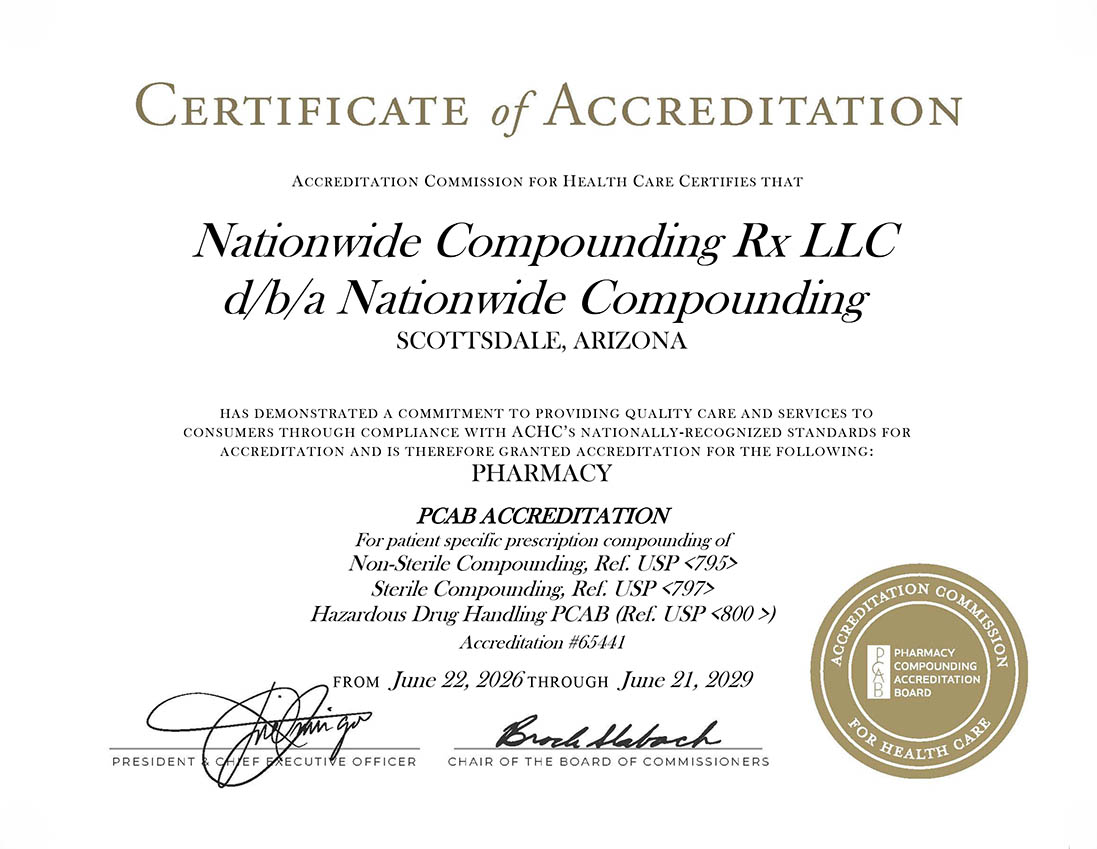
In this environment, quality-focused pharmacies use compliance as a trust signal. Nationwide Compounding Rx® maintains PCAB accreditation, operates a USP 800 compliant facility, and sources exclusively from FDA-inspected vendors, all of which strengthen its value proposition to prescriber partners.
The EHR Interoperability Challenge: The Biggest Workflow Barrier to Team-Based Compounding Care
One of the most underappreciated barriers to compounding collaboration is electronic health record interoperability. Compounded medications are often documented as free-text notes rather than structured medication entries, and they lack standardized drug codes. This creates gaps in clinical decision support, medication reconciliation, and care transitions, a problem athenahealth has described as unique and largely unsolved.
The contrast with mainstream e-prescribing is stark. By 2025, 92 percent of prescribers relied on e-prescribing software integrated into EHR systems, up from just 7 percent in 2008. Yet most of these platforms were never designed to integrate with 503A compounding pharmacies, creating a structural workflow gap. An ACCP/JACCP 2024 white paper argued that community-based pharmacists need shared access to real-time, bidirectional electronic communication tools and direct messaging platforms with prescribers.
There is reason for optimism. A July 2025 proof-of-concept study in ScienceDirect demonstrated the feasibility of integrating pharmacy and EHR systems using the HL7 FHIR format in an independent pharmacy setting, showing a viable path forward. For prescribers evaluating partners today, the practical takeaway is to assess a pharmacy’s communication infrastructure: prescriber portals, order tracking, and documentation support.
503A vs. 503B: Understanding the Two Collaboration Models
Compounding operates under two distinct models. 503A compounding pharmacies prepare patient-specific, prescriber-initiated medications, the traditional compounding model. 503B outsourcing facilities operate at larger scale, are FDA-registered, and primarily serve hospitals and health systems.
The collaboration dynamics differ accordingly. 503A pharmacies work directly with individual prescribers and patients within the triad model, while 503B facilities function more like pharmaceutical manufacturers engaging with health system procurement teams. The APC Snapshot data, with its 150 prescribers per pharmacy and 100 unique formulations weekly, reflects the depth of the 503A model.
This model is particularly suited to personalized medicine specialties: BHRT, pain management, dermatology, pediatrics, and sports medicine, where patient-specific customization is the clinical imperative. Notably, more than half of pharmacies in the APC survey reported compounding copies of FDA-approved drugs during active FDA-recognized shortages, a continuity-of-care role spanning both settings. Individual prescribers and patients typically engage with a 503A pharmacy like Nationwide Compounding Rx®, while large health systems may also work with 503B facilities.
Telehealth and the New Frontier of Compounding Pharmacy Collaboration
Telehealth is reshaping the prescriber-pharmacist-patient relationship, enabling collaboration beyond geographic boundaries. In the emerging model, telehealth prescribers partner with compounding pharmacies to deliver personalized therapies to patients who may lack local access to specialty care, with the compounding pharmacy serving as the clinical and logistical anchor.
According to Restore Health Consulting, modern compounding platforms can provide prescriber portals, order tracking, and e-communication to support team-based care in the telehealth era. Collaborations with telehealth partners, concierge medicine organizations, and specialty clinics are opening new channels for triad-based care in 2026.
Nationwide Compounding Rx®’s capability to ship to 47 states plus Washington, D.C., is a structural enabler of this model, allowing prescribers across the country to partner with a PCAB-accredited, USP 800 compliant facility. Importantly, telehealth prescribing for compounded medications must still satisfy the valid prescriber-patient relationship requirement, reinforcing the triad even in virtual care.
Drug Shortages: The Compounding Pharmacist as Continuity-of-Care Partner
When commercial supply fails, the compounding pharmacist becomes an essential continuity-of-care partner. The APC 2025–2026 Snapshot reports that more than half of responding pharmacies compounded copies of FDA-approved drugs during active FDA-recognized shortages. Mordor Intelligence data shows persistent shortages have elevated compounded preparations to essential components of hospital formularies, helping drive the global compounding market toward $22.08 billion by 2031.
In this context, the prescriber must collaborate with a compounding pharmacist to identify an appropriate alternative formulation, a process requiring trust, communication, and shared clinical knowledge. Regulatory guardrails apply: the SAFE Drugs Act of 2025 proposes limits on compounding copies of FDA-approved drugs, so both parties must stay current on the FDA shortage list and what compounding is legally permissible. Nationwide Compounding Rx®’s ability to replicate discontinued medications directly expresses this continuity-of-care role, serving patients whose commercial medications were discontinued due to low manufacturer profitability.
What Prescribers Should Look for in a Compounding Pharmacy Partner
For prescribers evaluating a compounding pharmacy as a clinical collaborator, several factors matter:
- Accreditation and quality standards: Look for PCAB accreditation, USP 800 compliance, and sourcing from FDA-inspected vendors, all signals of a reliable partner.
- Communication infrastructure: Assess prescriber portals, direct communication channels, order tracking, and documentation support to address the EHR interoperability gap.
- Clinical expertise and formulation range: A strong partner should prepare diverse dosage forms (transdermal, oral, sublingual, suppository) with demonstrated specialty expertise.
- Regulatory compliance posture: With the SAFE Drugs Act and FDA enforcement reshaping the landscape, prioritize pharmacies demonstrating proactive compliance and transparency.
- Turnaround and reliability: Nationwide Compounding Rx® offers 1 to 2 business day turnaround and same-day pickup options for some medications.
- Geographic reach: For telehealth and multi-state practices, the pharmacy’s 47-state shipping footprint is a practical advantage.
The APC and Coalition for Compounding Excellence announced a new accreditation partnership in January 2026, offering a streamlined, USP-based quality signal prescribers can use when evaluating partners.
The Patient’s Voice in the Triad: Empowerment Through Personalized Care
The patient is often the most underrepresented voice in discussions about compounding collaboration, yet the triad model legally and clinically empowers patients to advocate for their preferences. Dosage form, flavor, allergen-free formulation, and delivery method are all patient-driven inputs the pharmacist can accommodate.
Given that 80 percent of patients do not remember medication instructions and 31 percent of prescriptions are never filled, patient-centered customization is a clinical imperative, not a luxury. The populations that benefit most include patients with allergies or intolerances to commercial ingredients, children who refuse unpalatable medications, patients needing discontinued drugs, and individuals requiring precise hormone adjustments based on lab results. Peer-reviewed evidence confirms that dosage-form customization significantly improves adherence in conditions like psoriasis.
Nationwide Compounding Rx® expresses this commitment through its range of flavoring options (including banana crème, cherry, grape, and vanilla butternut), its variety of dosage forms (troches, gummies, suppositories, and more), and its allergy-friendly formulation capabilities that can eliminate lactose, dyes, gluten, and sugar.
Conclusion: The Compounding Triad in 2026, A Model Whose Time Has Come
The prescriber-pharmacist-patient compounding triad is not a niche concept. It is a legally required, clinically validated, and increasingly formalized model reshaping how personalized medicine is delivered in 2026. Several structural forces are accelerating this shift: the 2025 SUPPORT Act expanding pharmacist authority, Collaborative Practice Agreements formalizing the prescriber-pharmacist relationship, the EHR interoperability challenge creating urgency for better communication infrastructure, and telehealth opening new collaboration channels.
The evidence base is compelling, from the APC 2025–2026 Snapshot data to peer-reviewed studies on interprofessional collaboration outcomes. Yet the implementation gap remains the defining challenge: over 98 percent of prescribers agree collaboration improves outcomes, but more than half have never formally collaborated. Closing that gap is the opportunity of 2026. Quality-focused, accredited compounding pharmacies are the right partners for prescribers who want to deliver truly personalized care. As personalized medicine grows, drug shortages persist, and regulatory standards rise, the compounding triad will become not just a best practice but the expected standard of care.
Ready to Build a Stronger Compounding Partnership? Connect with Nationwide Compounding Rx®
Whether a healthcare provider is seeking a reliable, accredited compounding pharmacy partner for medical practices or a patient is looking for personalized medication solutions, Nationwide Compounding Rx® is equipped to help. The pharmacy’s trust signals speak for themselves: PCAB accreditation maintained since its early days, a USP 800 compliant facility, 40 years of combined staff experience, and sourcing exclusively from FDA-inspected vendors.
Above all, Nationwide Compounding Rx® works alongside prescribers, not in isolation, to customize medications that align with each patient’s clinical profile, preferences, and treatment goals. With nationwide shipping to 47 states plus Washington, D.C., 1 to 2 business day turnaround, same-day pickup options for some medications, and a dedicated team available Monday through Friday, the practical access points are built for real-world clinical workflows.
Prescribers are invited to call 1-833-650-9836 or visit NationwideCompounding.com to discuss a compounding partnership, explore formulation options, or submit a prescription. Patients are encouraged to ask their prescriber about compounding as an option and to reach out with questions about how personalized medications might better meet their needs.
Related Posts

Searching for Marty's Compounding Pharmacy but not sure if a local Mississippi storefront fits your needs? This guide compares Marty's Pharmacy & Compounding Center to nationwide compounding options using a five-point credential checklist covering accreditation, testing, and shipping licenses in 2026.

The term 'board of specialty pharmacy' actually refers to four distinct organizations, each serving a different purpose. This article breaks down BPS, SPCB, state boards, and PCAB to reveal which body truly governs compounding pharmacy quality in 2026.

Many patients assume CVS Pharmacy Specialty Services can compound custom medications simply because it holds PCAB accreditation—but the reality is more nuanced. This article breaks down what the accreditation actually covers, how the FDA's 503A/503B rules apply, and what it means for prior authorizations on oncology, MS, and RA prescriptions in 2026.

Many patients land on Accredo after a physician, insurer, or PBM directs them there. This guide breaks down what specialty pharmacy Accredo actually does—and the critical compounding limitations you need to know about in 2026.