Sublingual Solution Compounding Pharmacy: The Science of Faster Absorption Explained
Introduction: Why the Route of Delivery Changes Everything
Consider a patient who has spent months cycling through oral medications with frustratingly inconsistent results. Doses feel unpredictable, onset is slow, and side effects linger. Then a provider suggests a compounded sublingual liquid solution, and the difference is immediate: the medication works faster, feels more reliable, and produces fewer of the digestive complaints that plagued the oral version. That experience is not anecdotal magic. It is pharmacokinetics in action.
Not all sublingual formulations are created equal. While many patients have heard of medications that “dissolve under the tongue,” sublingual liquid solutions occupy a distinct clinical position that goes well beyond convenience. They represent a measurable, evidence-backed delivery strategy that can dramatically change how a drug behaves in the body.
This article explains the science behind sublingual absorption, distinguishes liquid solutions from troches, tablets, films, and sprays, and explores the expanding clinical applications driving demand for sublingual solution compounding. It is written for patients seeking to understand their options and for healthcare providers evaluating compounding partners. Throughout, it references the work of Nationwide Compounding Rx®, a PCAB-accredited compounding pharmacy serving patients and providers across 47 states plus Washington, D.C.
The Pharmacokinetics of Sublingual Absorption: A Science-First Explanation
The tissue beneath the tongue, known as the sublingual mucosa, is exceptionally thin, richly supplied with blood vessels, and highly permeable. This anatomy allows dissolved drugs to diffuse directly into the systemic bloodstream rather than traveling through the digestive system first.
To appreciate why this matters, consider hepatic first-pass metabolism. When a drug is swallowed, it is absorbed through the gastrointestinal tract and routed to the liver before reaching general circulation. The liver metabolizes a significant portion of many drugs, rendering them inactive before they can produce any therapeutic effect. The result is reduced potency and slower onset.
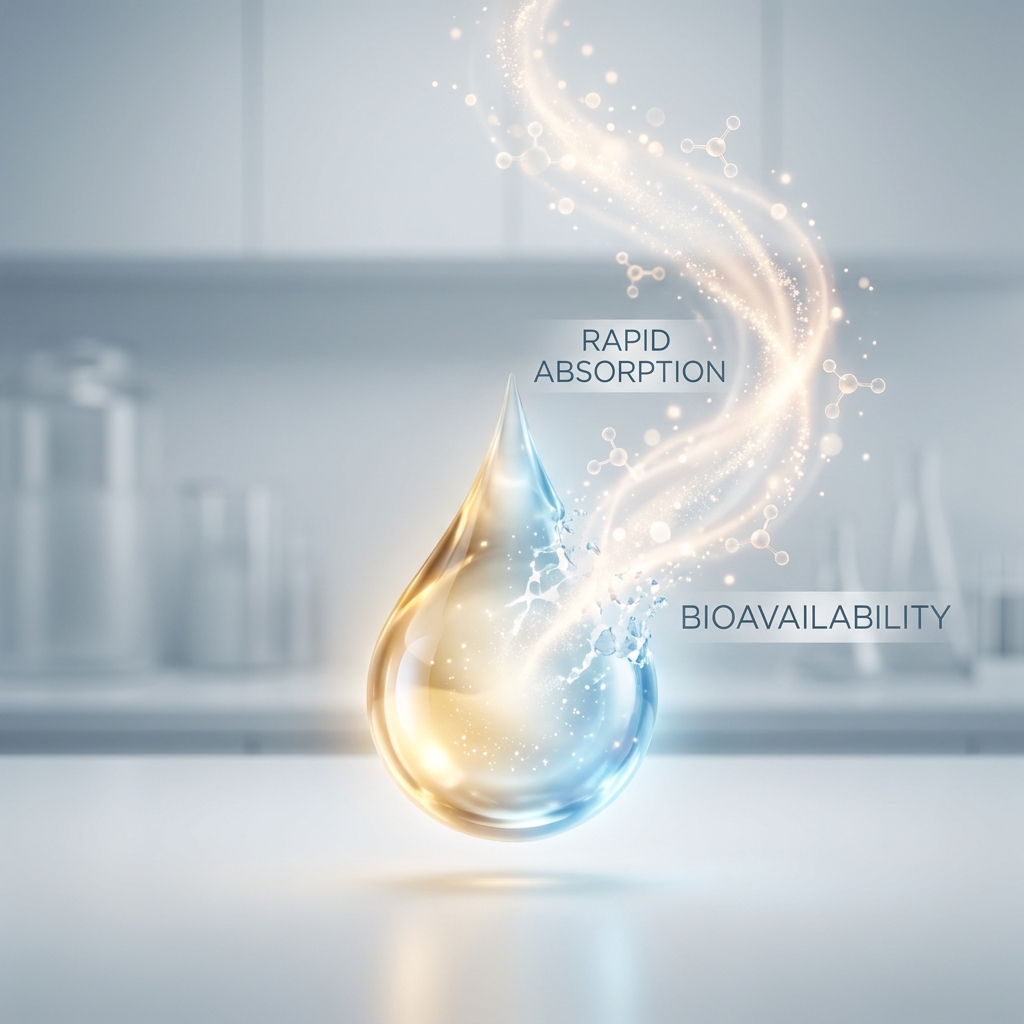
Sublingual administration changes the equation entirely. By absorbing through mucosal tissue, the drug enters venous blood draining from the mouth and bypasses both the GI tract and the liver. This produces faster onset and higher bioavailability, meaning a greater fraction of the dose actually reaches systemic circulation and exerts its intended effect.
The classic clinical example is sublingual nitroglycerin, which produces therapeutic effects in as little as two minutes precisely because it diffuses immediately into the bloodstream, bypassing intestinal absorption and first-pass metabolism, as documented in NIH StatPearls. Peak blood levels for most sublingually administered products are achieved within minutes, making this route especially valuable for acute and time-sensitive conditions.
The science continues to advance. A 2026 NIH-published study on sublingual microrobotic pills demonstrated that sublingual delivery can achieve absorption speeds competitive with intramuscular injections, underscoring just how clinically significant this route has become.
Sublingual Solutions vs. Troches, Tablets, Films, and Sprays: Understanding the Differences
“Sublingual” is not a single format. Compounding pharmacies can prepare drops and liquid solutions, troches (sublingual lozenges), tablets, films, and sprays, each with a distinct absorption profile. This article focuses specifically on sublingual liquid solutions, which represent a distinct and often superior option in certain clinical scenarios.
Sublingual Liquid Solutions (Drops)
With sublingual liquid solutions, a measured volume (typically 0.5 to 1 mL, the practical capacity under the tongue) is placed beneath the tongue and held for a specified dwell time, usually one to two minutes, before swallowing or expectorating.
Because the drug is already dissolved, liquid solutions eliminate the dissolution step that troches and tablets require before absorption can begin. This can mean faster mucosal contact and a quicker onset. Liquid solutions also allow precise dose titration: a prescriber can adjust concentration or volume incrementally, which is especially valuable in bioidentical hormone therapy and low-dose naltrexone protocols.
There are practical limitations. Volume capacity under the tongue is limited, taste can be challenging with certain active ingredients such as ketamine, and patients must hold the solution in place long enough for adequate absorption. To improve palatability and adherence, compounding pharmacies can add flavoring agents such as peppermint, cherry, or vanilla.
Sublingual Troches and Tablets
Troches are compressed or molded solid lozenges that dissolve slowly under the tongue, releasing the active drug over a longer dwell time. Because they require a dissolution phase before absorption begins, troches can have a slower onset than liquid solutions, though the extended contact time may be advantageous for certain sustained-release applications.
Troches are widely used in bioidentical hormone therapy for hormones such as estradiol, progesterone, testosterone, and DHEA, and they are a familiar format for many patients. However, for patients who need the fastest possible onset (such as those using sublingual ketamine for acute anxiety), liquid solutions may outperform troches.
Sublingual Films and Sprays
Sublingual films, sprays, and other dosage forms are thin polymer strips that dissolve rapidly, offering convenience and portability, though they may have limitations in dose flexibility compared to liquid solutions. Sprays deliver a precise metered dose quickly but can carry higher manufacturing complexity.
Ultimately, the best sublingual format depends on the drug, the clinical indication, the required onset speed, and individual patient factors. That determination is best made in collaboration with a knowledgeable compounding pharmacist.
Clinical Applications: Where Sublingual Solution Compounding Makes the Greatest Difference
Demand for sublingual compounded solutions is strongest across bioidentical hormone therapy, mental health, pain management, and emerging wellness applications. The following clinical overview highlights where sublingual liquid solutions offer measurable advantages.
Bioidentical Hormone Replacement Therapy (BHRT)
Hormones such as estradiol, progesterone, testosterone, and DHEA are subject to significant first-pass hepatic metabolism when taken orally, reducing their bioavailability and often requiring higher doses. Sublingual BHRT drops allow these hormones to enter the bloodstream directly through mucosal tissue, avoiding liver metabolism and enabling lower doses to achieve therapeutic blood levels.
The flexibility of compounding is notable. According to National Academies/NCBI documentation, compounded BHRT formulations include at least 13 different progesterone dosage forms alone, far exceeding the four FDA-approved options. Sublingual liquid solutions also allow dose adjustments each refill cycle based on lab results, supporting the precision-medicine approach central to hormone management. HRT is the fastest-growing segment of the compounding market, projected at a 7.86% CAGR from 2026 to 2031, according to Mordor Intelligence.
Ketamine for Mental Health
Compounded sublingual ketamine has become a major growth area, enabling at-home treatment for treatment-resistant depression, anxiety, and PTSD. Compounding pharmacies filled more than 90% of ketamine prescriptions in Rhode Island between 2017 and 2023, according to the R Street Institute.
Sublingual delivery is preferred for at-home ketamine because it avoids IV administration in a clinical setting, reduces cost, and allows patients to follow structured home protocols under provider supervision. Ketamine’s bitter taste presents a palatability challenge, which compounding pharmacies address with flavoring agents and optimized formulation bases. Online prescribers increasingly partner with 503A compounding pharmacies to ship sublingual ketamine directly to patients, a model subject to evolving regulatory guardrails in 2026.
NAD+ and Metabolic Wellness
NAD+ (nicotinamide adenine dinucleotide) is an emerging sublingual application gaining traction in functional medicine and longevity practices. Oral NAD+ precursors face significant GI degradation and first-pass metabolism, so sublingual delivery offers a non-injectable alternative with improved bioavailability. Patients seeking cellular energy support, cognitive function, and metabolic health represent a growing segment, though clinical evidence remains developing and providers should discuss realistic expectations with patients.
Low-Dose Naltrexone (LDN)
Low-dose naltrexone (typically 1.5 to 4.5 mg, far below the FDA-approved 50 mg dose) is not commercially available and must be compounded. Compounded LDN sublingual solutions are increasingly used for autoimmune conditions, fibromyalgia, Crohn’s disease, and chronic pain. Sublingual delivery offers faster onset and more predictable absorption than oral capsules, which is clinically meaningful given the precise dosing LDN requires. LDN is a prime example of a therapy that exists only because of medication no longer available commercially.
Peptide Therapies
Peptide therapies such as sermorelin and BPC-157 are traditionally administered by subcutaneous injection because they degrade in the GI tract. Sublingual delivery offers a needle-free alternative that bypasses that degradation, generating interest among anti-aging, sports medicine, and functional medicine practitioners. Clinical evidence for sublingual peptide bioavailability varies by compound, so providers should consult a knowledgeable compounding pharmacist to assess suitability.
GLP-1 Alternatives: A Cautionary but Important Conversation
Compounded sublingual GLP-1 drops and tablets emerged as needle-free alternatives during the GLP-1 drug shortage. However, the regulatory reality demands transparency. In March 2026, the FDA issued 30 warning letters to telehealth companies for marketing compounded GLP-1 products as “equivalent” to FDA-approved drugs, and clinical evidence for non-injectable sublingual GLP-1 formulations remains limited.
The SAFE Drugs Act of 2025 (H.R. 6509), introduced December 9, 2025, proposes to limit 503A compounders to no more than 20 units per month of any drug considered essentially a copy of a commercially available product. Patients and providers should consult a PCAB-accredited compounding pharmacy and their prescriber before pursuing compounded GLP-1 sublingual formulations and should rely on FDA-approved injectables where available. A responsible pharmacy will guide both parties honestly through this landscape, which is itself a mark of clinical credibility.
Who Benefits Most from Sublingual Compounded Solutions?
The following guide helps patients and providers identify the strongest candidates for sublingual solution compounding.
Patients with Dysphagia or Swallowing Difficulties
Dysphagia, or difficulty swallowing, is common among elderly patients, neurological patients (including those with stroke or Parkinson’s disease), psychiatric patients, and children. Sublingual liquid solutions eliminate the need to swallow a pill entirely, absorbing through mucosal tissue instead. This makes the route a medically necessary alternative for patients who cannot reliably take oral solid medications, and it is one of the most compelling use cases in geriatric and pediatric care.
Patients with GI Absorption Disorders
Patients with Crohn’s disease, irritable bowel syndrome, celiac disease, gastroparesis, or post-bariatric surgery often experience severely impaired oral drug absorption. Sublingual delivery bypasses the GI tract entirely, providing more reliable systemic drug levels. This is particularly relevant for BHRT patients after bariatric surgery, where oral hormone absorption is unpredictable.
Patients with Allergies or Sensitivities to Commercial Excipients
Commercial medications contain inactive ingredients such as lactose, gluten, artificial dyes, and preservatives that can trigger reactions in sensitive patients. Compounded sublingual solutions can be formulated allergen-free, dye-free, gluten-free, and vegan. Nationwide Compounding Rx® can eliminate common allergens and intolerances, including lactose, dyes, gluten, and sugar.
Patients on Complex Polypharmacy Regimens
Patients managing multiple chronic conditions may take 10 or more medications daily, leading to fatigue, confusion, and non-adherence. Sublingual liquid solutions can combine multiple compatible active ingredients into a single formulation, reducing the number of doses required. Improved adherence translates directly to better clinical outcomes.
Pediatric and Geriatric Patients
Children often refuse oral medications due to taste, size, or texture. Compounded sublingual solutions can be custom-flavored and precisely dosed by weight. Elderly patients frequently face dysphagia and polypharmacy simultaneously, and sublingual solutions address both challenges. Nationwide Compounding Rx® offers multiple flavoring options (including banana crème, cherry, grape, peppermint, raspberry, strawberry, tutti frutti, and vanilla butternut) specifically to improve palatability and adherence in these populations.
The Provider Perspective: Prescribing and Monitoring Sublingual Compounded Medications
Prescribing compounded medications requires a different workflow than writing a standard commercial prescription. Partnering with the right compounding pharmacy simplifies the process significantly.
How to Write a Sublingual Compound Prescription
A sublingual compound prescription should include the active ingredient(s) and strength(s), the base or vehicle (for example, a specific sublingual solution or solvent), the volume per dose, dosing frequency, total quantity, and any specific instructions such as “hold under tongue for 2 minutes.” A PCAB-accredited pharmacy like Nationwide Compounding Rx® works collaboratively with prescribers to ensure formulations are clinically appropriate, stable, and accurately prepared. Prescriptions can be submitted by fax (480-699-5341) or through the provider portal, with a one to two business day turnaround. Compounding pharmacies cannot legally dispense without a valid patient-specific prescription from a licensed prescriber.
Clinical Monitoring for Sublingual Hormone Therapy
Sublingual BHRT requires a different monitoring approach because absorption kinetics differ; peak levels occur rapidly after administration. Providers should time lab draws appropriately: serum levels drawn immediately after administration reflect peak levels, while trough levels drawn before the next dose provide a different picture. Compounded formulations allow dose adjustments each refill cycle based on lab results. Providers should establish a baseline panel before initiating therapy and schedule follow-up labs at appropriate intervals, typically four to eight weeks after initiation or a dose change. Nationwide Compounding Rx® collaborates with prescribers to support ongoing dose optimization.
Selecting a Compounding Pharmacy Partner: What Providers Should Require
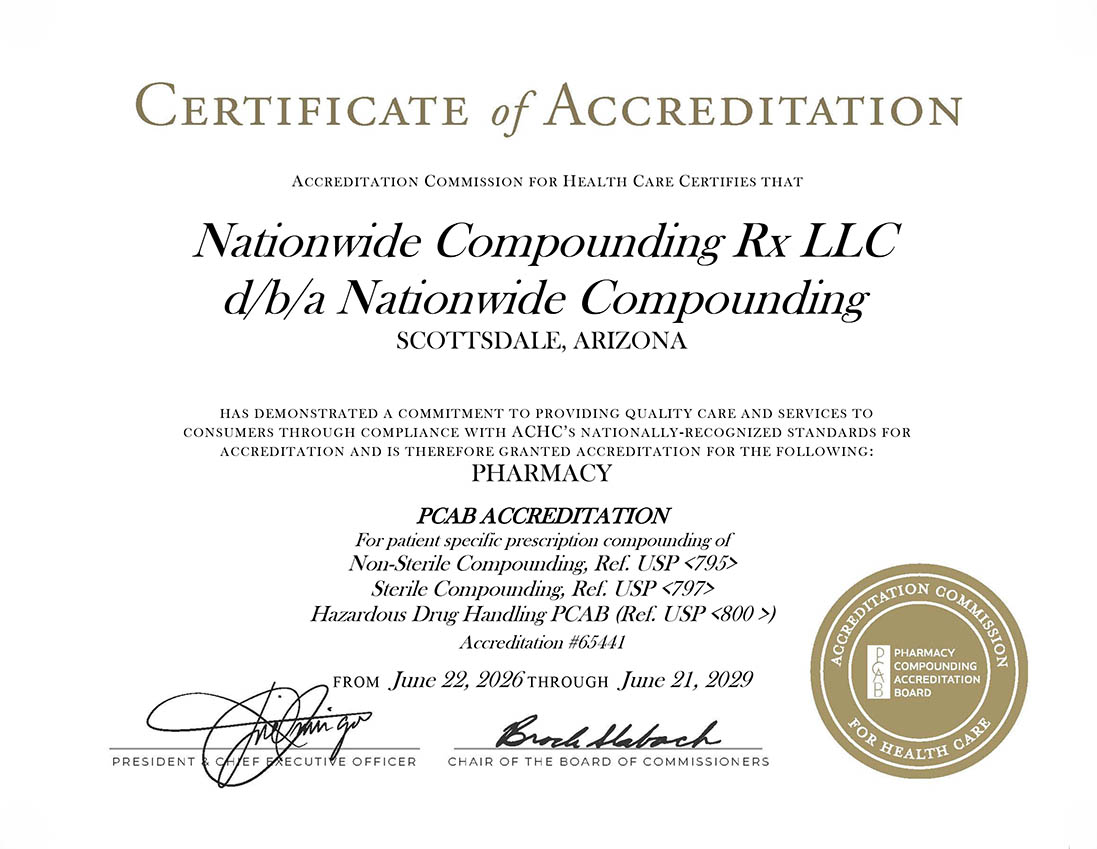
The American Medical Association recommends physicians use only PCAB-accredited pharmacies for compounded medications. Fewer than 1% of U.S. compounding pharmacies hold this voluntary accreditation, which represents the gold standard for quality. As described by ACHC/PCAB, accredited pharmacies must demonstrate compliance with USP <795> for non-sterile compounding (which covers most sublingual solutions), USP <797> for sterile preparations, documented quality control, and contamination prevention protocols. Providers should also verify that the pharmacy sources active pharmaceutical ingredients exclusively from FDA-inspected and cleared vendors. Nationwide Compounding Rx® has maintained PCAB accreditation since its early days, operates a USP 800-compliant facility, and purchases only the highest-grade chemicals from FDA-inspected vendors.
Quality, Safety, and Regulatory Standards: What to Look for in a Sublingual Solution Compounding Pharmacy
The regulatory framework distinguishes 503A compounding pharmacies (patient-specific, prescription-based) from 503B outsourcing facilities (larger scale, hospital supply, subject to stricter cGMP requirements and FDA inspection schedules). As the FDA explains, most sublingual solutions dispensed to individual patients are prepared by 503A pharmacies operating under state pharmacy board oversight and USP standards.
USP <795> compliance is central for non-sterile sublingual preparations, governing ingredient quality, formulation accuracy, beyond-use dating, labeling, and quality control documentation. The 2026 environment adds complexity: the SAFE Drugs Act of 2025 proposes a 20-unit-per-month cap on essentially-copied drugs and mandatory interstate shipping reports to the FDA, so providers and patients should work with pharmacies that are actively monitoring these developments. With more than 350 drug shortages affecting U.S. pharmacies in 2025, compounding pharmacies remain a critical bridge when commercial products are unavailable.
Key criteria to look for include PCAB accreditation, USP compliance, FDA-inspected ingredient sourcing, transparent quality documentation, and a collaborative approach to prescriber communication. Nationwide Compounding Rx® meets all of these criteria, backed by 40 years of combined staff experience and a nationwide distribution network serving 47 states.
Practical Patient Guide: How to Use Sublingual Liquid Solutions Correctly
- Preparation: Rinse the mouth with water before administration if instructed, and avoid eating or drinking immediately beforehand to ensure clean mucosal contact.
- Measurement: Use the provided dropper or syringe to measure the exact prescribed dose. Do not estimate.
- Administration: Place the solution under the tongue, not on top of it, and do not swallow it immediately. Keep the mouth closed and minimize swallowing.
- Dwell time: Hold the solution under the tongue for the time specified by the prescriber or pharmacist, typically one to two minutes. This contact time is essential for adequate absorption.
- After absorption: Once the dwell time is complete, any remaining solution may be swallowed or expectorated as directed.
Practical tips: Avoid talking during the dwell time to prevent accidental swallowing. If the taste is challenging, ask about flavoring options. Store solutions as directed, since some require refrigeration. Correct technique directly affects how much drug is absorbed, so patients should request a demonstration or written instructions.
Why Nationwide Compounding Rx® Is the Trusted Partner for Sublingual Solution Compounding
Nationwide Compounding Rx® delivers on every dimension covered in this article:
- PCAB Accreditation: Maintained since the pharmacy’s early days, placing it among fewer than 1% of U.S. compounding pharmacies to earn this gold-standard credential.
- USP 800 Compliance: The Scottsdale, AZ facility operates under USP 800 standards, eliminating cross-contamination risks.
- FDA-Inspected Ingredient Sourcing: All active pharmaceutical ingredients come exclusively from FDA-inspected and cleared vendors.
- Clinical Collaboration: The pharmacy works alongside prescribers to develop and refine formulations and optimize dosing based on lab results.
- Formulation Expertise: Sublingual solutions are prepared across BHRT, ketamine, LDN, NAD+, peptides, and more, with custom flavoring options to maximize adherence.
- Speed and Accessibility: One to two business day turnaround on all compounded medications, same-day pickup for select formulations, and shipping to 47 states plus Washington, D.C.
- Personalized Approach: Every formulation is tailored to the individual patient, rejecting a one-size-fits-all model.
- Combined Experience: The team brings 40 years of combined compounding experience to every formulation.
Conclusion: The Science Supports a Smarter Delivery Strategy
Sublingual liquid solutions bypass hepatic first-pass metabolism, deliver drugs directly into systemic circulation, and achieve peak blood levels within minutes. These advantages are clinically meaningful across a growing range of therapeutic applications. For many patients, sublingual solutions are not simply a convenience; they represent a medically superior delivery route that improves bioavailability, reduces side effects, and enhances adherence.
From BHRT and ketamine to NAD+, LDN, and peptides, sublingual compounding stands at the forefront of personalized medicine in 2026. Navigating this space requires a qualified, PCAB-accredited partner who understands both the science and the evolving regulatory environment. As drug shortages persist and the compounding market expands toward $22 billion globally by 2031, sublingual solution compounding pharmacies like Nationwide Compounding Rx® will play an increasingly vital role in patient care.
Ready to Explore Sublingual Compounding? Connect with Nationwide Compounding Rx®
For patients: Speak with a healthcare provider about whether a compounded sublingual solution may be appropriate for your condition, and ask your provider to contact Nationwide Compounding Rx® to discuss formulation options.
For providers and prescribers: Contact Nationwide Compounding Rx® directly to discuss sublingual compounding capabilities, prescription submission, and collaborative patient care, including BHRT, ketamine, LDN, NAD+, and peptide formulations.
- Phone: 480-499-8379 or toll-free 1-833-650-9836
- Fax prescriptions: 480-699-5341
- Website: www.NationwideCompounding.com
- Hours: Monday through Friday, 7:00 AM to 3:30 PM
Nationwide Compounding Rx® ships to 47 states plus Washington, D.C., making expert sublingual compounding accessible nationwide. With PCAB accreditation as the final trust signal, patients and providers can be confident they are working with a pharmacy that meets the highest standards in the industry.
Related Posts
Searching for Marty's Compounding Pharmacy but not sure if a local Mississippi storefront fits your needs? This guide compares Marty's Pharmacy & Compounding Center to nationwide compounding options using a five-point credential checklist covering accreditation, testing, and shipping licenses in 2026.

The term 'board of specialty pharmacy' actually refers to four distinct organizations, each serving a different purpose. This article breaks down BPS, SPCB, state boards, and PCAB to reveal which body truly governs compounding pharmacy quality in 2026.

Many patients assume CVS Pharmacy Specialty Services can compound custom medications simply because it holds PCAB accreditation—but the reality is more nuanced. This article breaks down what the accreditation actually covers, how the FDA's 503A/503B rules apply, and what it means for prior authorizations on oncology, MS, and RA prescriptions in 2026.
Many patients land on Accredo after a physician, insurer, or PBM directs them there. This guide breaks down what specialty pharmacy Accredo actually does—and the critical compounding limitations you need to know about in 2026.