Compounding Pharmacy for Elderly Patients: Solving Dysphagia, Polypharmacy, and Allergen Challenges in 2026
Introduction: When Standard Medications Fail Aging Patients
Consider an 84-year-old nursing home resident prescribed 13 different medications. He cannot reliably swallow pills, and he has a documented gluten intolerance. The standard retail pharmacy down the road simply cannot solve his problem. The tablets it dispenses are too large, too numerous, and contain fillers that trigger gastrointestinal distress. For millions of older Americans, this is not a hypothetical scenario. It is a daily reality.
The scale of the issue is staggering. According to CDC data, 83.6% of U.S. adults aged 60 to 79 use at least one prescription drug, and 34.5% use five or more. The typical nursing home resident takes an average of 13 medications every single day. When patients cannot swallow, cannot tolerate, or cannot afford to keep starting and stopping these medications, the consequences ripple outward into hospitalizations, falls, and accelerated decline.
Compounding pharmacy offers a clinically grounded answer. This is not a niche workaround or an alternative medicine fad. The FDA explicitly recognizes elderly patients who cannot swallow pills as a legitimate use case for compounding under Section 503A of the Federal Food, Drug, and Cosmetic Act. This article addresses three core challenges that compounding directly solves: dysphagia, polypharmacy, and allergen and excipient sensitivities.
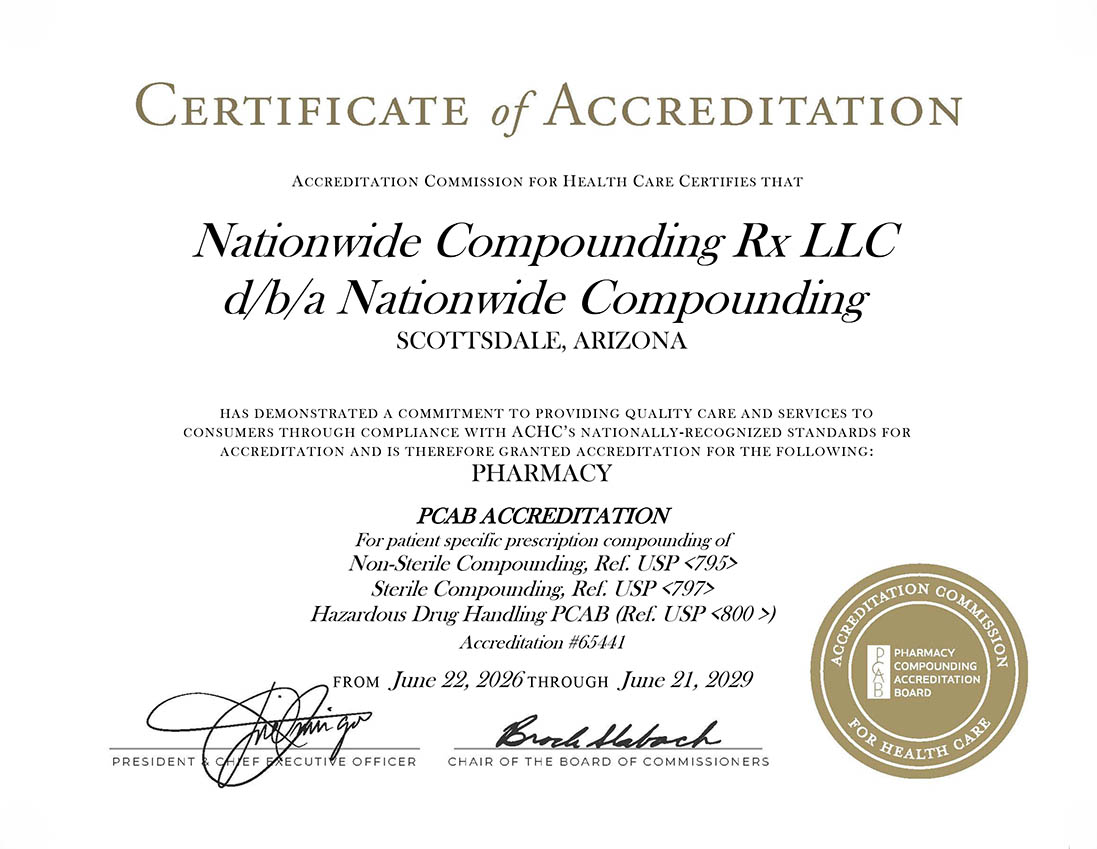
Throughout, the discussion references the capabilities of Nationwide Compounding Rx®, a PCAB-accredited, USP 800-compliant compounding pharmacy that serves geriatric care providers across 47 states and Washington, D.C. This guide is written for geriatric care providers, nursing home administrators, and family caregivers who need actionable, clinically grounded information.
The Geriatric Medication Crisis: Understanding the Scope in 2026
The aging population’s medication burden is reshaping the pharmaceutical landscape. The U.S. compounding pharmacy market reached USD 6.98 billion in 2025 and is projected to grow to USD 12.79 billion by 2035 at a 6.24% compound annual growth rate, with geriatric care identified as a primary growth driver.
Behind that growth lies a clinical reality. Older adults take an average of 6 to 8 medications daily due to multiple chronic conditions, and nursing home residents average 13. Each additional medication compounds the risk of adverse drug reactions, dangerous drug-drug interactions, falls, and cognitive impairment.
Standard retail pharmacy is structurally ill-equipped to manage this complexity. Mass-manufactured medications follow a one-size-fits-all model that ignores the age-related physiological changes affecting how older bodies absorb, metabolize, and clear drugs. A 2025 pharmacokinetic simulation study found that more than 70% of elderly patients needed dose adjustments due to age-related changes in drug clearance and distribution. Commercial dosing simply does not account for this variability.
Three pillars of geriatric medication failure emerge from this reality: the inability to swallow solid forms, the polypharmacy burden, and allergen and excipient sensitivities. This is not an edge case. HHS predicts that 70% of individuals reaching age 65 will need long-term care services, making personalized medication a systemic concern.
Challenge #1: Dysphagia and Why Pill-Based Medications Fail Elderly Patients
Dysphagia is the medical term for difficulty swallowing. It is far more common in older adults than most caregivers realize. According to the NIH/StatPearls 2026 edition, the prevalence of dysphagia in patients over age 60 is approximately 40%.
The physiological drivers are specific to aging: reduced saliva production, weakened pharyngeal muscles, neurological changes from stroke or Parkinson’s disease, and dental deterioration. All of these worsen over time.
The clinical gap is alarming. In a survey of 791 people aged 60 and over, nearly 60% reported difficulty swallowing medication, yet 72% had never been asked about it by their physician. When compounding is unavailable, patients and caregivers resort to dangerous workarounds such as crushing tablets or opening capsules. These practices can destroy extended-release mechanisms, alter bioavailability, and create toxic concentration spikes.
In long-term care, alternative drug delivery is not optional. Up to one-third of nursing home residents experience difficulty swallowing. A cross-sectional study of 200 geriatric hospital patients with a mean age of 84 found a 29% prevalence of oropharyngeal dysphagia, with elevated pneumonia risk, connecting swallowing difficulty to consequences well beyond adherence.
How Compounding Pharmacy Solves Dysphagia-Related Medication Challenges
The core solution is conversion. A compounding pharmacy can transform solid oral medications into liquid suspensions, oral solutions, sublingual drops, troches, or transdermal gels that bypass the swallowing barrier entirely.
Nationwide Compounding Rx® offers a full range of these dosage forms, including:
- Oral liquids and suspensions
- Sublingual solutions
- Transdermal creams and gels
- Troches (sublingual lozenges)
- Suppositories
The clinical benefits extend beyond convenience. For seniors, switching from pills to topical gels has been reported to reduce vomiting and nausea by up to 60%, improving both comfort and adherence. Flavoring is another practical adherence tool. Options such as cherry, grape, vanilla butternut, and raspberry make liquid formulations more palatable, which matters especially for patients with cognitive decline who may resist unfamiliar or unpleasant medications.
The FDA’s explicit recognition gives this approach clinical legitimacy under Section 503A. While oral compounded medications hold a 46% market share in 2026, topical, transdermal, and liquid formulations are the fastest-growing segments, driven precisely by dysphagia-related demand.
Challenge #2: Polypharmacy and the 13-Medication Problem in Long-Term Care
Polypharmacy, the use of multiple medications simultaneously, carries serious consequences for elderly patients: increased risk of adverse drug reactions, drug-drug interactions, falls, hospitalizations, and cognitive impairment.
The scale is significant. The typical nursing home resident takes 13 medications, and 34.5% of adults aged 60 to 79 use five or more prescription drugs daily. This burden drives non-adherence through pill fatigue, complex dosing schedules, difficulty distinguishing between multiple tablets, and the sheer physical challenge of swallowing many pills throughout the day.
A 2025 NIH study of 42,601 elderly records found that pharmacological factors, including polypharmacy and inappropriate medication use, were the most statistically significant drivers of non-adherence. Compounding the problem, age-related declines in renal and hepatic clearance mean standard commercial doses may be too high or too low. The result is preventable hospitalizations, worsening chronic disease management, and rising long-term care costs.
How Compounding Pharmacy Addresses Polypharmacy Through Consolidation and Customization
Compounding offers several direct interventions. Medication combination compounding allows a pharmacy to consolidate multiple drugs into a single formulation, such as combining two or three topical agents into one cream, reducing pill burden and simplifying administration.
Dose individualization lets compounding pharmacies adjust dosages to match a patient’s specific pharmacokinetic profile, accounting for reduced renal clearance, lower body weight, or altered drug distribution. This directly fills the gap affecting the 70% of elderly patients who need dose adjustments.
Synchronized refill schedules allow compounding pharmacies working with long-term care facilities to coordinate medication delivery so all of a resident’s formulations arrive together, easing the administrative load on nursing staff.
The pharmacist’s active role is well documented. A pharmacist-led intervention study of 317,613 Medicare patients showed significant adherence improvements: +4.0% for diabetes, +6.3% for hypertension, and +6.1% for cholesterol. Nationwide Compounding Rx® reinforces this collaborative model by working directly alongside prescribers to design individualized formulations, with a 1 to 2 business day turnaround and same-day pickup available for some medications, making the compounding pharmacist an active member of the geriatric care team. Learn more about how compounding pharmacy for nursing homes supports long-term care facilities with these individualized solutions.
Challenge #3: Allergens and Excipients and the Hidden Ingredients in Standard Medications
Excipients are the inactive ingredients in medications: fillers, binders, dyes, and preservatives. They serve manufacturing purposes, but ingredients such as lactose, gluten, artificial dyes, and sugar can trigger adverse reactions in sensitive patients.
The problem is widespread. About 1 in 5 people react to dyes, gluten, or lactose found in standard pill fillers. For elderly patients with celiac disease, lactose intolerance, or dye sensitivities, these hidden ingredients can cause significant gastrointestinal distress or allergic reactions. Age-related changes in gut permeability, immune function, and digestive enzyme production can amplify sensitivities that younger patients tolerate without issue.
There is also a diagnostic challenge. Patients and caregivers often blame the active drug rather than an excipient, leading to unnecessary medication discontinuation or dose reduction. When a medication causes discomfort due to a filler, the patient stops taking it, creating a preventable cause of non-adherence.
How Nationwide Compounding Rx® Eliminates Allergen Barriers
Nationwide Compounding Rx® can compound medications without lactose, gluten, artificial dyes, sugar, and other common excipients while preserving the therapeutic profile of the active drug.
Several safeguards make this possible. The pharmacy purchases only the highest-grade pharmaceutical chemicals from FDA-inspected and cleared vendors, ensuring purity and consistency. Its USP 800-compliant facility eliminates the risk of allergen cross-contamination during compounding, a critical protection for patients with severe sensitivities.
Practical examples relevant to elderly patients include a gluten-free liquid suspension for a resident with celiac disease, a lactose-free topical gel for a patient with dairy intolerance, and a dye-free oral solution for someone with documented dye sensitivity. Because Nationwide Compounding Rx® compounds on a patient-specific basis, each formulation is reviewed against the individual’s known allergens rather than produced for a generic population. This capability also extends to discontinued medications: if a patient relied on a commercially available allergen-free product that has been pulled from the market, the pharmacy can replicate it.
Understanding the Regulatory Framework: 503A vs. 503B Compounding
For geriatric care providers, the distinction between compounding pathways affects patient safety, regulatory oversight, insurance coverage, and the formulations available.
503A compounding is patient-specific compounding performed by a state-licensed pharmacy based on a valid prescription for an identified individual patient. It is not subject to FDA new drug approval requirements but must comply with state pharmacy board regulations and USP standards.
503B compounding refers to FDA-registered outsourcing facilities that produce larger batches without patient-specific prescriptions. These facilities are subject to FDA inspection and Current Good Manufacturing Practice requirements.
The practical implication for long-term care facilities is clear. A 503A pharmacy such as Nationwide Compounding Rx® is the appropriate partner for patient-specific formulations tailored to individual residents, while 503B facilities may supply bulk stock for facility-wide use. Compounded drugs are not FDA-approved; FDA’s compounding program aims to protect patients from poor-quality compounded drugs while preserving access for patients with a legitimate medical need. PCAB accreditation, held by Nationwide Compounding Rx® since its early days, provides third-party validation that a 503A pharmacy meets rigorous safety and quality standards beyond basic state licensure.
Quality and Safety Safeguards: What to Look for in a Geriatric Compounding Partner
Because compounded medications are not FDA pre-approved, product quality depends entirely on the pharmacy’s internal standards, accreditation, and compliance practices. Vetting is essential.
PCAB accreditation means the Pharmacy Compounding Accreditation Board has independently assessed the pharmacy against USP standards for safety and quality. USP 800 compliance governs the handling of hazardous drugs, preventing cross-contamination and protecting both patients and staff. Nationwide Compounding Rx® brings a combined 40 years of compounding expertise and uses modern, high-tech compounding technologies as additional quality indicators.
The 2026 landscape also features AI and automation. Leading compounding pharmacies are integrating robotic dispensing systems, predictive analytics, and AI-driven visual inspection to enhance precision and reduce dosing errors, a benefit that matters most for vulnerable elderly patients.
A practical checklist for evaluating a compounding partner includes:
- PCAB accreditation
- USP 800 compliance
- FDA-inspected ingredient sourcing
- State licensure in the patient’s state
- Reliable turnaround time
- Direct prescriber collaboration capabilities
The 2026 Legislative Landscape: What Geriatric Care Providers Need to Know
Pending legislation could affect access, reimbursement, and oversight of compounded medications in long-term care settings.
The Preserving Patient Access to Long-Term Care Pharmacies Act (H.R. 5031), introduced in August 2025, would establish a $30 per-prescription supply fee for long-term care pharmacies under Medicare Part D in 2026. It aims to address a reimbursement crisis threatening the viability of services for roughly 2 million nursing home residents. As of spring 2026, the bill remained stalled, meaning long-term care pharmacies continue to face financial pressure that could reduce access to specialized compounded formulations.
The SAFE Drugs Act of 2025 (H.R. 6509), introduced in December 2025, proposes new annual FDA reporting requirements for interstate compounding pharmacies and pre-compounding inspections of outsourcing facilities, tightening oversight following quality concerns.
While increased oversight may add compliance burdens, accredited pharmacies such as Nationwide Compounding Rx® that already meet PCAB and USP 800 standards are well-positioned to navigate new requirements. Geriatric care providers should stay informed and choose partners with strong compliance track records.
Navigating Insurance and Cost Considerations for Compounded Medications
The reimbursement gap is real. Most insurers do not cover compounded medications, creating a barrier for elderly patients on fixed incomes, particularly those in community settings rather than facility-based care. Geriatric compounded prescriptions also face stricter pharmacy benefit manager oversight than pediatric compounding, making reimbursement harder to secure even when coverage technically exists.
Family caregivers and administrators can take practical steps to appeal for coverage of medically necessary formulations. Documenting the clinical need, such as confirmed dysphagia, a verified allergen sensitivity, or failed adherence with standard formulations, strengthens an appeal. Under Medicare and Medicaid, these programs cover over 60% of long-term care pharmacy spending, though coverage for compounded medications specifically varies by state Medicaid program and Medicare Part D plan.
The cost-benefit argument is compelling. The cost of a compounded formulation must be weighed against the cost of non-adherence: preventable hospitalizations, emergency care, and worsening chronic disease. Geriatric care providers should discuss cost transparency with their compounding partner upfront. Nationwide Compounding Rx® can be contacted directly to discuss pricing and coverage options for specific patient scenarios.
Telehealth and the Homebound Elderly Patient: The 2026 Compounding Pipeline
The integration of telehealth with compounding pharmacy services is accelerating in 2026, enabling remote consultations, digital prescription workflows, and direct-to-patient shipping for homebound elderly patients.
This matters because many older patients face mobility limitations, transportation barriers, or cognitive decline that make in-person visits difficult. The workflow is straightforward: a telehealth provider evaluates the patient remotely, identifies the need for a compounded formulation such as a liquid conversion for dysphagia or an allergen-free option, transmits the prescription digitally, and the pharmacy ships directly to the patient’s home.
Nationwide Compounding Rx®’s nationwide shipping capability across 47 states and Washington, D.C., is a critical enabler of this model. Its fast compounding pharmacy turnaround of 1 to 2 business days supports patients who depend on consistent access without in-person visits. Family members managing a relative’s care from a distance can coordinate with a telehealth provider and the pharmacy to ensure reliable medication access without requiring the patient to leave home.
How to Partner with a Compounding Pharmacy for Geriatric Care
The path into a compounding relationship differs by audience.
For geriatric care providers and facility administrators: Initiate a relationship by discussing formulary needs, turnaround time requirements, prescriber collaboration protocols, and compliance documentation. The goal is a working partnership that supports residents’ individualized needs.
For family caregivers: Watch for signs that a loved one may benefit from compounding, including difficulty swallowing, pill refusal, gastrointestinal complaints, or known allergen sensitivities. Raise the conversation with the prescriber and have relevant information ready when contacting the pharmacy, including current medications and documented intolerances.
At Nationwide Compounding Rx®, the prescriber collaboration model means the physician does not need to be a compounding expert. The prescriber describes the clinical need, and the pharmacy designs the solution. The pharmacy serves 47 states and Washington, D.C., and does not currently ship to Alabama, California, North Carolina, or South Carolina, so providers can quickly confirm eligibility.
To get started, contact the pharmacy by phone at 480-499-8379 or toll-free at 1-833-650-9836, visit www.NationwideCompounding.com, or submit prescriptions via fax at 480-699-5341. All compounded medications carry a 1 to 2 business day turnaround.
Conclusion: Personalized Pharmacy Is a Clinical Necessity for Elderly Patients
The case is clear across three dimensions. Dysphagia affects approximately 40% of patients over 60, making standard pill-based medications clinically inappropriate. Polypharmacy, averaging 13 medications in nursing homes, demands individualized dose management and consolidation. Allergen and excipient sensitivities remain an underdiagnosed driver of non-adherence that compounding directly eliminates.
This is not an alternative medicine approach. The FDA, NIH, and Congressional Research Service all explicitly recognize compounding as an appropriate solution for elderly patients facing these challenges. The stakes of inaction are high: medication non-adherence contributes to preventable hospitalizations, accelerated disease progression, falls, and cognitive decline, all outcomes that compounding is uniquely positioned to prevent.
Nationwide Compounding Rx® stands as a clinically and operationally qualified partner: PCAB-accredited, USP 800-compliant, backed by 40 years of combined expertise, offering a 1 to 2 business day turnaround, nationwide shipping, and a patient-first philosophy that rejects the one-size-fits-all model. As the U.S. compounding pharmacy market grows toward USD 12.79 billion by 2035 and the geriatric population expands, the integration of compounding into standard geriatric care will shift from an exception to an expectation.
Ready to Solve Your Patients’ Medication Challenges? Contact Nationwide Compounding Rx® Today
Geriatric care providers, nursing home administrators, and family caregivers are encouraged to contact Nationwide Compounding Rx® to discuss how compounded formulations can address dysphagia, polypharmacy, or allergen challenges for specific patients.
Contact details:
- Phone: 480-499-8379
- Toll-Free: 1-833-650-9836
- Fax: 480-699-5341
- Website: www.NationwideCompounding.com
- Address: 14000 N. Hayden Rd., Suite 104, Scottsdale, AZ 85260
Business hours are Monday through Friday, 7:00 a.m. to 3:30 p.m., with a 1 to 2 business day turnaround on all medications. The pharmacy ships to 47 states and Washington, D.C., making it accessible to the vast majority of geriatric care providers and patients nationwide.
Prescribers are invited to reach out directly to discuss patient-specific compounding needs, reinforcing the collaborative partnership model that distinguishes Nationwide Compounding Rx® from standard retail pharmacy. Family caregivers can bring this article to their loved one’s next physician appointment as a starting point for a conversation about compounded medication options.
Related Posts
Searching for Marty's Compounding Pharmacy but not sure if a local Mississippi storefront fits your needs? This guide compares Marty's Pharmacy & Compounding Center to nationwide compounding options using a five-point credential checklist covering accreditation, testing, and shipping licenses in 2026.

The term 'board of specialty pharmacy' actually refers to four distinct organizations, each serving a different purpose. This article breaks down BPS, SPCB, state boards, and PCAB to reveal which body truly governs compounding pharmacy quality in 2026.

Many patients assume CVS Pharmacy Specialty Services can compound custom medications simply because it holds PCAB accreditation—but the reality is more nuanced. This article breaks down what the accreditation actually covers, how the FDA's 503A/503B rules apply, and what it means for prior authorizations on oncology, MS, and RA prescriptions in 2026.

Many patients land on Accredo after a physician, insurer, or PBM directs them there. This guide breaks down what specialty pharmacy Accredo actually does—and the critical compounding limitations you need to know about in 2026.