
How Compounding Pharmacy Improves Medication Adherence: The Patient-by-Patient Case
Introduction: The Medication Adherence Crisis No One Is Solving at the Source
Medication non-adherence is one of the most expensive and least visible problems in modern healthcare. In the United States alone, patients who do not take their medications as prescribed cost the healthcare system an estimated $100 to $300 billion each year in avoidable expenses, and non-adherence contributes to roughly 125,000 preventable deaths annually. These are not abstract figures. They represent millions of people whose treatment plans quietly fall apart, often without their prescribers ever knowing.
The World Health Organization has found that among patients with chronic diseases in developed countries, adherence averages only 50 percent. Half of all chronic disease patients, in other words, are not taking their medications as directed. The problem starts even earlier: more than 20 percent of new prescriptions are never filled at all, and roughly 63 percent of physicians report that at least one in four of their patients does not take medication as prescribed.
Most interventions aimed at this crisis treat the symptoms rather than the cause. Reminder apps, patient education campaigns, and copay assistance programs all assume the underlying medication is fine and the patient simply needs a nudge. But a large share of non-adherence is not a motivation failure. It is a formulation failure. The medication, as mass-manufactured, was never designed for the individual taking it.
This is precisely the problem compounding pharmacy was built to solve. Compounding is a discipline dedicated to customizing a medication’s dosage form, strength, flavor, route of administration, and ingredient composition on a patient-by-patient basis. The WHO has noted that “increasing the effectiveness of adherence interventions may have a far greater impact on the health of the population than any improvement in specific medical treatments.” That statement is, in effect, a validation of the compounding mission. The sections that follow map each major root cause of non-adherence to a specific compounding solution, supported by data and grounded in the patient populations most affected.
Understanding Why Patients Don’t Take Their Medications
The first step toward solving non-adherence is recognizing that it is frequently not a behavioral or motivational shortcoming. When a medication as manufactured does not physically work for a patient, no amount of coaching will change the outcome. The patient stops taking it because taking it is genuinely difficult, uncomfortable, or harmful.
Five root causes account for a large portion of preventable non-adherence, and compounding addresses each of them directly:
- Allergens and inactive ingredients in commercial products that trigger adverse reactions
- Pill burden created by polypharmacy and complex regimens
- Unpalatable taste or smell, which is especially disqualifying for children
- The wrong dosage form for a patient’s physical condition
- GI intolerance and systemic side effects that make daily use unbearable
These barriers are most acute in specific populations: pediatric patients, geriatric patients, patients managing chronic diseases, and patients juggling complex polypharmacy regimens. Although compounded prescriptions represent only an estimated 1 to 3 percent of all U.S. prescriptions, they serve millions of patients whose needs commercial products simply cannot meet. That gap is the problem-solution framework the rest of this article follows.
Root Cause #1: Allergens and Inactive Ingredients in Commercial Medications
Every commercial tablet or capsule contains more than its active ingredient. Excipients, the inactive components that bind, preserve, color, and stabilize a drug, include dyes, gluten, lactose, preservatives, and various fillers. For sensitive patients, these additives can cause reactions that have nothing to do with the therapeutic agent itself.
The scale is significant: approximately 1 in 5 people react to dyes, gluten, or lactose commonly found in commercial pills. When a patient experiences such a reaction, they often stop taking the medication without informing their prescriber, producing what amounts to silent non-adherence. The prescriber sees a patient who is “not responding,” when in reality the patient abandoned the drug because it made them feel worse.
Compounding resolves this directly. A compounding pharmacy can formulate a chemically equivalent product without the specific allergen or filler causing the reaction. Nationwide Compounding Rx®, for example, can eliminate lactose, dyes, gluten, and sugar from a formulation on request. Once the offending ingredient is removed, the primary reason for discontinuation disappears with it, and the patient can finally take their medication consistently. Learn more about how alternative to commercial medication compounding addresses these formulation barriers.
Root Cause #2: Pill Burden and the Polypharmacy Problem
Polypharmacy, generally defined as the concurrent use of five or more medications, has become increasingly common among older adults and anyone managing multiple chronic conditions. The more medications a patient must track, the harder consistent adherence becomes. Research summarized in 2026 adherence statistics indicates that prescribing more than five medications increases the risk of non-adherence by roughly 50 percent.
Clinical literature reinforces the concern. Guidance on reducing polypharmacy in older adults confirms that stacking multiple prescriptions raises the likelihood of adverse drug events, dangerous interactions, and reduced compliance. Managing many bottles, schedules, and dosing instructions is a cognitive load that many patients cannot sustain over the long term.
Compounding offers a direct structural fix. When medications are chemically compatible, a compounding pharmacy can combine them into a single dosage form: one capsule, one cream, or one troche instead of several separate products. This is not merely a convenience; it is a clinically meaningful intervention that removes a documented adherence barrier. Nationwide Compounding Rx® builds combination formulations across multiple dosage forms, giving prescribers a practical way to consolidate complex regimens for the patients who need it most.
Root Cause #3: Unpalatable Taste and the Pediatric Adherence Gap
Nowhere is the taste problem more decisive than in pediatrics. An estimated 30 to 70 percent of children with chronic illness are non-adherent to their medication regimens, and unpalatable taste ranks among the most commonly cited reasons. Commercial medications are engineered for efficacy and stability, not flavor. Adults may tolerate a bitter pill; children will simply refuse it.
Compounding addresses this through flavor customization. Pharmacists can reformulate medications in child-friendly flavors such as grape, cherry, strawberry, banana crème, tutti frutti, and vanilla butternut. Established flavoring systems give pharmacists access to thousands of flavor recipes matched to individual preferences, demonstrating that flavor customization is a proven, mainstream adherence tool rather than a novelty.
Nationwide Compounding Rx® offers flavored medication for children along with pediatric-appropriate dosage forms including oral liquids, suspensions, and gummies. The benefit extends beyond children. Pharmacy continuing education resources confirm that compounding solutions such as flavoring, dosage form alteration, and combination preparations directly close the pediatric adherence gap, and the same principles help geriatric patients and adults with swallowing difficulties or sensory sensitivities.
Root Cause #4: Wrong Dosage Form for the Patient’s Physical Condition
Commercial medications are overwhelmingly manufactured as oral tablets and capsules. For a substantial portion of the patient population, that single dominant form is inaccessible. Elderly patients with dysphagia (difficulty swallowing), patients with feeding tubes, patients with neurological conditions affecting swallowing, and patients recovering from gastrointestinal surgery often cannot take a standard pill at all.
The solution is to change the form of the medicine rather than expect the patient to adapt. Elderly dysphagic patients benefit from oral disintegrating tablets, transdermal gels, and rectal, buccal, or sublingual delivery systems. Compounding makes the full range possible: troches, transdermal creams and gels, oral liquids and suspensions, sublingual solutions, suppositories, and even medicated lip balms.
A peer-reviewed 2022 study on the role of pharmaceutical compounding in promoting medication adherence establishes that patient-centric customization of dosage form, strength, and route measurably supports adherence. The logic is straightforward: a patient who physically cannot swallow a tablet will not take that tablet, and providing an alternative form removes the physical barrier entirely. For children specifically, compounded medication when a child can’t swallow pills illustrates how dosage form changes translate directly into adherence gains. Nationwide Compounding Rx® maintains an extensive dosage form portfolio built on exactly this principle.
Root Cause #5: GI Intolerance and Systemic Side Effects
Gastrointestinal intolerance, including nausea, stomach upset, diarrhea, and abdominal pain, is one of the most common reasons patients quietly abandon long-term medications. Often these side effects are not caused by the active ingredient itself but by the route of administration. An oral drug must pass through the digestive system, where it can cause local irritation regardless of its therapeutic action.
Compounding sidesteps this problem with transdermal and topical formulations that deliver the active ingredient through the skin, bypassing the GI tract altogether. Nationwide Compounding Rx® applies this approach in its pain management specialty, where topical creams and gels provide localized treatment while minimizing systemic side effects such as addiction, dizziness, nausea, and fatigue.
Open-access research on topical therapies notes non-adherence rates as high as 50 to 75 percent for psoriasis treatments and shows how improved vehicle formulation and route optimization address those barriers. The connection is direct: when patients do not experience adverse effects, they have no reason to stop. The principle applies across hormone therapy, dermatology, pain management, and chronic disease care alike.
Patient Population Spotlight: Who Benefits Most from Compounding-Driven Adherence
Compounding’s adherence benefits are not theoretical. They resolve documented, population-specific barriers, which becomes clearest when the affected groups are examined individually.
Pediatric Patients
With non-adherence rates among chronically ill children ranging from 30 to 70 percent, pediatrics represents one of the highest-need populations. Children require age-appropriate dosing, palatable flavors, and dosage forms they can physically take, such as liquids, gummies, and chewables. None of these are reliably available in commercial formulations. Compounding pharmacies work with prescribers to create pediatric-specific preparations matched to a child’s weight, age, and preferences. When a parent trusts that a medication tastes acceptable and is dosed appropriately, caregiver adherence improves as well. Nationwide Compounding Rx®’s pediatric specialty, including gummies and flavored oral liquids, addresses this directly.
Geriatric Patients
Older adults face a convergence of adherence barriers: dysphagia, polypharmacy, cognitive decline, and heightened sensitivity to inactive ingredients. They are also the population most likely to be taking five or more medications at once, making pill burden a leading obstacle. Compounding responds on every front. Combination formulations reduce pill count; alternative dosage forms such as transdermal, sublingual, and liquid preparations accommodate swallowing difficulties; and allergen-free formulations reduce adverse reactions. The aging U.S. population is a primary driver of compounding market growth, with the U.S. market projected to reach as high as $12.79 billion by 2035.
Chronic Disease Patients
Managing hypertension, diabetes, thyroid disorders, and autoimmune conditions demands consistent, long-term adherence, which makes any barrier especially consequential. Chronic disease patients are particularly vulnerable to the cumulative effect of GI intolerance, allergen reactions, and pill burden, which can build over time into full discontinuation. Adherent patients with conditions like hypertension or diabetes save an average of $4,000 to $8,000 per year in healthcare costs. Compounding supports these patients through individualized dosing, alternative delivery routes, and formulations adjustable at each refill. Nationwide Compounding Rx®’s lab-based hormone adjustment compounding, dosed according to lab results, illustrates how individualized, data-driven care improves patient involvement and long-term adherence.
Polypharmacy Patients
Overlapping with the geriatric and chronic disease groups, polypharmacy patients deserve separate attention because of the severity of their risk: a 50 percent increase in non-adherence associated with five or more concurrent medications. Combination compounding, which consolidates compatible medications into a single dosage form, is among the most direct and measurable adherence interventions available. It also reduces dosing errors, missed doses, and interaction confusion, delivering safety benefits beyond adherence alone. This capacity to combine medication therapies sits at the center of Nationwide Compounding Rx®’s stated philosophy.
The Drug Shortage Connection: When Non-Adherence Is Forced, Not Chosen
One dimension of non-adherence rarely discussed is the treatment gap caused by drug shortages. When a commercially manufactured drug becomes unavailable due to supply chain disruptions or a manufacturer’s decision to discontinue it, patients are forced off a medication they would otherwise take faithfully. This involuntary non-adherence can carry serious clinical consequences.
The 2025 to 2026 Snapshot of pharmacy compounding in America found that more than half of responding pharmacies reported compounding copies of FDA-approved drugs during active, FDA-recognized shortages. Official FDA guidance confirms that compounders may prepare versions of drugs on the shortage list under specific conditions, giving this role clear regulatory legitimacy.
Viewed this way, compounding functions as a continuity-of-care mechanism. By replicating discontinued or shortage-affected medications, compounding pharmacies prevent gaps that would otherwise register as non-adherence. Nationwide Compounding Rx®’s ability to reproduce discontinued medications is a direct application of this principle.
The Science Behind the Solution: Patient-Centric Drug Product Design
The scientific framework underlying these benefits is Patient-Centric Drug Product Design (PCCD). Rather than relying on behavioral interventions applied after a prescription fails, PCCD addresses adherence barriers at the formulation level itself, from taste and texture to route of administration and regimen complexity.
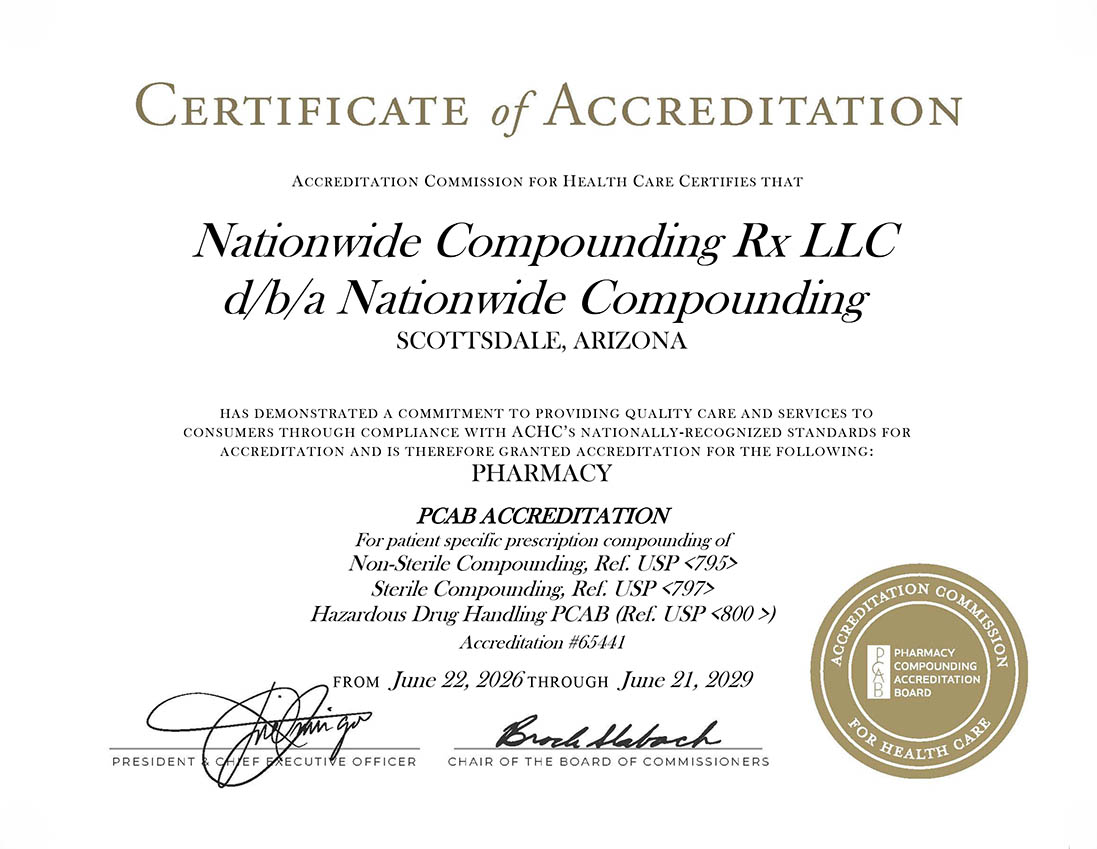
The 2022 peer-reviewed study connecting pharmaceutical compounding to medication adherence serves as the primary academic foundation for this approach. The clinical workforce capable of implementing it is highly specialized: the 2025 to 2026 Snapshot reports that compounding pharmacists average 19 years of experience and prepare roughly 100 unique formulations per week. Market data reflects growing demand for this expertise, with the U.S. compounding pharmacy market expanding from an estimated $6.98 to $7.42 billion in 2025 to 2026 toward a projected $11.52 to $12.79 billion by 2035, driven substantially by demand for personalized, adherence-improving medications. Nationwide Compounding Rx®’s PCAB accreditation, USP 800 compliance, and 40 years of combined staff experience reflect the clinical rigor PCCD requires.
The Economic Case: Why Adherence-Focused Compounding Is a Healthcare Investment, Not a Cost
Weighed against the cost of non-adherence, compounding services represent an investment rather than an expense. Non-adherence drives $100 to $300 billion in avoidable annual costs and contributes to 125,000 preventable deaths. A systematic review of 79 studies found that the annual economic cost of non-adherence per person ranges from $949 to $44,190 depending on the disease group.
Set against those figures, the savings from adherence are compelling. Patients with chronic conditions who take their medications consistently save an average of $4,000 to $8,000 per year in healthcare costs, an amount that far exceeds the incremental cost of a compounded formulation. The WHO’s assessment that improving adherence may yield greater population health gains than any new treatment reframes compounding as a high-leverage public health intervention. In a healthcare system increasingly organized around outcomes rather than volume, compounding-driven adherence improvement aligns with payer and provider incentives alike.
How Nationwide Compounding Rx® Puts These Principles Into Practice
Nationwide Compounding Rx® operationalizes adherence-focused compounding through a stated patient-by-patient philosophy: the company does not believe in a one-size-fits-all approach and instead customizes medications by combining therapies through the art of compounding to increase adherence for each individual patient.
That philosophy is reflected in practical capabilities. The pharmacy offers a broad range of flavors and dosage forms, including troches, transdermal creams and gels, capsules, gummies, oral liquids, sublingual solutions, suppositories, and lip balm, covering virtually every alternative to a standard commercial tablet. Eight flavoring options (banana crème, cherry, grape, peppermint, raspberry, strawberry, tutti frutti, and vanilla butternut) support palatability, while allergen-free formulation allows the removal of lactose, dyes, gluten, and sugar on request.
Its specialty areas, including bioidentical hormone replacement therapy, pain management, dermatology, pediatrics, sports medicine, and weight loss, mirror the populations most underserved by commercial products. Operational features reinforce adherence as well: one to two business day turnaround, same-day pickup options, nationwide shipping to 47 states plus Washington, D.C., and close collaboration with prescribers. PCAB accreditation and USP 800 compliance ensure these compounded medications meet the safety standards patients expect.
Conclusion: Compounding Pharmacy as the Structural Answer to a Systemic Problem
Medication non-adherence is not primarily a patient behavior problem. It is a formulation problem, and compounding pharmacy is the only intervention that addresses it at the source. The five root causes examined here (allergens in commercial medications, polypharmacy pill burden, unpalatable taste, the wrong dosage form, and GI intolerance) each map to a specific compounding solution that removes the barrier rather than working around it.
The patient impact is real and measurable. Pediatric, geriatric, chronic disease, and polypharmacy patients all face documented, population-specific obstacles that compounding directly resolves. The stakes justify the effort: $100 to $300 billion in annual avoidable costs, 125,000 preventable deaths, and a 50 percent chronic disease compliance rate describe a crisis that personalized medicine is uniquely positioned to answer. As the WHO framing suggests, improving adherence may do more for population health than any new drug. Nationwide Compounding Rx®, a PCAB-accredited, USP 800-compliant pharmacy with 40 years of combined experience serving patients across 47 states, stands as a partner in that mission.
Ready to Improve Medication Adherence for Your Patients? Partner with Nationwide Compounding Rx®
For prescribers: If commercial formulations are undermining adherence in your patient population, Nationwide Compounding Rx® can help. Contact the team to discuss customized formulations that remove specific barriers, backed by one to two business day turnaround and nationwide shipping to 47 states plus Washington, D.C.
For patients and caregivers: If a reaction to a filler, an unpleasant taste, a pill that cannot be swallowed, or a regimen with too many medications is standing in the way, ask your prescriber whether a compounded formulation could help. An allergen-free, flavored, alternatively delivered, or combination preparation may be the difference between a treatment that gets abandoned and one that can be sustained.
Contact Nationwide Compounding Rx®:
- Phone: 480-499-8379 or toll-free 1-833-650-9836
- Website: www.NationwideCompounding.com
- Location: 14000 N. Hayden Rd., Suite 104, Scottsdale, AZ 85260
- Hours: Monday through Friday, 7:00 a.m. to 3:30 p.m., with same-day pickup available for qualifying medications
Backed by PCAB accreditation, USP 800 compliance, FDA-inspected vendor sourcing, and 40 years of combined compounding expertise, the principle is straightforward: medication adherence improves when medications are designed for the patient, not the other way around.
Related Posts

Searching for Las Colinas Pharmacy Compounding & Wellness in Irving, TX? This 2026 guide gives you the address, hours, and phone number up front, then breaks down the accreditation and safety standards DFW patients should check before trusting any compounding pharmacy with hormone, peptide, or custom medication needs.

Searching for Jefferson Specialty Pharmacy turns up two unrelated organizations—one in Pennsylvania, one in Washington State. This guide clarifies which is which and explains what to do in 2026 when a prescribed medication can't be filled by either.

Searching for Marty's Compounding Pharmacy but not sure if a local Mississippi storefront fits your needs? This guide compares Marty's Pharmacy & Compounding Center to nationwide compounding options using a five-point credential checklist covering accreditation, testing, and shipping licenses in 2026.

The term 'board of specialty pharmacy' actually refers to four distinct organizations, each serving a different purpose. This article breaks down BPS, SPCB, state boards, and PCAB to reveal which body truly governs compounding pharmacy quality in 2026.