Koshland Pharm: Custom Compounding Pharmacy’s 2026 Shipping Reach
Introduction: Searching for Koshland Pharm? Here’s What to Know in 2026
Most people who search for “Koshland Pharm: Custom Compounding Pharmacy” want something simple: the official phone number, hours, address, or website of the well-known San Francisco pharmacy. They may have seen the name on a prescription label, a physician referral, or a local listing.
A growing share of searchers, however, are doing deeper research. Patients and caregivers want to verify PCAB credentials, read reviews, understand pricing, or confirm whether Koshland can ship medications to where they live. Compounded medications are personal, often recurring, and quality-sensitive, so this kind of research makes sense.
This article covers both needs. It first confirms Koshland Pharm’s credentials and reputation. It then looks at three practical friction points that appear in the pharmacy’s own policies and public reviews: shipping reach, pricing, and peptide compounding. Finally, it introduces a broadly licensed, equally accredited alternative for readers whose needs fall outside Koshland’s current scope. The goal is informed decision-making, not criticism.
Who Is Koshland Pharm? Validating the Credentials Behind the Name
Koshland Pharm is a legitimate, PCAB-accredited compounding pharmacy that makes customized prescription medications. It describes itself as committed to producing the highest quality compounded medicine possible. Before discussing any limitations, it is important to be clear: this is a credible, established San Francisco institution, not a questionable operator.
PCAB Accreditation and San Francisco’s “Only” Accredited Pharmacy Claim
In 2010, Koshland Pharm became the first compounding pharmacy in San Francisco to earn voluntary accreditation from the Pharmacy Compounding Accreditation Board (PCAB). Both its own website and third-party listings describe it as San Francisco’s only PCAB-accredited compounding pharmacy.
PCAB accreditation carries real weight. The board was established in 2007 by eight leading national pharmacy organizations, including the American Pharmacists Association, the National Association of Boards of Pharmacy (NABP), and the United States Pharmacopeia (USP). Today it operates as a service of the Accreditation Commission for Health Care (ACHC). PCAB is widely regarded as the gold standard in compounding and is the only accreditation backed by a formal American Medical Association recommendation.
Importantly, PCAB accreditation is voluntary across most of the country. Only Washington and Ohio require it for nonresident pharmacy licensure. Pharmacies that pursue it elsewhere do so by choice, which makes it a meaningful quality signal.
Company Snapshot: Founding, Size, and Specialties
Koshland Pharm was founded in 2009 and is headquartered at 301 Folsom St., Suite B, in San Francisco, California. It is privately held with 11 to 50 employees. Third-party data estimates roughly 21 employees and about $6.1 million in annual revenue.
Its core specialties include:
- Hormone Replacement
- Veterinary Medications
- Pain Management
- Dental Preparations
- Thyroid Treatments
- Sinus Treatments
- Pediatric Care
- Dermatology
- Urology
The pharmacy also publishes frequent updates on specific formulations, such as suppositories, injectable Tri-Mix strength changes, and minoxidil/finasteride combinations for hair loss. This frequent publishing suggests active clinical engagement.
Leadership and Industry Recognition
In 2013, the California Pharmacist Association and the Professional Compounding Centers of America honored Peter Koshland with the Innovative Pharmacist and Outstanding Young Compounding Pharmacist of the Year awards. He is a sought-after speaker for organizations including the California Naturopathic Doctors Association, One Medical Grand Rounds, and the National Academies of Sciences, Engineering, and Medicine.
On Yelp, Koshland Pharm holds a 4.4-star rating across 178 reviews. That is a strong, credible reputation, though not without areas for improvement.
Where Koshland Pharm Searchers Hit Friction in 2026
Koshland’s credentials are solid. A closer look at its own policies and public reviews, however, reveals three practical friction points that matter to 2026 searchers. Each is drawn from Koshland’s own site or from review platforms, not speculation.
Shipping Reach: California-Only Limits
Koshland markets itself as a high-quality, California-licensed compounding pharmacy. Each therapy is compounded at its San Francisco facility and can be shipped anywhere in the state via FedEx or courier delivery. The key phrase is “in the state”: shipping is confined to California.
The practical implications are significant for certain patients:
- Out-of-state patients cannot use Koshland for ongoing prescriptions.
- Snowbirds who spend part of the year outside California may face gaps in care.
- Relocating patients need a new pharmacy once they move.
- Patients whose prescriber is licensed elsewhere may find Koshland is not an option.
This limitation matters more each year. Telehealth has made it common for patients to see providers across state lines, and many people now split time between states or move frequently.
Documented Pricing Complaints in Reviews
Aggregated review content shows that several customers are dissatisfied with pricing. Some describe Koshland’s costs as “significantly higher” than other compounding pharmacies, with a few saying they felt taken advantage of.
This should be viewed in context. Pricing friction is common among boutique, urban compounding pharmacies, which absorb higher real estate, labor, and operating costs. San Francisco is one of the most expensive cities in the country to run a business.
Still, for cost-sensitive patients, the issue is real. People on recurring regimens, such as bioidentical hormone replacement therapy (BHRT), pain management, or GLP-1 support, pay for their medications repeatedly. For them, price transparency and predictability often become deciding factors.
The Peptide Compounding Pause Amid FDA PCAC Review
Recent news about the FDA’s Pharmacy Compounding Advisory Committee (PCAC) prompted many questions about whether Koshland Pharm would compound certain peptides. Koshland has publicly answered: at this time, no.
This is a responsible, compliance-first stance, and it should not be read as a shortcoming. It does, however, create a real gap for patients who are actively seeking GLP-1 or peptide compounding support right now. Understanding why requires a look at the broader regulatory landscape.
Understanding the 2026 GLP-1/Peptide Regulatory Backdrop
The decisions pharmacies like Koshland are making do not happen in a vacuum. The following context, current as of this writing in October 2026, explains the industry-wide situation.
What Changed on April 30, 2026
On April 30, 2026, the FDA announced it is considering removing GLP-1 medications, specifically semaglutide, tirzepatide, and liraglutide, from the 503B Bulks List. That list identifies the drug substances outsourcing facilities may use. If finalized, the change would limit large-scale production of compounded versions of drugs such as Ozempic, Wegovy, and Zepbound. This proposal targets 503B bulk compounding, not individual, patient-specific prescriptions.
As of October 2026, the proposal remains unresolved. The comment period closed around July 30, 2026, and the FDA has not acted. There is no final determination, no follow-on Federal Register document, no press release, and no court challenge. The proposal is still a proposal.
503A Patient-Specific Compounding Remains a Legal Pathway
Compounding pharmacies generally fall into two categories:
- 503A pharmacies compound medications based on individual patient prescriptions. They are licensed primarily by state boards of pharmacy and must obtain a non-resident pharmacy license in every state they ship to.
- 503B outsourcing facilities produce compounded medications in bulk, often without patient-specific prescriptions, under FDA oversight.
Most patient-specific compounding pharmacies operate under the 503A model. Critically, the FDA has not banned compounded GLP-1s in 2026. Patient-specific compounding of semaglutide and tirzepatide under 503A remains legal and continues to be the primary pathway for these medications today. Readers evaluating any pharmacy’s peptide stance should keep this distinction in mind.
Introducing Nationwide Compounding Rx®: A PCAB-Accredited Alternative Built for Broader Reach
Nationwide Compounding Rx® is not positioned as a replacement for Koshland’s reputation. Instead, it is a complementary option for patients affected by the specific gaps described above.
Based in Scottsdale, Arizona, Nationwide Compounding Rx® specializes in personalized medications, serving both healthcare providers (B2B) and patients directly (B2C). With more than 40 years of combined team experience, it partners with providers to deliver custom solutions in BHRT, pain management, dermatology, pediatrics, sports medicine, and GLP-1/peptide support.
Shared Trust Credentials: PCAB Accreditation and USP <800> Compliance
Nationwide Compounding Rx® is PCAB-accredited, matching Koshland’s core trust signal.
The pharmacy also operates a USP <800> compliant facility. USP <800> is a critical safety standard for handling hazardous substances, and it minimizes cross-contamination risk for patients receiving compounded hormones and similar preparations.
Additional quality measures include:
- Sourcing high-grade chemicals exclusively from FDA-inspected and cleared vendors
- Independent third-party testing to verify quality and consistency
- Capability to prepare both sterile and non-sterile formulations
Multi-State Shipping Reach: With an Honest Caveat
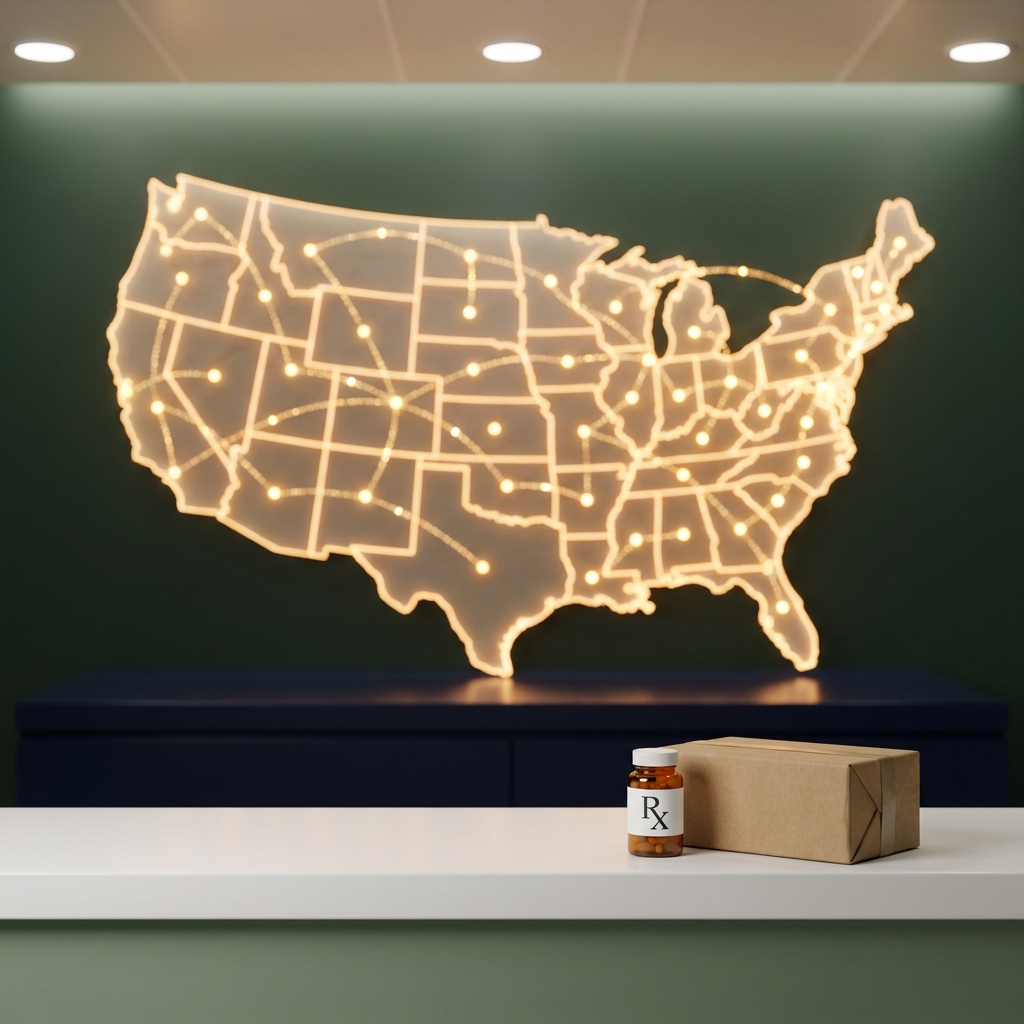
Nationwide Compounding Rx® ships to patients and providers across much of the country, with specific availability depending on medication type and state licensing requirements. That is a substantial expansion compared with a single-state pharmacy.
There is an important caveat. Shipping availability is not uniform across every state, and coverage can vary by formulation. This means California-based readers searching for Koshland specifically should confirm eligibility directly with Nationwide before assuming it is an option for them.
For patients who travel, relocate, or live outside California, Nationwide may offer broader access, subject to confirmed state licensing. Shipping availability follows a three-tier licensing system:
- Fully licensed states: both sterile and non-sterile preparations can ship.
- Non-sterile only: sterile licensing is pending.
- Pending or unlicensed states: shipping is not yet available.
Transparent Value and Fast Turnaround
Nationwide Compounding Rx® structures its provider relationships around a four-part model:
- Connect: establish the clinical relationship and patient profile.
- Collaborate: discuss formulation options, delivery forms, and clinical justification.
- Create: compound the patient-specific preparation.
- Care: monitor outcomes and adjust at each refill.
This collaborative approach gives providers and patients a clear view of formulation choices and value before treatment begins. BHRT formulas, for example, can be adjusted at each refill based on updated lab results.
Speed is another differentiator. Nationwide offers a 1 to 2 business day turnaround, with same-day pickup available for local Scottsdale-area patients on certain medications. Secure Provider and Patient Portals streamline prescription submission, order tracking, and refill requests.
Documented GLP-1/Peptide Support Under 503A
Nationwide Compounding Rx® offers GLP-1/peptide support within the 503A patient-specific framework, consistent with the legal pathway described earlier.
This represents a service-availability difference from Koshland’s current public pause on certain peptides pending PCAC guidance. It is not a criticism of Koshland’s quality or compliance. Nationwide’s support operates within documented clinical justification, developed with the prescriber during the Collaborate stage, and within each state’s licensing requirements.
Koshland Pharm vs. Nationwide Compounding Rx®: A Side-by-Side Look
| Factor | Koshland Pharm | Nationwide Compounding Rx® |
|---|---|---|
| PCAB Accreditation | Yes (since 2010) | Yes |
| USP Compliance | PCAB-accredited compounding standards | USP <800> compliant facility |
| Headquarters | San Francisco, CA | Scottsdale, AZ |
| Shipping Footprint | California only | Multi-state, with availability varying by state and medication type (confirm eligibility) |
| Turnaround | Not specified publicly | 1 to 2 business days; same-day local pickup for some medications |
| Pricing Feedback | Some reviews cite higher costs | Collaborative, provider-guided value model |
| GLP-1/Peptide Stance | Currently not compounding certain peptides | GLP-1/peptide support under 503A |
Both are legitimate, accredited pharmacies. The right choice depends on a patient’s location, budget expectations, and specific formulation needs.
How to Choose the Right Compounding Pharmacy for Your Needs in 2026
A structured approach helps patients and providers make confident decisions.
Key Questions to Ask Before Choosing a Compounding Pharmacy
- Is the pharmacy PCAB accredited and USP <795>/<797>/<800> compliant for the type of formulation needed?
- Does the pharmacy ship to the patient’s state, and is it licensed as a non-resident pharmacy there?
- Is pricing transparent, and can patients get a quote before committing to a formulation?
- Does the pharmacy currently support GLP-1/peptide compounding under 503A, and can it document clinical justification with the patient’s prescriber?
- What is the expected turnaround time, and is local pickup available if needed?
Conclusion
Koshland Pharm remains a legitimate, PCAB-accredited, well-regarded San Francisco institution. Its strengths include a strong local reputation, recognized leadership, and a broad range of clinical specialties.
Three documented friction points deserve attention from 2026 searchers: California-only shipping, pricing complaints in reviews, and the current pause on certain peptide compounding. These are practical considerations, not red flags against the pharmacy’s legitimacy.
For readers whose needs extend beyond California, or who are seeking documented GLP-1/peptide support under 503A right now, Nationwide Compounding Rx® is a credible, equally accredited option. Both pharmacies operate within the same regulated, patient-specific 503A framework. The decision ultimately comes down to location, budget, and service availability.
Find the Right Compounding Partner for Your Needs
Patients and providers whose location, budget, or GLP-1/peptide needs are not served by Koshland Pharm’s current policies can explore Nationwide Compounding Rx®.
- Call: (480) 499-8379 (Monday through Friday, 7:00 AM to 3:30 PM Arizona time)
- Visit: nationwidecompounding.com
- Use the secure Provider or Patient Portal to check state shipping eligibility and discuss formulation needs
Before starting any compounded treatment, providers and patients should verify accreditation, confirm shipping availability for their state, and review formulation options directly with the pharmacy team.
Related Posts
Searching for a compounding pharmacy in Louisville KY? Learn the 2026 Kentucky regulations that govern out-of-state shipping and compounding standards, so you can verify any pharmacy's legal authority to ship to you. Includes a look at how Nationwide Compounding Rx meets these requirements.
What makes a pharmacy feel like 'community'? This article redefines the community compounding pharmacy model for 2026, showing how relationships, accessibility, and trust can scale nationwide without a traditional storefront. Learn how Nationwide Compounding Rx® blends personalization with multi-state reach.
Kentucky's 2026 USP compliance rules have raised the bar for compounding pharmacies statewide. This guide gives Louisville patients and prescribers a five-part framework to independently verify a compounding pharmacy's quality and safety credentials.
Searches for Harbor Compounding Pharmacy often turn up conflicting addresses and accreditation claims. This 2026 guide clarifies Harbor's real Santa Ana location, its shift from PCAB to NABP accreditation, and how it compares to other compounding pharmacies for specialty prescriptions.