
MN Personalized Medicine: From Mayo’s PGx Research to Your Rx
Introduction: What “MN Personalized Medicine” Actually Means
The phrase MN personalized medicine can point in two different directions. One is a Minneapolis functional and integrative medicine clinic operating under the brand name “Minnesota Personalized Medicine,” which focuses on complex chronic illness. This article covers something else: the genomics- and pharmacogenomics-driven clinical practice that has made Minnesota one of the most important precision medicine regions in the United States.
Personalized medicine in Minnesota is not a single clinic or a wellness trend. It is a clinical ecosystem built on three pillars:
- Mayo Clinic’s Center for Individualized Medicine (CIM) in Rochester, a global leader in genomic discovery.
- The University of Minnesota’s Institute of Personalized Medicine (IPM), housed in the College of Pharmacy and focused on applied pharmacogenomics.
- The Minnesota Precision Medicine Collaborative (MPMC), a statewide initiative bringing pharmacogenomic (PGx) testing into health systems such as Essentia Health and Fairview.
The central argument of this article is simple: even the best PGx data and the most carefully designed dosing protocol are clinically useless until they become a dispensed, patient-specific medication. That “last mile” is where an accredited, standards-compliant 503A compounding pharmacy comes in.
This guide is written for healthcare providers, pharmacists, clinic administrators, and informed patients who want to understand how individualized medicine travels from the research bench to the prescription bottle in Minnesota.
The Research Engine: Mayo Clinic’s Center for Individualized Medicine
Mayo Clinic’s Center for Individualized Medicine exists to discover and integrate the latest genomic, molecular, and clinical sciences into personalized care for each Mayo patient. The center is organized into five Translational Programs:
- Biomarker Discovery
- Clinomics
- Epigenomics
- Microbiome
- Pharmacogenomics
These are supported by seven Infrastructure Programs that provide the data, laboratory, and bioinformatics backbone needed to move discoveries into practice.
CIM is also pushing past pure genetics. Its researchers are exploring pharmacoexposomics, the study of how environmental exposures influence drug response. Diet is one example; grapefruit juice, known to interfere with the metabolism of certain medications, is another. A patient’s genes may predict how quickly a drug is processed, but what that patient eats, drinks, and is exposed to can shift the outcome further. Pharmacoexposomics aims to account for both.
Real Patient Impact: The Tapestry Study
Mayo’s Tapestry DNA sequencing study shows how this research reaches real people. Through Tapestry, three Minnesota sisters, Chris, Cindy, and Carrie, learned they shared a BRCA1 mutation, a genetic variant that significantly increases the risk of breast and ovarian cancer. That knowledge prompted preventive action.
The case illustrates an essential point: Minnesota’s genomic research is not abstract science confined to journals. It produces concrete, individual clinical decisions that change the course of patients’ lives.
Training the Next Generation of PGx-Literate Clinicians
Genomic data only helps if clinicians know how to use it. In 2020, CIM launched a certificate program called “Pharmacogenomics For Your Practice,” which gives physicians, pharmacists, and nurses structured education in clinical PGx topics along with continuing education credit.
Mayo also hosts the Annual Individualizing Medicine Conference in Rochester. Its 13th edition, held in 2024 under the theme “From Innovation to Integration,” explored omics technologies and the growing role of artificial intelligence in precision diagnostics. The conference continues to position Rochester as a recurring national meeting point for the field.
The Academic Partner: University of Minnesota’s Institute of Personalized Medicine
The University of Minnesota College of Pharmacy runs the Institute of Personalized Medicine, whose researchers develop tools and algorithms that use a patient’s genetic profile and other factors to achieve maximum therapeutic benefit with minimum toxicity.
Where Mayo’s CIM is often oriented toward discovery, IPM functions as the applied-science and implementation-research complement. Its work focuses on how genetic insight becomes a usable dosing decision inside real pharmacies and clinics.
MPMC II: Turning Research Into a Statewide PGx Rollout
The Minnesota Precision Medicine Collaborative (MPMC) II is a Grand Challenges-funded, multi-institutional initiative aimed squarely at pharmacogenomics implementation. Its own framing names the problem directly: PGx is “one of the most mature domains of precision medicine,” yet “despite its proven scientific basis and immense promise has not yet been widely implemented in healthcare systems.”
That gap between proven science and routine use is the same gap this article addresses.
The University of Minnesota has also hosted a biennial national Precision Medicine Conference since 2016, further reinforcing the state’s role as a convening hub for PGx research and practice.
Health Equity in Minnesota’s Genomic Research
Minnesota researchers are studying pharmacogenomics within the state’s own communities. Two notable examples:
- Very Important Pharmacogenes (VIP) variation in the Hmong population, a community with a significant presence in Minnesota and historically underrepresented in genomic databases.
- Lung cancer and nicotine metabolism research with the Mille Lacs Band of Ojibwe, exploring how genetic differences affect tobacco-related disease risk and treatment.
These studies matter because most early PGx data came from populations of European ancestry. Research grounded in Minnesota’s diverse communities helps ensure that PGx-guided care works equitably for everyone in the state.
From Lab to Clinic: Where PGx Implementation Is Happening Right Now
Research institutions generate knowledge, but health systems deliver care. In Minnesota, PGx is already moving into everyday clinical workflows. For referring providers and patients, this means PGx testing is not a future possibility; it is influencing prescribing decisions in the state today.
Essentia Health-Duluth: Oncology PGx Integration
One MPMC demonstration project embeds pharmacogenomic testing into oncology care at Essentia Health-Duluth, a large rural health system. Cancer treatment often involves drugs with narrow therapeutic windows, where small differences in metabolism can mean the difference between effective therapy and serious toxicity.
The project’s location is significant. Precision medicine has long been associated with major academic medical centers. Bringing PGx into rural and regional care shows that genomically informed treatment can reach patients far from Rochester or Minneapolis.
Fairview and Northern Pines: Psychiatric PGx Testing
MPMC has also implemented psychiatric PGx testing across Fairview outpatient clinics and the Northern Pines Mental Health Center.
The clinical rationale is strong. Psychiatric medications for depression and anxiety are notoriously trial-and-error. Patients may cycle through several drugs over months before finding one that works without intolerable side effects. PGx testing can identify how a patient is likely to metabolize specific antidepressants or anxiolytics, helping clinicians choose a better starting medication and dose.
The Last Mile Gap: Why a PGx Result Isn’t a Prescription Yet
Here is the core issue: a PGx report or individualized dosing protocol is clinical data. It is not a medication a patient can take.
Commercially manufactured drugs come in fixed strengths, standard inactive ingredients (excipients), and a limited range of dosage forms. Those products are designed for the average patient. A genomic result, by definition, describes a patient who may not be average. When a PGx report recommends a dose that falls between available tablet strengths, or a formulation the market does not offer, the prescriber faces a practical problem.
Academic research pages, branded functional medicine clinics, and city-by-city compounding landing pages rarely explain this translation step. Yet it determines whether Minnesota’s research advantage produces better outcomes for an individual patient.
What “Turning Data Into a Dose” Looks Like in Practice
Several common scenarios illustrate the gap:
- Non-standard strengths for poor metabolizers. A PGx result may show that a patient is a poor metabolizer of a particular drug, meaning standard doses build up in the body and raise side-effect risk. The appropriate dose may be a lower or fractional strength that no manufacturer produces.
- Excipient-free formulations. A patient’s workup may reveal an allergy or sensitivity to a dye, preservative, or filler used in the commercial version of a medication. A clean formulation removes that barrier.
- Alternative dosage forms. An individualized protocol may call for a medication in sublingual, topical, or liquid form to address swallowing difficulties, absorption concerns, or the need for more precise titration.
Each of these scenarios requires a pharmacy capable of preparing a custom medication from a patient-specific prescription. Nationwide Compounding Rx® is an example of this operational bridge, offering custom strengths, alternative dosage forms such as capsules, liquids, troches, sublingual tablets, topicals, and suppositories, and formulations free of dyes, fillers, preservatives, and allergens.
Minnesota’s Regulatory Framework: The Rules Behind the Last Mile
In a genomics-driven care model, the compounding pharmacy is responsible for the final, physical form of a precisely calculated therapy. Providers who understand the rules governing compounding are better equipped to choose a partner that will execute their prescriptions safely and accurately.
USP <795>/<797> and Minnesota Rules Part 6800.3300
Under Minnesota Rules Part 6800.3300, all licensed Minnesota pharmacies that compound nonsterile preparations must follow United States Pharmacopeia (USP) Chapter 795 standards. Pharmacies compounding sterile preparations must follow USP Chapter 797 standards.
In practice, these standards govern:
- Beyond-use dating, which defines how long a compounded preparation remains safe and effective.
- Environmental controls, including cleanroom requirements and air quality for sterile work.
- Documented procedures and testing, ensuring each preparation is made consistently and traceably.
503A vs. 503B and Minnesota’s Stricter Stance on Patient-Specific Compounding
Federal law recognizes two main categories of compounders:
- 503A pharmacies compound medications for individual patients based on a prescription.
- 503B outsourcing facilities register with the FDA and may produce larger batches, including for office use, under manufacturing-style standards.
Minnesota draws this line firmly. A U.S. Government Accountability Office report noted that compounding by licensed pharmacies for “office use,” without a patient-specific prescription, has not been allowed in Minnesota for decades, unlike states such as Texas. Personalized medicine in Minnesota must therefore be built on true patient-specific prescriptions.
The Fairview case illustrates the boundary. After Minnesota’s Board of Pharmacy informed Fairview it would not renew the manufacturing license of its 503A operation, Fairview opened a separate 503B outsourcing facility, IntegraDose, co-located with but walled off from its retail 503A pharmacy. The episode shows the state’s tightened enforcement and the clear distinction between individualized and bulk compounding.
Recent tracking estimates roughly 62 traditional 503A compounding pharmacies and 2 FDA-registered 503B facilities serving Minnesota, with a slightly above-average rate of FDA warning letters compared with the national state average. That figure underscores the importance of vetting a pharmacy’s compliance record before entrusting it with precision prescriptions.
How Providers and Patients Should Vet a Compounding Pharmacy Partner
Regulatory context is only useful if it informs action. The following checkpoints help providers and patients evaluate a compounding partner for PGx-informed prescriptions.
Accreditation and Compliance Checkpoints
- PCAB accreditation. The Pharmacy Compounding Accreditation Board provides independent, third-party verification of a pharmacy’s quality systems.
- USP compliance. Adherence to USP <795> and <797>, along with USP <800> for hazardous drug handling, should be non-negotiable.
- Independent third-party testing. Outside verification of potency and purity confirms that each preparation contains what the label says.
- Quality sourcing. Active ingredients should come from FDA-inspected and cleared vendors.
These standards carry extra weight for PGx-guided formulations. When a dose has been calculated for a poor metabolizer, a preparation that runs even modestly over or under strength can undo the benefit of the genetic test. Precision in strength and purity is clinically critical.
What a Genuine Provider-Pharmacy Partnership Looks Like
The best compounding relationships are collaborative rather than transactional. Nationwide Compounding Rx® describes its approach through a four-step framework: Connect, Collaborate, Create, Care. The pharmacy works directly with prescribers to understand the clinical goal, design the formulation, prepare it, and support the patient over time.
Providers should also look for practical operational factors:
- Fast turnaround, such as 1 to 2 business days.
- Secure provider portals for submitting prescriptions, tracking orders, and communicating with the pharmacy team.
- Adjustable formulations that change as new lab or genomic results arrive, similar to bioidentical hormone replacement therapy (BHRT) models in which the formula is reviewed at each refill.
This approach applies across use cases relevant to Minnesota providers, including pharmacogenomic-guided dosing, BHRT, pain management topicals, pediatric formulations, and peptide or GLP-1 support.
Minnesota’s Place in a Fast-Growing National Movement
The global precision medicine market is projected at roughly $118 to $138 billion in 2026, with analyst firms forecasting compound annual growth rates of 11 to 17 percent through the early-to-mid 2030s. North America holds an estimated 45 to 51 percent of global market share.
Minnesota’s dense concentration of major health institutions, including Mayo Clinic, the University of Minnesota, Fairview, Essentia, and the Sanford and HealthPartners networks, makes the state a disproportionately influential part of that national footprint.
This is a structural, institution-backed movement, not a passing wellness trend. It is supported by sustained research funding, statewide collaboratives such as MPMC, and recurring national conferences hosted in Rochester and Minneapolis.
Conclusion: Closing the Gap Between Genomic Insight and Dispensed Medicine
Minnesota’s personalized medicine ecosystem forms a clear chain. Mayo’s CIM generates the science. The University of Minnesota’s IPM builds the tools and algorithms. MPMC operationalizes PGx across Essentia, Fairview, and Northern Pines. Compounding pharmacies complete the chain by turning results into an actual patient-specific medication.
Understanding that final step is essential for providers and patients who want Minnesota’s research advantage to become real treatment outcomes. Choosing an accredited, USP-compliant 503A partner is not a minor logistical detail. It is the operational foundation that makes individualized prescribing possible in practice.
Partner With a Compounding Pharmacy Built for Personalized Medicine
Nationwide Compounding Rx® is the type of PCAB-accredited, USP <800>-compliant, patient-specific compounding partner described throughout this article. The pharmacy is equipped to translate PGx results and individualized dosing protocols into custom-strength, custom-dosage-form, or excipient-free medications, using high-grade ingredients from FDA-inspected and cleared vendors and verified through independent third-party testing.
Capabilities relevant to Minnesota providers and patients include:
- BHRT formulas adjustable at each refill based on updated lab results
- Pain management and dermatology topicals designed to localize treatment and reduce systemic side effects
- Pediatric-friendly formulations in age- and weight-appropriate doses with flavors such as cherry, bubblegum, and strawberry
- GLP-1 and peptide support
- Sterile and non-sterile preparations in a wide range of dosage forms
Practical differentiators include a 1 to 2 business day turnaround, nationwide shipping (availability varies by medication type, state regulations, and prescription requirements), secure provider and patient portals, and a collaborative Connect, Collaborate, Create, Care partnership model.
Minnesota providers are invited to connect through the provider portal or contact the pharmacy team directly to discuss how custom compounding can support PGx-guided and individualized treatment plans. Patients are encouraged to ask their prescriber whether a compounded medication could better fit their personalized treatment plan.
Contact Nationwide Compounding Rx®:
- Phone: (480) 499-8379
- Website: nationwidecompounding.com
- Hours: Monday through Friday, 7:00 AM to 3:30 PM
- Email inquiries: Submitted through the website contact form, with responses typically within one business day
Related Posts

Most specialty pharmacy job guides assume you're already a licensed pharmacist, but most 2026 hiring demand is in technician, prior-authorization, and patient care coordinator roles. This guide maps real entry paths into specialty pharmacy without a PharmD, based on actual workflows at an accredited compounding pharmacy.

Searching for a compounding pharmacy in Louisville KY? Learn the 2026 Kentucky regulations that govern out-of-state shipping and compounding standards, so you can verify any pharmacy's legal authority to ship to you. Includes a look at how Nationwide Compounding Rx meets these requirements.
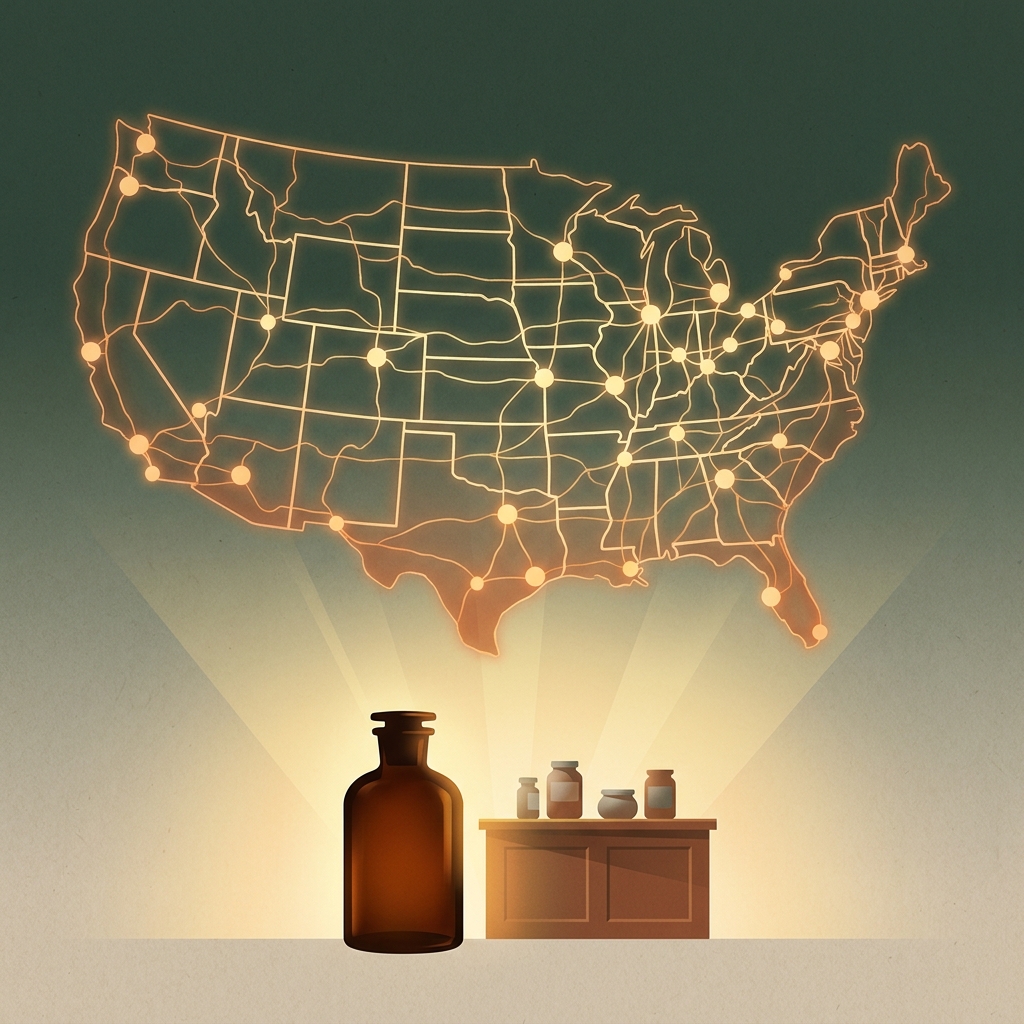
What makes a pharmacy feel like 'community'? This article redefines the community compounding pharmacy model for 2026, showing how relationships, accessibility, and trust can scale nationwide without a traditional storefront. Learn how Nationwide Compounding Rx® blends personalization with multi-state reach.

Koshland Pharm: Custom Compounding Pharmacy is a PCAB-accredited San Francisco institution, but its shipping reach and peptide offerings have limits. This 2026 guide verifies its credentials and highlights an alternative for broader needs.